Two Children, Four Years Apart, One Afternoon: The Scheduling Maths Nobody Does Before You Enrol; The Four-Column Week: How to Price Out Two Children's Classes Before You Sign Anything; Your Younger Child Is the Constraint. Here Is What That Costs Over a Term; Two Kids, Three Addresses, One Weekday Evening in Jaipur; Why an Activity Schedule Built One Child at a Time Does Not Survive Two
Discover how scheduling activities for two children of different ages can become a logistical challenge in Jaipur. Learn to map your week before enrolling.
By Champions Studio · Fri Aug 07 2026
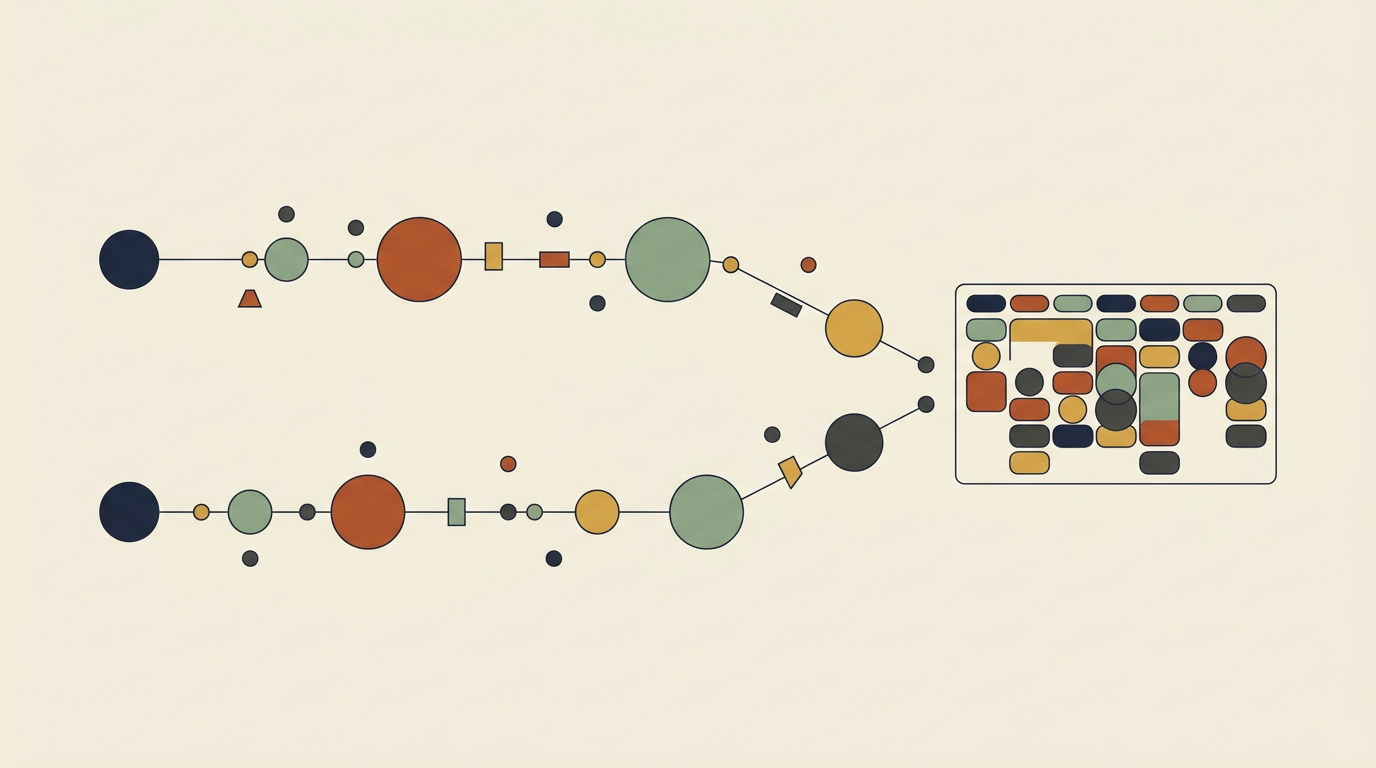
When you have two children with different age-appropriate activities, scheduling becomes an intricate dance. This article provides a method to map out your weekly commitments and identify hidden logistical costs before enrolling in new classes.
We built Champions Studio for our own two children, and the scheduling was the part we consistently underestimated. Not the fees. Not the coaching. The calendar. This piece helps articulate a problem many parents in Jaipur face but cannot easily name.
The arithmetic nobody hands you
Consider a common scenario here in Jaipur. You have a seven-year-old who wants to try basketball and chess. Their younger sibling, two-and-a-half, is ready for a parent-and-toddler movement class. Between them, that is four classes a week, possibly at three different addresses, all needing to happen on a Jaipur weekday between 4 pm and 7 pm.
Let us do a quick, honest tally. This is not a complaint; it is arithmetic. For these four classes, you are looking at:
- Multiple trips between home and different venues.
- Separate drop-offs and pick-ups for each child at potentially distinct locations.
- And then there is the dead time. This is the period nobody counts: the gap where one child is in class, and the other is in the car, waiting. This waiting time is a real, unacknowledged cost.
The constraint is clear: an activity schedule built one child at a time will not survive two children.
The three things that actually break
These are observations from numerous conversations with parents in areas like C-Scheme, Civil Lines, and Ashok Nagar, not a critique of any specific provider.
1. The younger one becomes the constraint.
Toddler classes often have fewer slots and earlier timings. This means the seven-year-old's basketball or chess batch often ends up being chosen around the availability of the younger child's classes. The younger child dictates the family schedule more than might initially be apparent.
2. Nobody drops an activity, so something gets skipped instead.
When schedules clash or energy levels wane, an activity often gets missed rather than formally dropped. The class that is skipped is almost always the younger child's. A two-year-old missing a week of movement class might feel harmless in isolation. However, over a term, it is not. Motor learning and habit formation at that age rely significantly on consistent frequency.
3. Attendance decays quietly.
By week six of a term, it is not uncommon for one child to have missed a third of their sessions. This goes unrecorded because attendance tracking is not something a scattered set of independent activity providers reports centrally to you, Ji. You have a general sense, but no concrete record to act upon.
Do this before you enrol anything: the four-column week
This is the practical exercise we encourage every parent to do. Before committing to any new class, map out your current week using this simple table. Fill it in honestly.
| Day | Child | Class Start and End | Address |
|---|---|---|---|
| Monday | |||
| Tuesday | |||
| Wednesday | |||
| Thursday | |||
| Friday |
Once you have this filled out, ask yourself three questions:
- How many separate addresses appear in one week?
- What is the largest gap between one child finishing and the other starting, where you are waiting in between?
- If one child is unwell on a Tuesday, how many classes are lost that day across both children, not just one?
That last question often changes minds. In a scattered week, the answer is frequently two classes lost, or sometimes even more, across different locations.
What changes when it is one building
When activities for children aged six months to eight years are offered under one roof, the practicalities shift. A parent-and-toddler class and a seven-year-old's batch can potentially run in overlapping slots within the same 7,000 square foot facility. This often means one trip, one car park, and one conversation with one team about both children.
Our batches are designed for 8 to 10 children, meaning slots are limited. This kind of integrated scheduling works best if both children are placed deliberately at the start of a term, rather than trying to patch together schedules midway through. We will be transparent if we cannot accommodate both children in a viable window this term.
Crucially, both children at Champions Studio sit on the same four-to-six-week milestone cycle. This means the written progress report for both arrives at the same time. The practical value here is not motivational; it is clarity. A parent can see in one document that the younger child missed four of eight sessions while the older one missed none. This makes the invisible problem of decaying attendance, which we discussed in section three, visible and actionable.
What this does not solve
It is important to be clear about the limitations. A single facility, however comprehensive, does not solve every logistical challenge. It does not solve school pick-up timing, which remains a fixed point in the day. It does not solve the challenge of two children who want activities we do not currently run. It also does not solve the commute for a family in Mansarovar or Vidhyadhar Nagar, as our live centre is in C-Scheme, and the drive remains a factor. While we have Malviya Nagar and Vaishali Nagar as register-interest locations, they are not yet open.
Our offerings are complementary to school and to any coaching either child already undertakes. Nothing here replaces either of those foundational commitments.
Bring both children. Book a Rs 500 trial session on WhatsApp at +91 95096 71632. Tell us both children's ages, and we will tell you honestly whether their two batches can run in the same window this term. If they cannot, we will say so directly.