The One Number That Predicts Whether a Kids Class Works
Discover the single most important number to evaluate any kids class: batch size. Understand how it directly impacts your child's individual attention and learning experience.
By Champions Studio · Tue Jul 21 2026
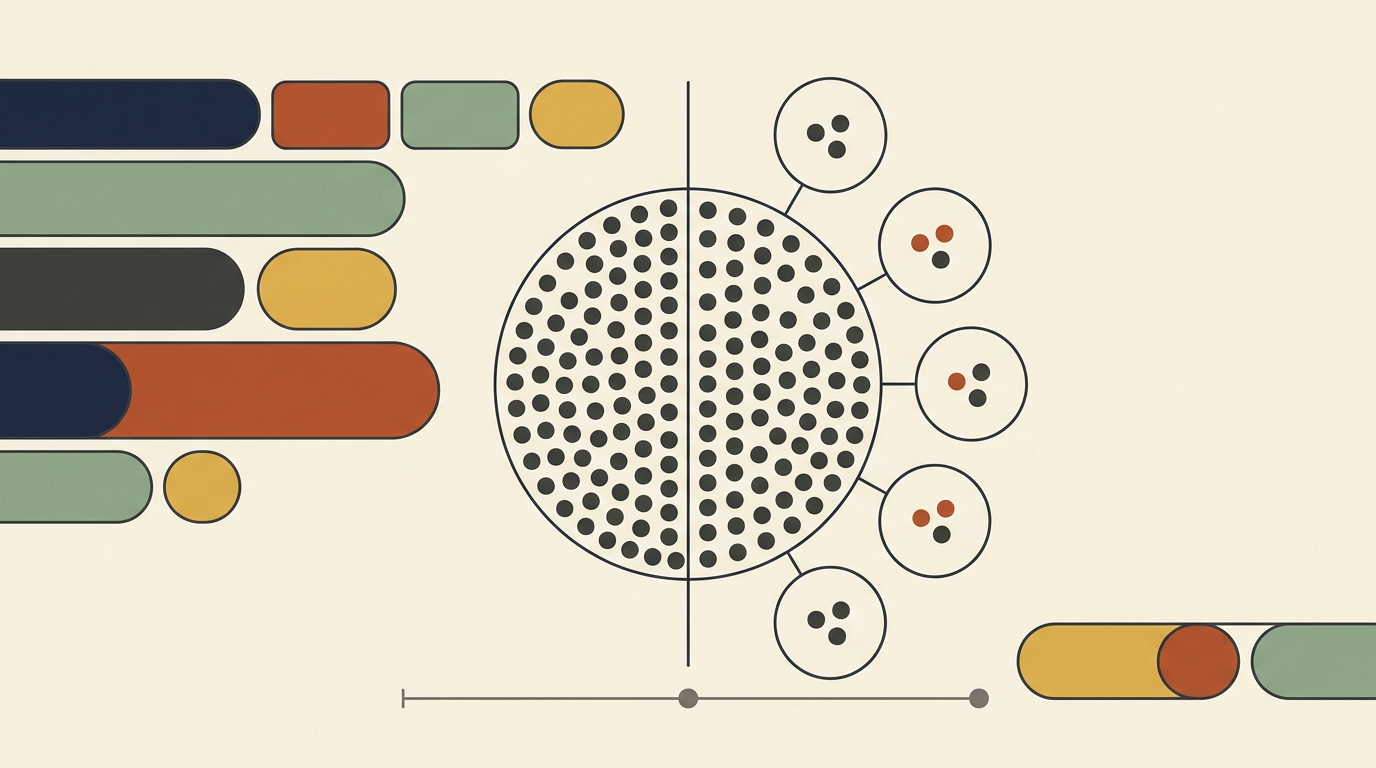
When selecting a kids class, parents often focus on fees, timings, or a coach's certifications. While these are valid considerations, they don't predict the quality of individual attention your child will receive or how effectively they will learn and grow in the program. The most critical factor is the batch size, directly influencing how much personal interaction and instruction your child receives.
Batch size is the first number to ask about
Many parents, quite reasonably, inquire about the coach's credentials, the class schedule, or the fee structure. While these are standard questions, they do not directly inform you about the practical attention your child will receive. The number that truly quantifies this is the batch size.
1. The arithmetic of attention
Consider a 60-minute class as a fixed budget of instructor attention. In a batch of 25 children, each child theoretically receives just over two minutes of individual attention, assuming an even distribution. This is often before accounting for transitions between activities, bathroom breaks, or addressing individual challenges. In contrast, a batch of 8 to 10 children allows for six to seven minutes of direct, individual interaction. This difference means the instructor can not only observe each child's attempt at a skill but also provide timely feedback and adjustments, which are crucial for learning.
- 60 minutes / 25 children = 2.4 minutes per child
- 60 minutes / 10 children = 6 minutes per child
2. What a 3-year-old does with minute 40
For children under the age of five, sustained engagement is paramount. The World Health Organization recommends at least 180 minutes of physical activity daily for 3 to 4-year-olds, with at least 60 minutes of that being energetic [1]. In over-sized batches, a significant portion of class time can be spent waiting in line or for instructions, rather than actively participating. This waiting time transforms into lost learning opportunities and can lead to disengagement for young children who thrive on active, hands-on experiences. A smaller batch ensures more active minutes and fewer queue minutes, directly aligning with developmental needs.
3. Why the number hides
The batch size information is often not prominently displayed, leading to a common industry pattern. Larger batches enable operators to offer lower fees, which can be an attractive proposition for parents. Marketing materials often promise "personal attention," yet the reality in some venues might be classes with 25 or more children and only one lead instructor supported by a couple of assistants who are often stretched thin. This discrepancy between expectation and reality is precisely why discerning parents, Ji, benefit from asking specific questions about batch size.
4. What is a good batch size for a kids class?
The ideal batch size varies slightly with age and activity, but a general guideline emerges for effective learning and engagement:
- Parent-and-child programs (6 months to 2 years): These programs benefit most from even smaller groups, typically 4 to 6 pairs, focusing on interaction and guidance for both parent and child.
- Early childhood (2 to 5 years): For this age group, where children are developing foundational skills and social behaviors, a batch size of 6 to 8 children allows for sufficient individual attention and guided peer interaction.
- School-age (5 to 8 years): For skill-building activities, a batch size of 8 to 10 children is widely considered optimal. This allows instructors to observe, correct, and encourage each child frequently.
At Champions Studio, Ji, we have engineered our programs around a strict limit of 8 to 10 children per batch. This is not merely a premium offering but a design constraint that underpins our entire educational approach, the Champions Method. It ensures that instructors can consistently implement our detailed checklists for each child. For instance, an instructor can genuinely track progress on milestones like "can bounce the ball once and catch it" or "holds a supported handstand for 5 seconds" for every child, assessing these points every 4 to 6 weeks. This attention to detail would be impossible in larger groups.
5. The two questions to ask any class
To cut through marketing claims and understand the practical reality of any children's class, Ji, these two questions are key:
- "How many children will be in my child's batch, exactly?" Insist on a precise number, not a range like "up to 15" or vague assurances.
- "Can I see the milestone list or curriculum objectives for the next 6 weeks for my child's age group?" A reputable operator with a structured program will have these readily available and will be able to explain how individual progress is tracked.
A good operator will answer both questions clearly and confidently, demonstrating transparency and a commitment to measurable progress.
The fastest way to understand the profound difference between a batch of 25 children and one of 9 is to witness it firsthand. We invite you to experience the focused attention and structured learning environment. Book a trial session on WhatsApp https://wa.me/919509671632.
Frequently asked questions
Q: Why is batch size more important than the instructor's experience?
While an experienced instructor is valuable, even the most skilled teacher cannot provide adequate individual attention to a large group. A smaller batch size amplifies the effectiveness of a good instructor, allowing them to apply their experience to each child's specific needs and challenges. Without sufficient time with each child, even a highly experienced instructor's impact is limited.
Q: Does a smaller batch size mean higher fees?
Generally, smaller batch sizes often correlate with higher fees because they reflect a superior student-to-teacher ratio and more direct overhead per child. However, the investment often pays off in terms of faster learning, greater engagement, and more meaningful progress for your child. It is a trade-off between cost and the quality of individual attention.
Q: How can I verify the batch size before enrolling?
Beyond asking explicitly, Ji, request to observe a live class for your child's age group. Pay attention to how many children are present, how much individual interaction the instructor has with each child, and how much time children spend waiting. This direct observation provides the most accurate verification.