Tabla for Kids: Jaipur Summer Music & Cognitive Boost
Discover why learning tabla this Jaipur summer is more than just music – it's a journey into Rajasthan's rich heritage, boosting cognitive skills and discipline.
By Champions Studio Team · Mon Jun 22 2026
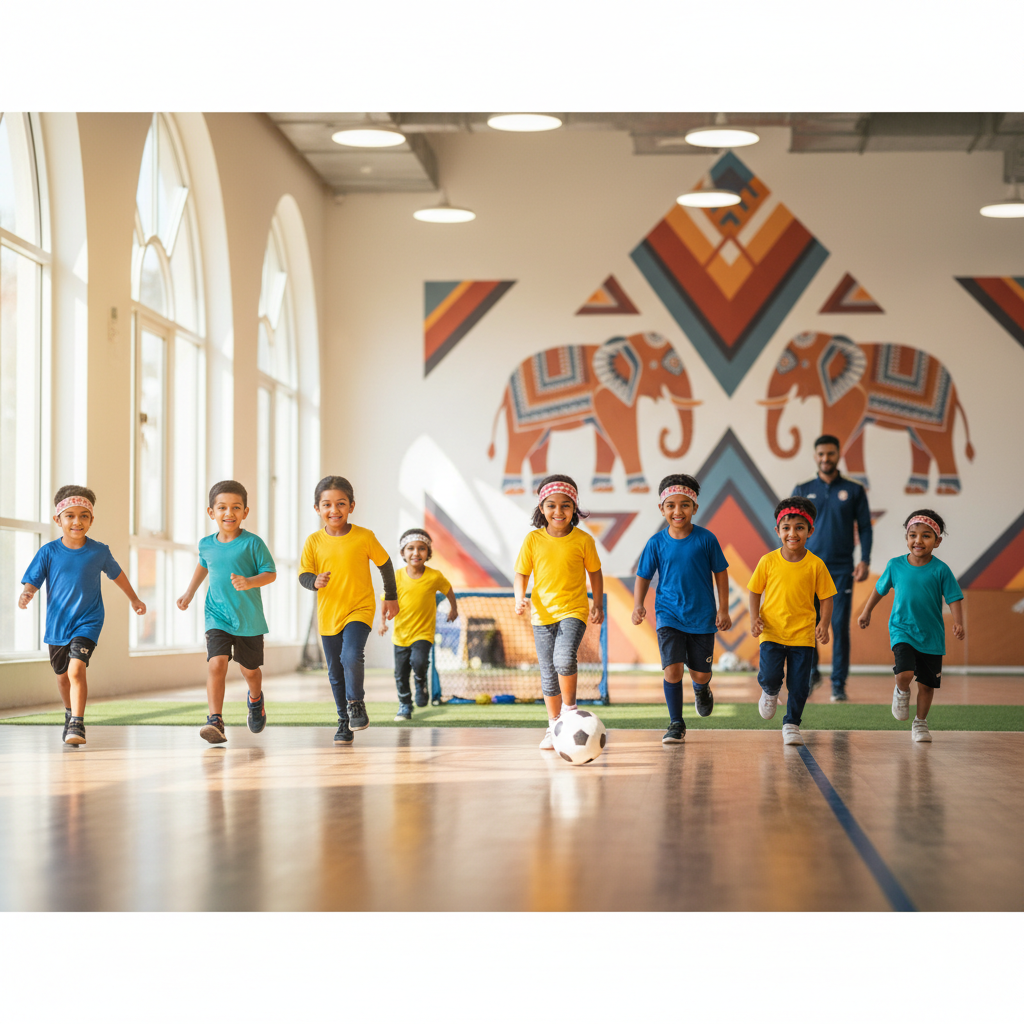
As the mercury begins its annual climb in Jaipur, reaching those familiar 40-degree highs, parents across the Pink City start their quest: how to keep young minds engaged and bodies active without melting in the afternoon sun. After the school van drops your child at 1 PM, the long hours indoors can quickly lead to screen time battles or restless boredom. But what if there was an activity that not only offered a cool, indoor escape but also connected your child to the soul of Rajasthan?
Key Takeaways
- Cultural Connection: Tabla introduces children to India's rich musical heritage, fostering a sense of pride and identity.
- Cognitive Boost: Learning tabla significantly enhances mathematical skills, language processing, memory, and spatial reasoning.
- Discipline & Focus: Mastering intricate rhythms builds patience, concentration, and self-discipline, skills valuable in all areas of life.
- Indoor & Engaging: A perfect summer activity for Jaipur's heat, keeping kids stimulated without sun exposure.
- Holistic Development: Music education complements physical activities, promoting balanced growth and expression.
The Rhythmic Heart of Rajasthan: Why Tabla This Summer?
Jaipur, with its vibrant culture and historical grandeur, pulses with a rich artistic legacy. From folk dances to intricate handicrafts, our city breathes tradition. And at the heart of much Indian classical and folk music lies the tabla – a pair of drums that don't just provide rhythm but tell stories, evoke emotions, and demand incredible skill. For children growing up amidst this heritage, learning tabla isn't just about picking up an instrument; it's about connecting with their roots.
Parents in Jaipur often ask, "Isn't classical music a bit too serious for young kids during summer holidays?" The truth is, learning tabla for kids aged 6-12 can be incredibly playful and rewarding. It's not about becoming a concert maestro overnight, but about exploring sound, developing coordination, and discovering a new language – the language of rhythm.
Beyond Bol: Rhythm and Cognitive Development
While the cultural aspect is compelling, the benefits of tabla for a child's cognitive development are truly remarkable. Learning tabla is like giving your child's brain a comprehensive workout. "Learning an instrument, especially one as intricate as the tabla, engages multiple parts of the brain simultaneously," notes Dr. Anita Sharma, a child psychologist in Malviya Nagar. "It's not just about motor skills; it's about auditory processing, pattern recognition, and sequencing."
Consider the 'bols' – the phonetic syllables used to describe tabla strokes (e.g., 'Dha', 'Tin', 'Na'). Children learn to associate these sounds with specific finger movements and then combine them into complex rhythmic patterns called 'taals'. This process directly strengthens:
- Mathematical Skills: Counting beats, understanding fractions of time, and recognizing rhythmic patterns lay a strong foundation for mathematical concepts.
- Language and Literacy: The phonetic nature of bols and the memorization of compositions enhance auditory memory and phonological awareness, crucial for reading and language development.
- Memory and Concentration: Recalling long sequences of bols and taals, and maintaining focus during practice, significantly boosts working memory and attention span.
- Problem-Solving: Figuring out how to execute a tricky rhythmic phrase or correcting a timing error are practical problem-solving exercises.
A common concern during Rajasthan summers is finding activities that genuinely stimulate the mind. Tabla, with its blend of physical coordination and mental gymnastics, offers a powerful alternative to passive screen time.
Cultural Pride: Connecting with Rajasthan's Soul
In a world that is increasingly globalized, nurturing a strong sense of cultural identity is more important than ever. Jaipur is a city steeped in music, from the folk melodies sung by Langa and Manganiyar communities to the classical raags that echo in old havelis. Introducing your child to tabla is like handing them a key to this rich legacy.
They learn not just an instrument, but a piece of history. They understand the stories behind the taals, the importance of improvisation, and the discipline passed down through generations of musicians. This connection fosters a deep sense of pride in their heritage, making them ambassadors of their culture in their own unique way.
"Rudr misses Champions so badly...it will always be a part of his growing up as Champions was practically his second home. Champions has a major role in shaping his early years and wish we could have continued there further."
Vedika Kedia (parent of Rudr)Imagine your child confidently performing a simple teentaal, understanding its structure and meaning. This isn't just a performance; it's an expression of cultural belonging.
Discipline, Focus, and Patience: Life Skills Through Rhythm
Learning any musical instrument requires dedication, but the tabla, with its subtle nuances and precise strokes, is a particularly effective teacher of discipline. Unlike many activities where immediate gratification is common, mastering the tabla requires patience and consistent practice.
- Patience: Children learn that complex rhythms aren't conquered overnight. They appreciate the process of gradual improvement.
- Focus: Playing tabla demands intense concentration – listening to the guru, remembering bols, coordinating hands, and maintaining the beat. This translates into improved focus in academic tasks.
- Self-Discipline: Regular practice, even when challenging, instills a strong sense of self-discipline. They learn the value of consistent effort.
- Emotional Regulation: Music provides an outlet for expression and can be a calming activity. Frustration with a difficult rhythm teaches resilience and emotional management.
These are not just musical skills; they are fundamental life skills that will benefit your child in school, sports, and future careers. For working parents in areas like Vaishali Nagar or Mansarovar, where summer schedules can be tight, knowing that a structured activity like tabla is building such crucial attributes is a huge relief.
Tabla for Different Age Groups: Finding the Right Fit
When considering tabla classes, parents often wonder about the ideal age to start. Here's a general guide:
| Age Group | Focus Areas | Session Duration |
|---|---|---|
| 6-8 Years | Basic bols (Dha, Tin, Na, Te), simple taals (Dadra, Keherwa), rhythm games, ear training, hand coordination. Emphasis on fun and engagement. | 30-45 minutes |
| 9-12 Years | More complex bols and taals (Teentaal, Ektaal), understanding of structure (theka, laggi), improvisation basics, emphasis on technique and theory. | 45-60 minutes |
| 13+ Years | Advanced taals, solo compositions (kaydas, relas, tukdas), accompanying vocal/instrumental music, deeper theoretical understanding. | 60-90 minutes |
For younger children, the key is to make learning playful. At Champions Studio C-Scheme, for instance, music programs introduce children to the joy of music with patience and care, helping young learners grasp rhythm and clef through engaging methods. This foundational approach ensures that children develop a love for music from an early age.
Music Education: The Perfect Partner for Sports and Academics
Sometimes, parents feel they have to choose between arts and sports, or between extracurriculars and academics. The reality is that music education, especially tabla, beautifully complements other areas of development.
- Enhanced Coordination: The intricate hand movements required for tabla directly translate to better hand-eye coordination, benefiting sports like basketball or pickleball.
- Improved Timing: A keen sense of rhythm developed through tabla training can enhance timing in dance, martial arts, and various sports.
- Stress Reduction: Playing music is a wonderful way to unwind and reduce stress, offering a mental break from academic pressures or competitive sports.
- Creative Expression: While sports build physical prowess, music allows for a different kind of expression, fostering creativity and emotional intelligence.
It's not about sacrificing one for the other, but about creating a balanced environment where your child can thrive holistically. Think of it as cross-training for the brain and body.
Choosing a Tabla Program in Jaipur for Summer 2026
When looking for a tabla class or summer program for your child in Jaipur, especially in areas like C-Scheme, Ashok Nagar, or Raja Park, consider these factors:
✅ Summer Music Program Readiness Checklist
- Experienced Instructors: Look for teachers who specialize in teaching children and have a strong foundation in classical Indian music.
- Appropriate Class Size: Smaller groups often mean more personalized attention.
- Indoor, Air-Conditioned Facilities: Essential for comfort and safety during Jaipur's intense summer months.
- Structured Curriculum: A clear progression of learning, from basics to more advanced concepts.
- Focus on Engagement: Programs that make learning fun and interactive, rather than just rote memorization.
- Trial Classes: An opportunity for your child to try it out before committing.
- Flexibility: Summer schedules can be tricky; look for programs that offer some flexibility in timings or make-up classes.
For parents in C-Scheme, Champions Studio offers structured music classes as part of its wider multi-activity offerings. Their focus on making music accessible and enjoyable for young learners aligns perfectly with the goal of fostering a love for the arts.
Frequently Asked Questions About Tabla for Kids in Jaipur
Q: What age is best to start learning tabla?
A: While some children can start as young as 5, 6-8 years old is often ideal. At this age, children have developed sufficient motor skills and attention span to grasp the basics, and formal instruction can be very effective. Programs like the Champions Studio Summer Camp for 4-9 yrs often include art or music elements suitable for this range.
Q: Are tabla classes safe for kids during Jaipur's summer heat?
A: Absolutely, if chosen carefully. Look for indoor, air-conditioned facilities. Reputable centers prioritize a comfortable and safe environment, allowing kids to focus on learning without concerns about the heat. This is a key advantage of indoor activities in Jaipur during summer.
Q: How much practice is required for a child learning tabla?
A: Consistency is more important than duration. For beginners, 15-20 minutes of daily practice is far more effective than one long session per week. As they progress, this can increase to 30-45 minutes. The key is to make it a regular, enjoyable habit.
Q: Can learning tabla help with screen time reduction?
A: Yes, definitely! A structured and engaging activity like tabla provides a compelling alternative to digital devices. When children are actively learning and creating, they are less likely to seek out passive entertainment. It channels their energy productively during the long summer afternoons.
Q: My child plays other instruments. Will tabla be too much?
A: Often, learning a second instrument, especially one from a different musical tradition and focused on rhythm like tabla, can be highly beneficial. It broadens their musical understanding and skill set, enhancing their overall musicality rather than overwhelming them. Discussing your child's current commitments with the tabla instructor can help manage expectations.
Q: Where can I find tabla classes in Jaipur?
A: Many local music schools and cultural centers across Jaipur offer tabla classes, particularly in areas like C-Scheme, Malviya Nagar, and Vaishali Nagar. Online searches for "tabla classes for kids Jaipur" or "Indian classical music Jaipur" will yield several options, including dedicated summer programs. Champions Studio C-Scheme offers music programs as part of their diverse activities, providing a holistic learning environment.
This summer, let your child explore the rich, rhythmic world of tabla. It's an opportunity to not just beat a drum, but to discover a piece of their heritage, sharpen their mind, and develop invaluable life skills – all while staying cool and engaged in Jaipur's summer heat.
Ready to introduce your child to the captivating world of rhythm and culture? Explore the music programs and other enriching activities available at Champions Studio C-Scheme this summer. You can also Book a Free Trial to see if it's the right fit for your child.