Skating for Kids in Jaipur Summer 2026: Balance, Speed & Joy
Discover why summer 2026 is the perfect time for your child to learn skating in Jaipur. Learn about types, safety, and developmental benefits in the heat.
By Champions Studio Team · Sat Feb 28 2026
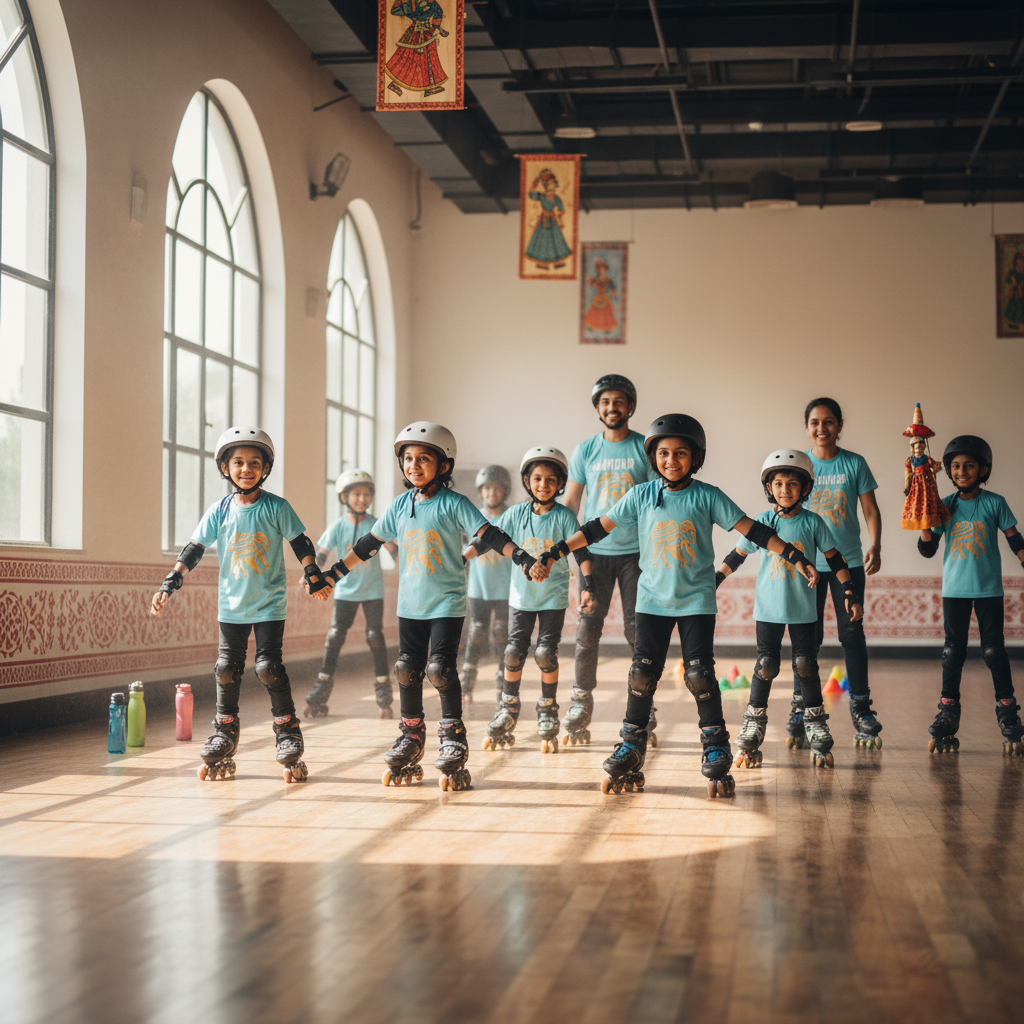
As the Jaipur sun begins its intense climb, signaling the start of another long summer break, parents often find themselves navigating a unique set of challenges. How do you keep those boundless bundles of energy engaged and active when the mercury hits an average of
Key Takeaways
- Indoor Advantage: Jaipur's intense summer heat (often 38-47°C) makes indoor, air-conditioned skating rinks ideal for active play.
- Holistic Development: Skating boosts physical fitness (balance, coordination, strength) and cognitive skills (focus, problem-solving, patience).
- Safety First: Essential gear (helmet, knee/elbow pads, wrist guards) and proper instruction are non-negotiable for a safe learning experience.
- Age Matters: Children as young as 4 can begin with quad skates, progressing to inline skates as balance improves.
- Fear Management: A supportive environment, gradual progression, and encouraging coaches are crucial for overcoming initial anxieties.
Why Summer is the Perfect Season to Roll into Skating in Jaipur
Parents in Jaipur often ask, "When is the best time for my child to learn a new sport like skating?" While the cooler months offer opportunities for outdoor play, the long summer break in Jaipur, typically from mid-May to early July, presents an unparalleled window for focused skill development. With extended free time, children can dedicate consistent hours to practice without the interruption of school schedules.
A common concern during Rajasthan summers is finding safe, stimulating activities away from the scorching heat. This is precisely where indoor skating rinks become invaluable. They offer a controlled, air-conditioned environment where children can glide, fall, and learn without worrying about sunstroke or heat exhaustion. It transforms a potential period of boredom and increased screen time into an opportunity for energetic, skill-building fun.
Understanding the Skates: Quad vs. Inline
Before your child straps on their first pair of skates, it’s helpful to understand the two main types:
1. Quad Skates (Roller Skates)
These are the classic 'four-wheelers' with two wheels in the front and two in the back, arranged in a rectangle. They often have a toe stop at the front for braking. Quad skates offer a wider base, making them generally more stable for beginners, especially younger children who are still mastering their balance.
2. Inline Skates (Rollerblades)
Inline skates feature wheels arranged in a single line, much like ice skates. They typically have a heel brake. Inline skates offer greater speed and maneuverability once mastered, making them popular for recreational skating, fitness, and even competitive sports. They require a bit more core strength and balance to control.
| Age | Recommended Skate Type | Initial Focus |
|---|---|---|
| 4-6 years | Quad Skates | Balance, falling safely, standing up, basic forward movement |
| 7-9 years | Quad Skates (transition to Inline) | Turning, stopping, increasing speed, posture, introduction to inline |
| 10+ years | Inline Skates | Advanced techniques, speed, agility, different terrains, longer distances |
For most beginners in Jaipur, particularly those under 7 or 8, starting with quad skates is often recommended. They provide a more forgiving learning curve, building confidence before transitioning to the faster, more agile inline skates.
The Unseen Benefits: How Skating Shapes Young Minds and Bodies
Skating is far more than just rolling around; it's a powerhouse for child development, touching on physical, cognitive, and emotional aspects.
Physical Development: Building a Strong Foundation
- Balance and Coordination: This is perhaps the most obvious benefit. Skating constantly challenges a child's vestibular system, improving their proprioception (awareness of their body in space) and refining their ability to maintain equilibrium. This translates to better balance in everyday activities, from walking on uneven surfaces to playing other sports.
- Muscle Strengthening: Skating engages a wide range of muscles, especially in the legs, core, and glutes. Repeated pushing, gliding, and maintaining posture builds strength and endurance without feeling like a chore.
- Aerobic Fitness: A good skating session elevates the heart rate, improving cardiovascular health and stamina. This is crucial for overall physical well-being and helps combat sedentary lifestyles.
- Motor Skills: From learning to push off, to gliding, turning, and stopping, skating refines both gross motor skills (large muscle movements) and fine motor skills (control over smaller muscles, like adjusting foot position).
- Flexibility and Agility: The dynamic movements involved in skating enhance flexibility and improve a child's agility, allowing them to react quickly and change direction.
Cognitive and Emotional Growth: Beyond the Physical
- Focus and Concentration: Staying upright and navigating a rink requires sustained attention. Children learn to focus on their body movements, surroundings, and the instructions from their coach.
- Problem-Solving: Every fall is a lesson. Children learn to analyze why they lost balance, how to adjust their posture, and find new ways to move forward. This fosters practical problem-solving skills.
- Patience and Persistence: Learning to skate takes time and practice. There will be falls and frustrations. Skating teaches children the value of perseverance, pushing through challenges, and celebrating small victories.
- Confidence and Self-Esteem: Mastering a new skill, especially one that initially feels daunting, provides a huge boost to a child's confidence. The feeling of gliding smoothly and independently is incredibly empowering.
- Social Skills: Group lessons and rink sessions offer opportunities for children to interact, encourage each other, and learn the etiquette of sharing a space.
"Skating provides an excellent aerobic workout, strengthening bones, and improving overall physical health. It helps children develop better balance and coordination, benefiting them in all other physical activities."
Devanshu Gupta, Skating CoachSafety First: Essential Gear and Smart Habits
While the benefits are numerous, safety is paramount. Learning to skate inherently involves falling, especially in the beginning. Proper protective gear minimizes the risk of injury and allows children to learn with confidence.
✅ Essential Skating Safety Gear
- Certified Helmet: This is non-negotiable. Choose a multi-sport helmet that fits snugly and covers the forehead.
- Knee Pads: Crucial for protecting knees during falls. Look for pads with hard caps and good cushioning.
- Elbow Pads: Similar to knee pads, these protect elbows from scrapes and impact.
- Wrist Guards: Many beginners instinctively put their hands out to break a fall. Wrist guards protect against sprains and fractures.
- Comfortable, Thick Socks: Prevents blisters and provides extra cushioning inside the skates.
- Well-Fitting Skates: Skates should be snug but not uncomfortably tight. Ill-fitting skates can lead to blisters or ankle injuries.
Beyond gear, teach your child these habits:
- Learn to Fall Safely: Instructors often teach children how to fall forward onto their pads rather than backward.
- Stay Hydrated: Especially important in Jaipur; even in air-conditioned spaces, active children need regular water breaks.
- Follow Rules: Adhere to rink rules and listen to coaches.
Managing the 'Fear of Falling' in Beginners
It's completely natural for children (and adults!) to be apprehensive about falling when learning to skate. Here's how parents and instructors can help:
- Start Small, Celebrate Progress: Begin with very basic movements like standing, taking small steps, and holding onto a rail. Acknowledge every tiny improvement.
- Emphasize Safety Gear: Reassure your child that their pads are there to protect them. Knowing they're well-protected can significantly reduce anxiety.
- Positive Reinforcement: Focus on effort, not just results. Praise their bravery for trying, their persistence after a fall, and their willingness to learn.
- Demonstrate and Empathize: Show them how to fall safely. Share stories of your own learning struggles (if applicable) to normalize the experience.
- Choose the Right Environment: A supportive, patient coaching style makes a world of difference. Coaches like Devanshu Gupta, who brings energy and enthusiasm to every skating session and specializes in helping beginners, can transform apprehension into excitement.
- Gradual Progression: Don't rush them. Let them master one skill before moving to the next.
Rudr's parent, Vedika Kedia, shared, "Rudr misses Champions so badly...it will always be a part of his growing up as Champions was practically his second home. Champions has a major role in shaping his early years." This highlights the positive impact a supportive and engaging environment can have on a child's development and confidence.
Finding the Right Skating Program in Jaipur
With the summer holidays looming, many parents in areas like C-Scheme, Malviya Nagar, and Vaishali Nagar will be searching for structured activities. When evaluating skating programs, consider:
- Indoor, Air-Conditioned Facilities: Essential for Jaipur summers.
- Experienced Coaches: Look for instructors who specialize in teaching children and understand child development.
- Small Batch Sizes: Ensures personalized attention.
- Safety Protocols: Do they enforce helmet and pad usage?
- Flexible Scheduling: Helps working parents manage logistics.
For families in and around C-Scheme, Champions Studio C-Scheme offers dedicated skating programs designed for various age groups. They understand the need for a safe, indoor environment during Jaipur's intense summer. Their skating schedule includes sessions on Monday, Wednesday, and Friday evenings, catering to children aged 4.5-7, making it convenient for parents after work or other commitments. Options like their 'Standard' package (3 sessions/week, 1 activity at ₹5000/month) or 'Premium' (6 sessions/week, 4 activities at ₹8500/month) can be tailored to your child's interest and your family's schedule.
Looking Ahead: From Beginner to Enthusiast
Once your child gains confidence on wheels, the world of skating opens up. They might enjoy:
- Recreational Skating: Simply enjoying gliding around the rink or designated paths.
- Speed Skating: For those who love the thrill of speed.
- Artistic Skating: Combining elements of figure skating with dance.
- Roller Hockey/Basketball: Team sports on wheels.
The skills learned in skating, especially balance and coordination, often transfer beautifully to other sports and activities, giving your child a head start in overall physical literacy.
This summer, instead of battling screen time and the heat, consider empowering your child with a skill that offers not just physical prowess but also builds resilience, confidence, and pure, unadulterated joy. Skating is an investment in their holistic development, and Jaipur's indoor facilities make it a perfectly viable and exciting option.
Book a Free TrialParents in Jaipur Often Ask...
Q: What age is right for a child to start skating lessons in Jaipur?
A: Most children can start learning to skate with quad skates around 4-5 years old. The key is their ability to listen to instructions and their comfort level with new physical challenges. Many programs, including those at Champions Studio C-Scheme, cater to children from 4.5 years old, focusing on foundational skills.
Q: Are indoor skating camps safe for kids in Jaipur's summer heat?
A: Yes, absolutely. Indoor, air-conditioned skating rinks are specifically designed to provide a safe and comfortable environment. They protect children from the extreme temperatures, sun exposure, and potentially hazardous outdoor surfaces, ensuring they can stay active without overheating.
Q: How long does it take for a child to learn to skate?
A: The learning curve varies greatly for each child. Some may pick up basic gliding within a few sessions, while others might take a few weeks to feel comfortable. Consistency in practice (e.g., 2-3 sessions per week) significantly speeds up the process. Patience and positive reinforcement are key.
Q: What kind of protective gear is essential for a beginner skater?
A: Non-negotiable safety gear includes a certified helmet, knee pads, elbow pads, and wrist guards. These items should fit snugly and comfortably to offer maximum protection against falls. Quality skates that fit well are also crucial.
Q: My child is scared of falling. How can I encourage them to try skating?
A: Acknowledge their fear and reassure them that falling is a normal part of learning. Emphasize that their safety gear will protect them. Choose a program with experienced, patient coaches who can teach safe falling techniques and create a positive, encouraging atmosphere. Starting with quad skates often provides more stability and confidence.
Q: Are there skating programs suitable for working parents' schedules in Jaipur?
A: Many centers, like Champions Studio C-Scheme, offer flexible evening schedules. For instance, their skating classes run on Monday, Wednesday, and Friday evenings, making it convenient for children to attend after school or for working parents to manage drop-offs and pick-ups.