How Painting Shapes Your Child's Brain & Body: A Jaipur Parent's Guide
Discover how painting boosts your child's brain development, fine motor skills, and creativity. Practical tips, age-appropriate guidance, and local insights for Jaipur parents.
By Champions Studio Team · Sat Jul 25 2026
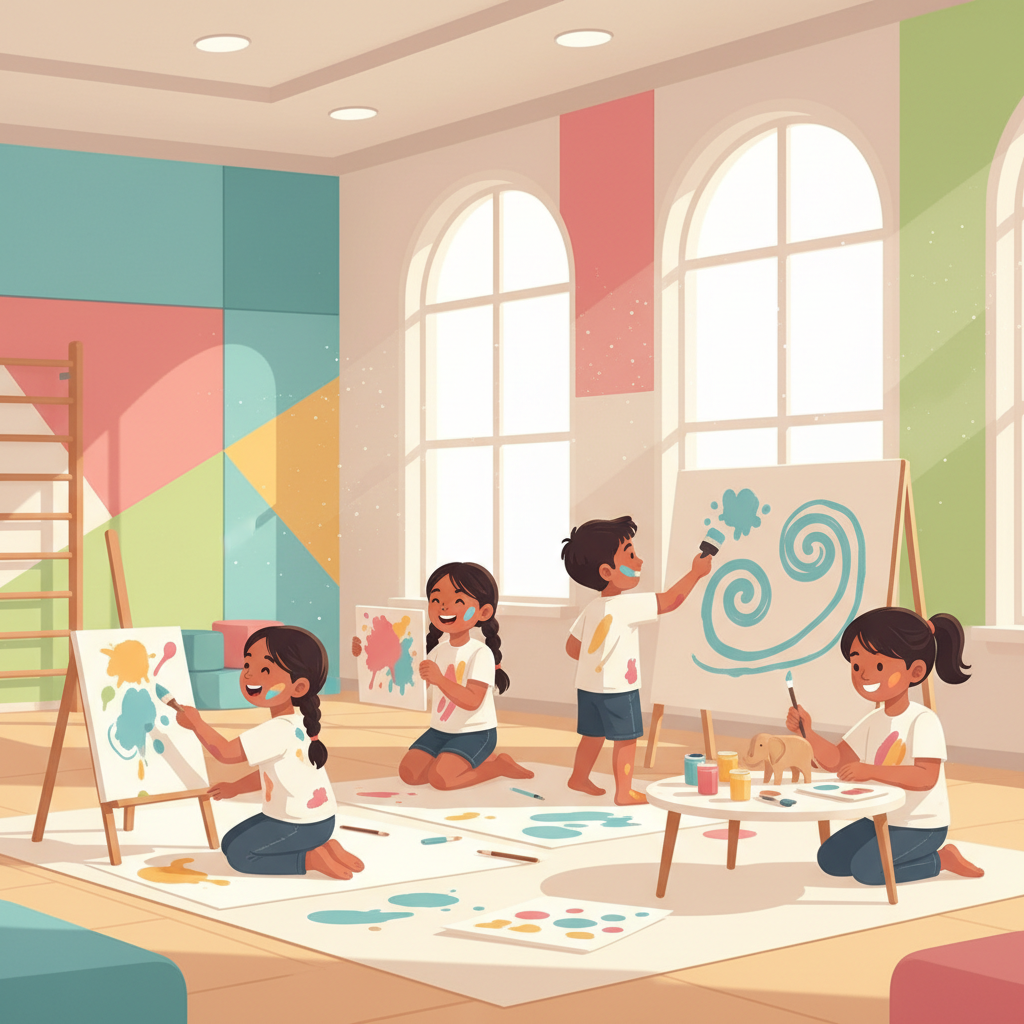
As a parent in Jaipur, you're constantly looking for activities that not only keep your child engaged but also genuinely contribute to their growth. From navigating school choices in Vaishali Nagar to finding enriching after-school programs, every decision feels significant. Today, let's talk about something wonderfully simple yet profoundly impactful: painting. It's more than just a colorful mess; it's a powerful tool for shaping your child's brain and body.
Key Takeaways
- Painting enhances fine motor skills, critical for handwriting and daily tasks.
- It fosters cognitive development, including problem-solving and spatial awareness.
- Emotional expression and stress reduction are significant psychological benefits.
- Age-appropriate materials and guidance are crucial for maximizing benefits.
- You don't need a dedicated art studio; simple setups at home work wonders.
- Look for programs that balance structured learning with creative freedom.
Beyond the Brushstroke: What Painting Does for Your Child's Brain
When your child dips a brush into paint and makes a mark, a symphony of neurological activity begins. It's not just about creating a pretty picture; it's about building neural pathways, strengthening cognitive functions, and developing a deeper understanding of the world around them.
1. Boosting Cognitive Development
Painting engages multiple areas of the brain. Children learn about cause and effect (how different strokes create different textures), spatial relationships (where to place objects on the canvas), and problem-solving (how to mix colors to get a desired shade). This active engagement helps in developing critical thinking skills that extend far beyond the art table.
2. Enhancing Sensory Integration
The feel of the brush, the texture of the paint, the vibrant colors – painting is a rich sensory experience. For many children, especially those who might be particular about textures, it can be a gentle way to explore and integrate sensory information, helping them become more comfortable and confident in their environment.
3. Fostering Emotional Expression and Regulation
Children sometimes struggle to articulate complex feelings with words. Painting offers a non-verbal outlet for emotions. A child might paint an angry red blob or a joyful yellow sun, processing their inner world through color and form. This can be incredibly therapeutic and helps them learn to express and manage their feelings in a healthy way.
"Painting allows children to communicate what they cannot yet say, giving them a voice through their art."
Dr. Rina Sharma, Child Psychologist, JaipurThe Physical Perks: How Painting Strengthens Their Body
While often seen as a sedentary activity, painting provides significant physical benefits, particularly for developing fine motor skills and hand-eye coordination.
1. Developing Fine Motor Skills
Holding a paintbrush, controlling its movement, and making precise strokes are all exercises in fine motor control. These are the same small muscle movements required for writing, buttoning clothes, tying shoelaces, and using utensils. Regular painting can make a noticeable difference in your child's dexterity.
2. Improving Hand-Eye Coordination
The act of looking at the paper and guiding the hand to make the desired mark is a direct exercise in hand-eye coordination. This skill is vital for sports, reading, and even navigating their surroundings safely.
3. Enhancing Bilateral Coordination
Often, one hand holds the paper steady while the other paints, or both hands work together to mix colors or hold a larger brush. This encourages bilateral coordination, where both sides of the body work together efficiently, which is important for many complex movements.
Age-Appropriate Painting: What to Expect and How to Support
Understanding what your child is capable of at different ages helps you provide the right materials and encouragement, without frustration.
| Age Group | Developmental Focus | Recommended Materials | Parental Role |
|---|---|---|---|
| 1-2 Years (Toddlers) | Sensory exploration, gross motor skills, cause & effect. | Non-toxic finger paints, large paper, sturdy brushes. | Supervise closely, allow mess, focus on the process. |
| 3-5 Years (Preschoolers) | Fine motor refinement, color recognition, pre-writing skills. | Washable paints, sponge painters, chunky brushes, easels. | Introduce concepts, encourage storytelling, provide choices. |
| 6-8 Years (Early School Age) | Developing detailed drawing, pattern recognition, self-expression. | Watercolors, tempera, various brush sizes, drawing paper. | Offer gentle guidance, introduce techniques, celebrate effort. |
| 9-12+ Years (Later School Age) | Developing personal style, understanding perspective, complex compositions. | Acrylics, oils (with supervision), canvas, mixed media. | Encourage experimentation, provide resources, discuss art history. |
Tips for Encouraging Painting at Home:
- Set up a dedicated (and safe) space: Even a corner of the dining table with a plastic tablecloth works. Protect your surfaces!
- Embrace the mess: Dress your child in old clothes or an apron. The joy of creation often involves a bit of mess.
- Focus on the process, not just the product: Praise their effort, their color choices, and their ideas, rather than just the 'prettiness' of the final artwork.
- Provide a variety of materials: Beyond brushes, try sponges, cotton balls, leaves, or even their fingers.
- Exhibit their art: Hang their masterpieces on the fridge or a dedicated wall. This boosts their confidence and shows you value their work.
Choosing an Art Program in Jaipur: What to Look For
While home painting is invaluable, structured art programs can offer deeper learning, exposure to different mediums, and a stimulating environment. For parents in Vaishali Nagar, Chitrakoot, or even those commuting from Raja Park or Vidyadhar Nagar, finding the right fit is key.
When evaluating options:
- Qualified instructors: Do they understand child development as well as art?
- Curriculum variety: Does it explore different techniques, artists, and art forms?
- Balance of structure and freedom: Good programs offer guidance but also allow for individual expression.
- Small class sizes: Ensures personalized attention for your child.
- Safe and inspiring environment: Is the space well-lit, clean, and stocked with appropriate materials?
✅ Your Art Program Pre-Enrolment Checklist
For families in Jaipur, especially those around Vaishali Nagar and nearby areas like Nirman Nagar, Champions Studio is preparing to open a new facility that includes dedicated art programs. Their C-Scheme club has already garnered praise for its holistic approach to child development, and their art programs are designed to nurture both skill and imagination. They offer various art activities, ensuring children can explore different mediums and techniques under expert guidance. Many parents, like Diane Singh, have shared how Champions Studio helped their children discover artistic talents.
"Soha focused exclusively on art, which we discovered his talent at your place!"
Diane Singh (parent of Soham & Sasha)Whether you're looking for a structured program that balances creativity with learning, or just want to introduce your child to the joy of color, Champions Studio aims to provide a space where young artists can thrive. Their approach focuses on building confidence and fostering a love for art, rather than just creating masterpieces.
Frequently Asked Questions by Jaipur Parents
Q1: At what age can my child start painting?
A: Most children can safely start exploring finger paints and large brushes around 12-18 months. The key is to use non-toxic, washable paints and supervise closely.
Q2: My child mostly just makes a mess. Is that normal?
A: Absolutely! Especially for toddlers and preschoolers, the process of mixing colors, feeling textures, and experimenting is far more important than creating a recognizable image. Embrace the mess as a sign of active exploration.
Q3: How often should my child paint?
A: Even 15-30 minutes a few times a week can be highly beneficial. The consistency matters more than long, infrequent sessions. Fit it into your schedule naturally, perhaps after school or on weekends.
Q4: What if my child isn't interested in painting?
A: Don't force it. Try offering different mediums (crayons, markers, clay) or integrate art into other activities, like painting rocks or decorating a box. Sometimes, a change of scenery or a peer group, perhaps in a class in Vaishali Nagar, can spark interest.
Q5: Is an art class necessary, or can we just do it at home?
A: Both have their merits. Home-based art encourages free exploration and family bonding. An art class, like those offered at Champions Studio, provides structured learning, exposure to new techniques, and interaction with other children, which can be highly motivating.
Q6: How can I manage the cost of art supplies and classes?
A: Start simple at home with basic washable paints and paper. For classes, understand the pricing structures. For example, Champions Studio offers different plans, from a Standard plan with 1 activity to a Deluxe plan with 6 activities, allowing parents to choose what suits their budget and child's needs. This flexibility can be a real help for families in Jaipur managing various expenses.
Painting is a gift you can give your child—a gift of self-expression, cognitive growth, and physical development. Whether you're setting up a mini studio at home or exploring a dedicated program, remember that the most valuable art is the one created with joy and curiosity.
If you're in Vaishali Nagar and looking for an enriching environment where your child can explore their artistic talents alongside other developmental activities, you might want to register your interest for the upcoming Champions Studio location.