How Painting Shapes Your Child's Brain and Body – A Guide for Jaipur Parents
Discover how painting enhances your child's cognitive, motor, and emotional development. A Jaipur parent's guide to age-appropriate art activities and choosing the right program in Vaishali Nagar.
By Champions Studio Team · Mon Sep 14 2026
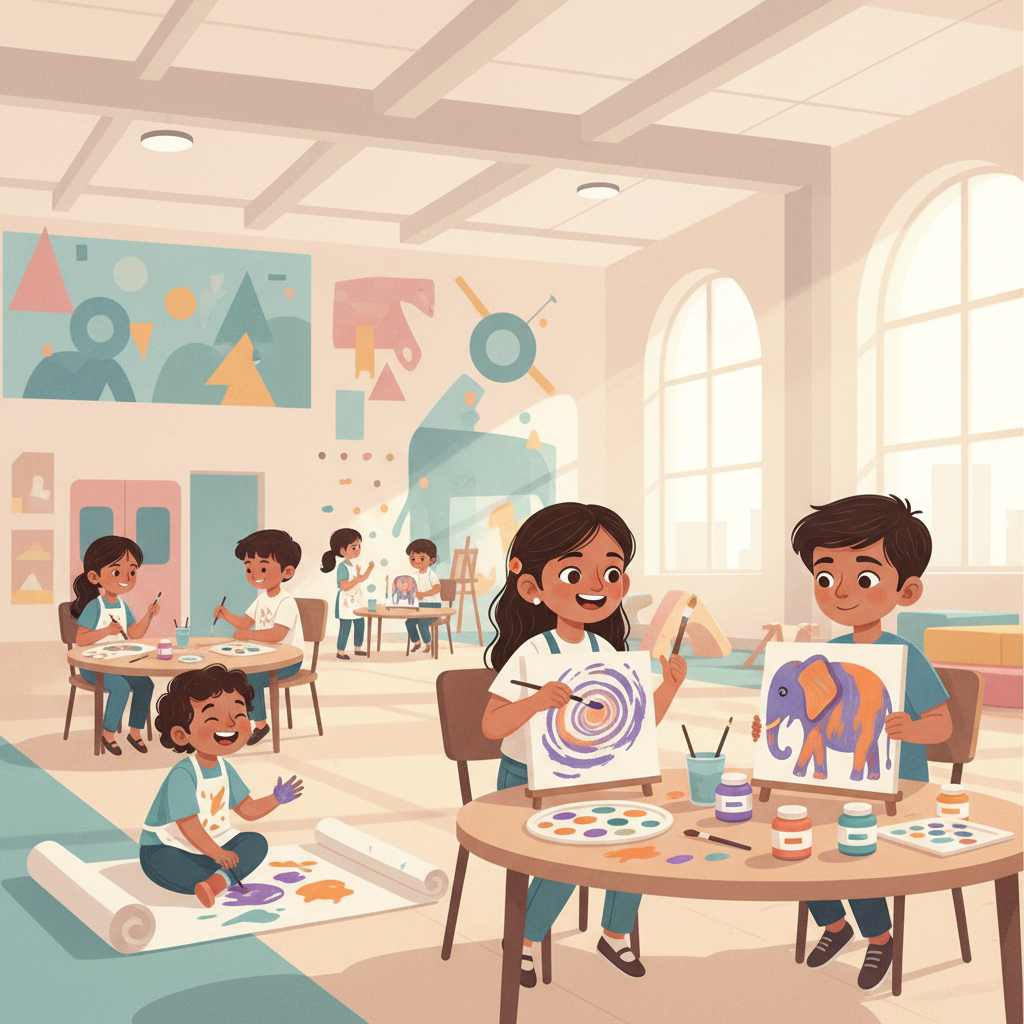
As parents, we're constantly looking for activities that genuinely enrich our children's lives. We want them to learn, grow, and explore their potential, often balancing academic demands with the need for creative expression. In a vibrant city like Jaipur, with its rich artistic heritage, it's natural to wonder how traditional arts like painting can benefit our modern kids.
Painting isn't just a fun pastime; it's a powerful developmental tool. From the moment a toddler grasps a chunky crayon to an older child meticulously blending colors, art engages multiple areas of the brain and body. It's a journey of discovery, problem-solving, and self-expression that offers far more than just a pretty picture.
Key Takeaways
- Painting boosts fine motor skills, hand-eye coordination, and spatial awareness.
- It fosters cognitive development through problem-solving, decision-making, and imaginative play.
- Emotional intelligence and self-expression are significantly enhanced through art.
- Age-appropriate materials and open-ended exploration are crucial for maximizing benefits.
- Consider structured programs in areas like Vaishali Nagar for guided learning and social interaction.
Beyond the Canvas: The Brain-Boosting Magic of Painting
You might think of painting as purely creative, but it's a fantastic workout for your child's brain. When they pick up a brush, their mind is alight with activity, making connections that support learning in all areas.
1. Fine Motor Skills & Hand-Eye Coordination
This is perhaps the most obvious benefit. Holding a brush, squeezing paint, making precise strokes – these actions are incredible for developing the small muscles in your child's hands and fingers. This 'pincer grasp' and dexterity are foundational for tasks like writing, buttoning clothes, and even using cutlery.
The act of translating what their eyes see (or imagine) onto paper requires intense hand-eye coordination. They learn to control their movements, adjust pressure, and make deliberate marks, which improves their overall motor control.
2. Cognitive Development: Problem-Solving and Decision-Making
Every painting session is a series of mini-problems to solve. What color should I use next? How do I make this shape? How can I blend these two colors to get the shade I want? These aren't just artistic choices; they're cognitive exercises.
Children learn cause and effect (e.g., mixing red and yellow makes orange), sequencing (first draw the outline, then fill it in), and spatial reasoning (how objects fit on the page). This unstructured problem-solving builds critical thinking skills vital for school and life.
3. Emotional Expression and Regulation
Children, especially younger ones, don't always have the words to express complex emotions. Painting offers a non-verbal outlet. They can express joy with bright, bold strokes, or frustration with dark, messy splatters. It's a safe space to process feelings.
This emotional release is incredibly healthy. It helps them understand and regulate their feelings, building emotional intelligence. The pride they feel in creating something, regardless of the outcome, also boosts their self-esteem and confidence.
"Painting allows children to communicate what they cannot yet put into words, providing a powerful outlet for their imagination and emotions."
Dr. Maryann Kohl, Author & Art EducatorAge-by-Age Guide: What to Expect and How to Support Your Young Artist
Understanding what's developmentally appropriate helps you set realistic expectations and provide the right support. Remember, the goal isn't perfection, but process and exploration.
Toddlers (1-3 years): Sensory Exploration and Messy Fun
At this age, painting is all about sensory experience. They love the feel of paint, the bright colors, and the sheer joy of making marks. Don't expect masterpieces; expect exploration.
- What they're learning: Cause and effect, color recognition, basic motor control, sensory input.
- Tips for parents: Use non-toxic, washable finger paints. Provide large paper or even an old bedsheet. Let them paint with their hands, feet, sponges, or chunky brushes. Focus on the experience, not the result.
Preschoolers (3-5 years): Storytelling and Emerging Forms
Children in this age group start to be more intentional. They might tell you stories about their paintings, even if they don't look like what they describe. They'll experiment more with different colors and tools.
- What they're learning: Symbolic representation, pre-writing skills, imaginative play, spatial awareness, identifying colors.
- Tips for parents: Offer a variety of brushes, tempera paints, and construction paper. Introduce simple concepts like primary colors. Encourage them to talk about their art: "Tell me about your painting." Ask open-ended questions like, "What's happening here?"
Early Elementary (5-8 years): Detail, Design, and Self-Correction
Now, children gain more control and often want their art to look 'realistic' or represent something specific. They can follow simple instructions and may start to get frustrated if their art doesn't match their vision. This is a great time to introduce basic techniques.
- What they're learning: Fine motor refinement, understanding patterns, perspective, mixing secondary colors, perseverance, problem-solving.
- Tips for parents: Introduce watercolors, acrylics (with supervision), and sketch pads. Encourage them to observe the world around them. Provide art books for inspiration. Focus on effort and experimentation, not just the final product. Help them understand that 'mistakes' are opportunities for new ideas.
| Age Group | Key Developmental Focus | Recommended Materials |
|---|---|---|
| 1-3 Years | Sensory Exploration, Gross Motor | Finger paints, large paper, sponges |
| 3-5 Years | Symbolic Representation, Fine Motor | Tempera paints, chunky brushes, construction paper |
| 5-8 Years | Detail, Planning, Problem-Solving | Watercolors, acrylics, various brushes, sketch pads |
Practical Tips for Encouraging Painting at Home in Jaipur
You don't need a dedicated art studio to foster creativity. Here are some actionable tips for setting up an art-friendly environment at home:
- Designate an Art Zone: This could be a corner of the dining table, a small desk, or even an outdoor space. Cover surfaces with old newspapers or a plastic tablecloth to minimize mess.
- Stock Age-Appropriate Supplies: Keep a rotating selection of paints, brushes, paper, and other craft items accessible. Consider a 'portable art kit' in a sturdy box.
- Embrace the Mess: Painting can be messy, and that's okay! Dress your child in old clothes or an art smock. Focus on the joy of creation, not the cleanliness.
- Focus on Process, Not Product: Instead of asking, "What is it?" try, "Tell me about your colors," or "How did you make that mark?" Celebrate their effort and exploration.
- Display Their Art: Hang their creations on the fridge, a dedicated art wall, or string a line across a room. This validates their efforts and boosts their confidence.
- Join In: Sometimes, the best way to encourage is to participate. Sit down and paint with your child. It's a wonderful bonding experience and shows them that art is for everyone.
✅ Your Pre-Enrolment Checklist for Art Programs
- Understand the Philosophy: Does the program focus on process or product? Is it child-led or instructor-led?
- Instructor Qualifications: What is their background in art and child development?
- Class Size & Environment: Is the space safe, inspiring, and does it allow for individual attention?
- Trial Class: Can your child try a session to see if it's a good fit?
- Flexibility: Does the schedule fit your family's routine, especially with Jaipur's traffic and school timings?
- Location: Is it conveniently located in areas like Vaishali Nagar, Chitrakoot, or Nirman Nagar?
Considering a Structured Painting Program in Jaipur?
While home-based exploration is fantastic, a structured painting program can offer additional benefits. It provides access to a wider range of materials and techniques, expert guidance, and the social aspect of creating alongside peers.
For parents in Vaishali Nagar, Chitrakoot, and nearby areas like Nirman Nagar, you might be looking for options that offer more than just a typical art class. A good program will foster creativity, teach foundational skills, and encourage independent thinking. It's about nurturing an artistic mindset, not just learning to draw a perfect circle.
When evaluating programs, consider if they offer a holistic approach. Do they integrate art with other developmental activities? Are the instructors trained in child-centric methodologies? For example, some centers, like Champions Studio (which has an existing club in C-Scheme and is opening soon in Vaishali Nagar), offer painting as part of a broader curriculum that includes activities like dance, gymnastics, and even 'Little Makers' sessions. This can be particularly beneficial for children who thrive on variety and cross-disciplinary learning.
Such programs often provide dedicated space, quality materials, and a supportive environment where children can experiment without the pressure of making a mess at home. Parents often share how these programs help their children discover hidden talents and build confidence. As Diane Singh, a parent of Soham & Sasha, shared, "Sasha is now focused on tennis and Soham exclusively on art which we discovered his talent at your place." This highlights how a structured environment can reveal and nurture specific passions.
Frequently Asked Questions by Jaipur Parents
Q: At what age should my child start painting?
A: Your child can start painting as early as 12-18 months with non-toxic, washable finger paints. The key is sensory exploration at this age. For more structured activities with brushes, around 2-3 years is a good starting point.
Q: What are the best types of paint for young children?
A: For toddlers and preschoolers, tempera or finger paints are ideal because they are non-toxic, washable, and vibrant. For older children (5+), watercolors and acrylics (under supervision) can be introduced for more detailed work. Always prioritize non-toxic options.
Q: My child only wants to use one color. Is that normal?
A: Yes, it's completely normal! Children often go through phases where they are drawn to a specific color, shape, or theme. This shows focus and deep exploration of that particular element. Encourage it, and they will naturally move on to exploring other colors when ready.
Q: How can I make painting less messy at home?
A: Embrace the mess as part of the creative process! However, you can manage it by using an old shower curtain or plastic tablecloth under their workspace, dressing them in old clothes or a smock, and keeping wet wipes or a damp cloth nearby. Outdoor painting is also a great option, especially during Jaipur's pleasant winter months.
Q: How do I choose a good art class for my child in Jaipur, especially around Vaishali Nagar?
A: Look for programs that emphasize process over product, have experienced instructors with a background in child development, and offer a supportive, inspiring environment. Consider class size, the variety of materials used, and if they offer a trial class. For parents in Vaishali Nagar, exploring local centers or looking at established names like Champions Studio (C-Scheme location, with a new one opening soon in Vaishali Nagar) can be a good starting point to compare philosophies and offerings.
Q: Will painting help my child with school readiness?
A: Absolutely! Painting significantly boosts fine motor skills crucial for writing, develops hand-eye coordination, and enhances cognitive functions like problem-solving and focus. It also fosters creativity and self-expression, which are vital for holistic development and adapting to new learning environments.
Nurturing the Artist Within
In a city as culturally rich as Jaipur, providing opportunities for artistic expression feels particularly apt. Painting offers a unique blend of cognitive, physical, and emotional benefits that contribute significantly to your child's overall development. Whether it's through messy finger painting at home or a structured class in Vaishali Nagar, giving your child the gift of art is an investment in their future.
For those living in Vaishali Nagar, Chitrakoot, Nirman Nagar, or even further afield in Raja Park or Vidyadhar Nagar, and seeking a comprehensive program that includes painting alongside other enriching activities, you might consider exploring options like Champions Studio. They're opening a new club in Vaishali Nagar soon, building on the success of their C-Scheme location, which offers activities from painting to sports, designed to nurture well-rounded children. You can register interest for Vaishali Nagar to learn more about their unique approach to child development.