Music's Magic: Brain & Body Boost for Kids in Malviya Nagar, Jaipur
Discover how music shapes your child's brain and body. Learn age-appropriate activities and practical tips for Jaipur parents, including options in Malviya Nagar.
By Champions Studio Team · Mon Apr 06 2026
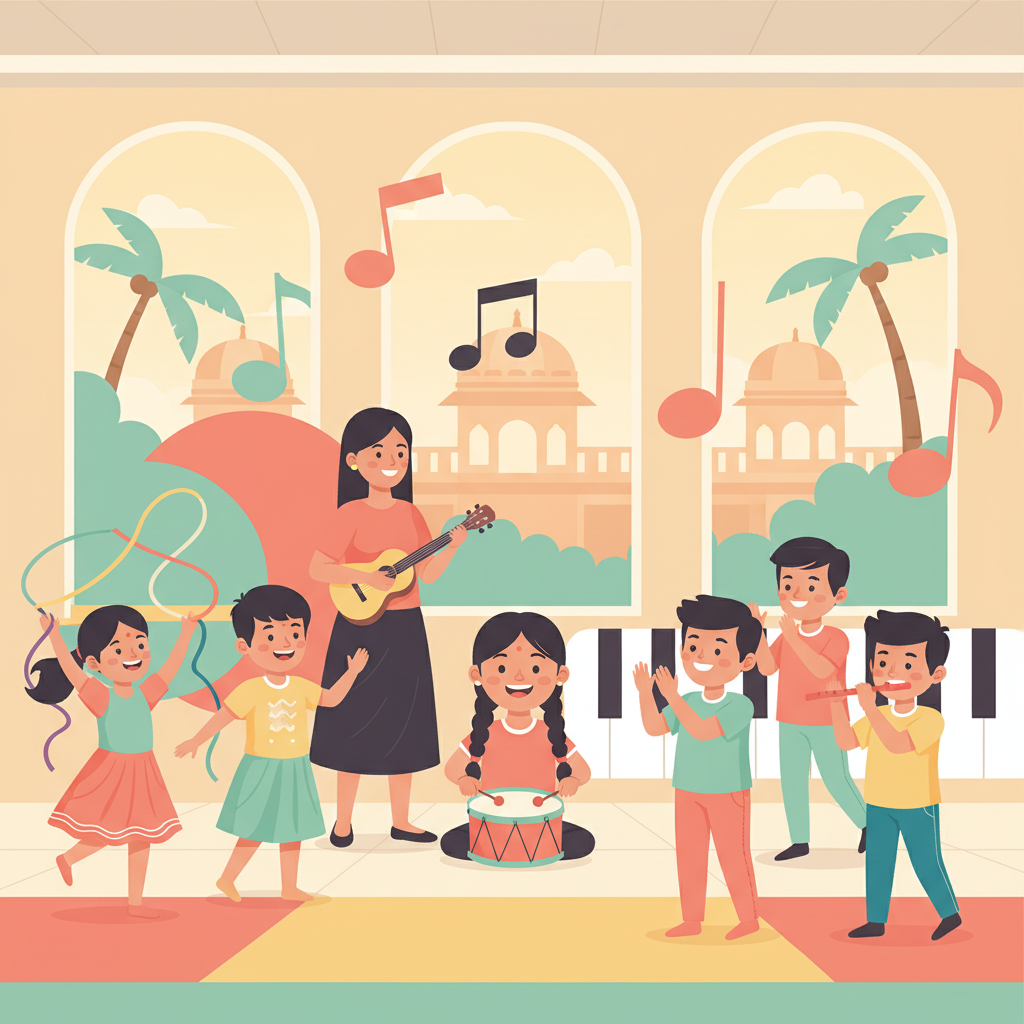
As parents in Jaipur, we're constantly looking for ways to nurture our children's growth. From choosing the right schools to encouraging healthy eating, every decision feels significant. One area that often sparks curiosity, yet sometimes gets overlooked, is the profound impact of music on child development. It's more than just a pleasant sound; it's a powerful tool for shaping young minds and bodies.
Key Takeaways
- Music engages multiple brain regions, boosting cognitive skills like memory, language, and problem-solving.
- Physical benefits range from improved motor skills and coordination to emotional regulation.
- Age-appropriate exposure is crucial: think gentle lullabies for infants, interactive songs for toddlers, and structured lessons for older children.
- You don't need to be a musician to foster a love for music at home; simple activities make a big difference.
- Consider local options like Champions Studio in Malviya Nagar for structured music programs.
The Symphony of Development: How Music Rewires the Brain
When your child listens to music, sings along, or plays an instrument, their brain isn't just passively receiving information. It's actively working, building connections, and strengthening neural pathways. This is why music is often called a 'full-brain workout.'
Think about it: rhythm engages the motor cortex, melody activates auditory processing centers, and lyrics stimulate language areas. Even the emotional response to music involves complex brain activity. This holistic engagement leads to a cascade of developmental benefits.
Cognitive Gains: Beyond the Notes
Research consistently shows a strong link between musical engagement and cognitive development. For instance, children involved in music often display enhanced memory skills. Learning song lyrics or instrumental pieces requires memorization, which trains the brain to retain and recall information more effectively. This skill transfers to academic subjects, helping with everything from remembering historical dates to mathematical formulas.
Language development is another significant beneficiary. Music shares many structural elements with language, such as rhythm, pitch, and phrasing. Singing helps children articulate words, expand their vocabulary, and understand phonetics. For children learning multiple languages, like many families in Jaipur, exposure to diverse musical styles can further enrich their linguistic abilities.
Moreover, music can sharpen problem-solving and critical thinking. Learning an instrument, for example, involves understanding patterns, coordinating movements, and adapting to new challenges. This structured approach to learning fosters a mindset of perseverance and analytical thinking, valuable skills for school and life.
The Rhythmic Body: Music and Physical Development
Music isn't just for the mind; it's for the body too. From a baby's first sway to a teenager's dance moves, music encourages movement and physical expression. These movements are crucial for developing gross and fine motor skills.
Motor Skills and Coordination
When your child claps their hands to a beat, taps their foot, or dances freely, they are practicing rhythm and coordination. These seemingly simple actions help develop their sense of timing and spatial awareness. For younger children, this can mean improved balance and agility. For older children, it translates into better hand-eye coordination, which is vital for sports, writing, and various daily tasks.
Playing an instrument takes this a step further. Imagine the intricate finger movements required to play a piano or a guitar. These activities refine fine motor skills, dexterity, and hand-eye coordination to an exceptional degree. This is why many occupational therapists use music-based interventions to help children with developmental delays.
Emotional Regulation and Social Connection
Beyond the physical, music is a powerful emotional outlet. It can soothe a fussy baby, energize a tired toddler, or help an anxious child find calm. Listening to music or participating in musical activities allows children to explore and express their emotions in a healthy way. This emotional intelligence is a cornerstone of well-being.
Group music activities, like singing in a choir or playing in a band, also foster social skills. Children learn to listen, cooperate, and synchronize with others. They develop a sense of teamwork and belonging, which is particularly important as they navigate social landscapes in schools around areas like Malviya Nagar, Jawahar Nagar, and Tonk Road.
"Vinayak is thriving—thanks to the incredible foundation and care he received at Champions Studio! Thank you for always nurturing not just the children but also the trust of every family who walks through your doors."
Kartikeya R Sharma (parent of Vinayak)Age-Appropriate Musical Journeys
The key to harnessing music's power lies in providing age-appropriate experiences. What's engaging for a toddler might be frustrating for a school-aged child, and vice-versa.
| Age Group | Activity Focus | Benefit Highlights |
|---|---|---|
| Infants (0-12 months) | Lullabies, gentle singing, soft instrumental music. | Calming, auditory development, language exposure. |
| Toddlers (1-3 years) | Action songs, nursery rhymes, dancing, simple instruments (shakers, drums). | Motor skills, vocabulary, emotional expression, rhythm. |
| Preschoolers (3-5 years) | Interactive music classes, singing games, basic instrument exploration. | Social skills, coordination, following instructions, creativity. |
| School-aged (6+ years) | Instrument lessons, choir, band, music theory, composition. | Discipline, advanced cognitive skills, perseverance, self-expression. |
For infants, simply singing to them or playing soothing classical music creates a rich auditory environment. Toddlers thrive on interactive songs with actions, which connect sound to movement. As they grow, introducing simple instruments like shakers or child-safe drums can ignite their curiosity about making sounds.
By school age, many children are ready for more structured learning. This is when formal music lessons can be incredibly beneficial. Whether it's learning the piano, guitar, or traditional Indian classical instruments, the discipline and focus required build strong executive function skills.
Nurturing Musicality at Home: Practical Tips for Jaipur Parents
You don't need to be a professional musician to fill your home with music. Simple, consistent efforts can make a world of difference.
✅ Your Home Music Checklist
- Sing often: Sing lullabies, nursery rhymes, or even made-up songs during daily routines. Your voice is your child's favorite sound.
- Dance together: Put on different genres of music and just move! Encourage free expression and don't worry about perfect steps.
- Listen actively: Play various types of music – classical, folk, pop, Indian classical. Talk about what you hear: 'Is it fast or slow? Loud or soft?'
- Create instruments: Use household items like pots and pans, rice in a bottle, or rubber bands on a box to make simple instruments.
- Attend local events: Keep an eye out for children's music concerts, cultural events, or school performances in Jaipur.
- Limit background noise: While music is good, constant background TV or noise can be overstimulating. Create quiet times too.
Parents in Malviya Nagar or nearby areas like Durgapura and Pratap Nagar might find that local community centers or schools sometimes host music workshops. Even a simple trip to a local music store to explore different instruments can spark a child's interest.
Choosing a Structured Music Program: What to Look For
When your child shows a deeper interest, you might consider enrolling them in a structured music program. This offers expert guidance, peer interaction, and access to specialized equipment.
Considerations:
- Instructor Qualifications: Look for teachers with experience in child development and music education.
- Class Size: Smaller classes often allow for more individualized attention.
- Curriculum: Does it match your child's age and interests? Is it play-based for younger children and more structured for older ones?
- Location and Schedule: For busy Jaipur families, convenience is key. Is it easily accessible from your home or school?
- Trial Classes: Many facilities offer trial classes, which are a great way to gauge your child's interest and comfort level.
A common question from Jaipur families is, "Where can I find quality music education near me?" Parents in Malviya Nagar and surrounding areas are fortunate to have options emerging. For a comprehensive approach to children's activities, including music, Champions Studio is a name that comes up. They offer a variety of programs designed to engage children of different ages and interests.
"Congratulations Sonam! We truly have good memories at your place and kids will never forget! Sasha is now focused on tennis and Soham exclusively on art which we discovered his talent at your place 🙏"
Diane Singh (parent of Soham & Sasha)Champions Studio, with an existing C-Scheme club, is known for its diverse offerings beyond just music, including fitness, dance, and art. This multi-activity approach means children can explore various passions under one roof. Their music programs focus on fostering a love for rhythm and melody, often integrating it with other creative expressions.
Parents in Malviya Nagar often wonder about new, engaging options for their children. Champions Studio is opening a new facility in Malviya Nagar, which will offer music programs among its many activities. This provides a convenient and well-regarded option for local families looking to enrich their child's development through music.
FAQs for Jaipur Parents on Music & Child Development
Q: At what age should my child start formal music lessons?
A: While early exposure to music is always beneficial, most children are ready for formal instrument lessons around 5-7 years old. This is when their fine motor skills, attention span, and ability to follow instructions are sufficiently developed. For younger children (3-5), group music classes focusing on rhythm, singing, and movement are ideal.
Q: My child isn't naturally musical. Should I still encourage music?
A: Absolutely! 'Being musical' isn't just about talent; it's about engagement. The developmental benefits of music – improved cognitive skills, coordination, emotional regulation, and social skills – apply to all children, regardless of their innate ability. The goal is enjoyment and growth, not necessarily becoming a virtuoso.
Q: How much time should my child spend on music activities each day?
A: For younger children, short, frequent bursts of musical activity (5-15 minutes) are more effective than long, infrequent sessions. For older children taking lessons, 15-30 minutes of daily practice is often recommended, but it should be flexible and enjoyable, not a chore. The key is consistency and making it a positive experience.
Q: Are there any specific types of music that are better for child development?
A: Exposure to a wide variety of musical genres is most beneficial. Classical music can enhance focus, folk music connects children to culture, and upbeat music encourages movement. Don't shy away from exposing them to Indian classical, Western classical, jazz, or even contemporary pop. The diversity helps develop a broad appreciation and understanding of musical structures.
Q: What if my child loses interest in music lessons?
A: It's common for children's interests to shift. Instead of forcing them, try to understand why they've lost interest. Is it the instrument, the teacher, or the practice routine? Perhaps a different instrument, a change in teaching style, or a break is needed. Sometimes, taking a break and revisiting it later rekindles their passion. Remember, the journey is more important than achieving a specific outcome.
Q: How can I find good music teachers or programs in Malviya Nagar, Jaipur?
A: Start by asking other parents for recommendations. Local schools and community centers can also be good resources. Online searches for 'music classes Malviya Nagar Jaipur' or 'children's activities Durgapura' will yield options. Consider visiting facilities, observing classes, and asking about teacher credentials and curriculum. For a range of activities, including music, Champions Studio is opening a new branch in Malviya Nagar soon, which could be a convenient option for many families.
Embracing music in your child's life is one of the most enriching gifts you can give them. It's a journey that touches every aspect of their development, fostering not just skills, but also joy and self-expression. For families in Malviya Nagar looking for structured music programs and a host of other enriching activities, you can register interest for Champions Studio's new Malviya Nagar center to learn more about their offerings.