Malviya Nagar Art Classes: What Parents Need to Know
Considering art classes for your child in Malviya Nagar, Jaipur? This guide helps you understand age, benefits, what to look for, and red flags.
By Champions Studio Team · Mon Aug 24 2026
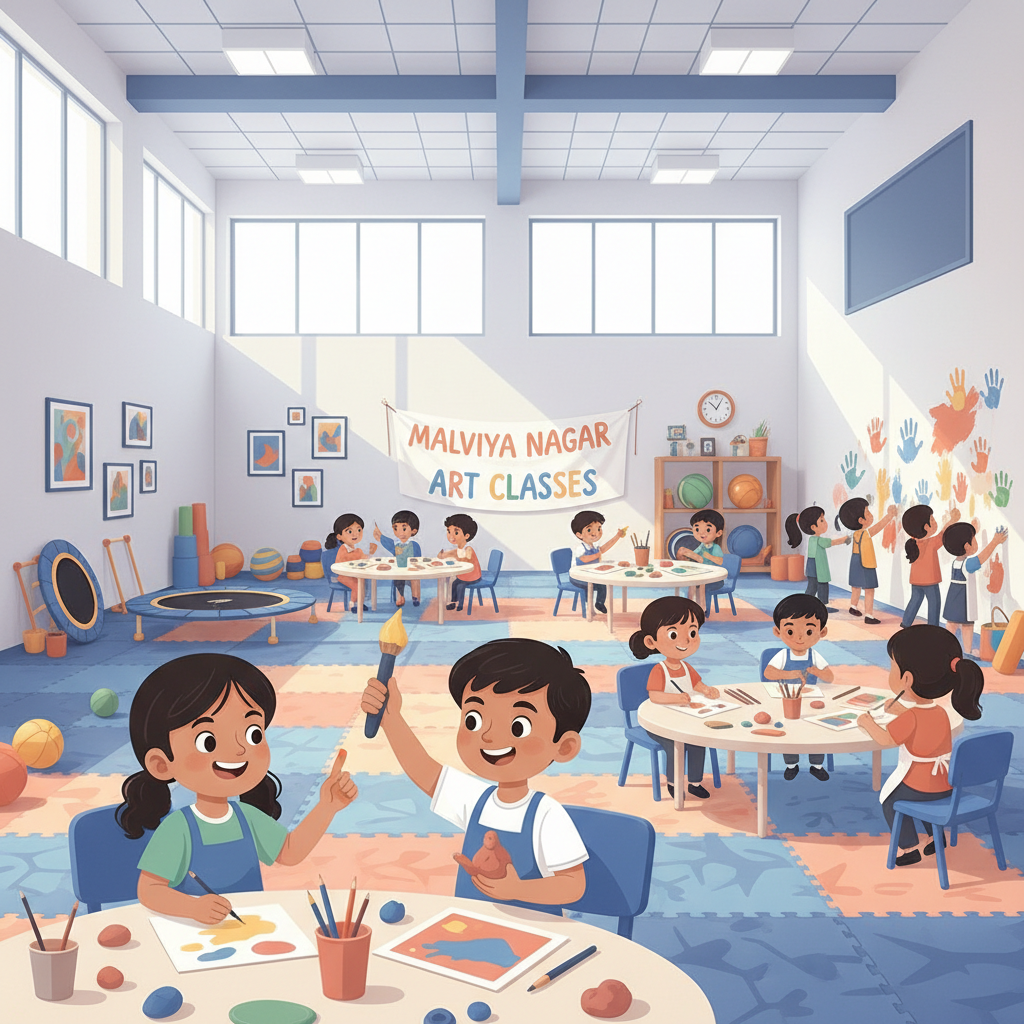
As a parent, you're constantly seeking enriching experiences for your child. In the vibrant city of Jaipur, especially in areas like Malviya Nagar, Jawahar Nagar, and Pratap Nagar, the options for children's activities can feel overwhelming. Among these, art classes often stand out as a wonderful way to foster creativity and development. But how do you choose the right one? What should you truly look for?
It's not just about keeping your child busy; it's about providing an environment where they can truly thrive, express themselves, and develop crucial life skills. Let's explore what makes a great art class and how it can benefit your child.
Key Takeaways
- Start Age: Introduce art informally early; structured classes are best from 3-4 years for group dynamics.
- Beyond Technique: Focus on classes that prioritize process over product, fostering creativity and self-expression.
- Look for: Small class sizes, experienced and patient instructors, diverse materials, and a supportive environment.
- Red Flags: Overly structured 'copy-paste' art, no free play, intimidating instructors, or a focus on competition.
- Benefits: Art boosts fine motor skills, problem-solving, emotional regulation, and confidence.
Why Art Matters: More Than Just Pretty Pictures
When you think of art class, you might envision your child coming home with a masterpiece. While those moments are certainly lovely, the true value of art education for young children goes far deeper than the final product. Art is a powerful tool for holistic development.
It's a language for children before they master words, a way to process emotions, and a playground for their burgeoning imagination. Every stroke, every splash of color, is a step in their developmental journey.
The Developmental Benefits of Art for Children
- Fine Motor Skills: Holding a brush, manipulating clay, cutting paper – these actions strengthen small muscles in the hands and fingers, crucial for writing and daily tasks.
- Cognitive Development: Art encourages problem-solving. How do I make green? What happens if I mix these colors? How do I make this shape? These are all mini-experiments.
- Emotional Expression: Children can express feelings that they might not yet have words for. Art provides a safe outlet for joy, frustration, or curiosity.
- Creativity and Imagination: This is perhaps the most obvious benefit. Art nurtures the ability to think outside the box, to invent, and to see the world in new ways.
- Sensory Exploration: The textures of paint, the smell of clay, the feel of different papers – art engages multiple senses, which is vital for early learning.
- Confidence and Self-Esteem: Completing an artwork, no matter how 'simple', gives a child a sense of accomplishment and pride.
What Age is Right to Start Art Classes?
Parents in Malviya Nagar often wonder, "When is my child ready for an art class?" The truth is, children are natural artists from the moment they can grasp a crayon. Informal art exploration can start as early as 1-2 years old with finger paints, chunky crayons, or playdough at home.
For structured group classes, a good general guideline is between 3 and 4 years old. At this age, children typically have developed enough fine motor control to handle basic tools and can engage in group activities for a sustained period.
| Age Range | Activity Focus | Class Duration |
|---|---|---|
| 1-2 Years | Sensory exploration, free play with safe materials (finger paints, large crayons, playdough). | 15-30 mins (at home, parent-led) |
| 3-5 Years | Experimentation with various mediums, process-oriented art, simple themes. Focus on exploration, not perfection. | 30-45 mins (structured class) |
| 6-8 Years | Introduction to basic techniques, observation, storytelling through art, more complex projects. | 45-60 mins (structured class) |
| 9+ Years | Developing personal style, understanding art history, advanced techniques, longer-term projects. | 60-90 mins (structured class) |
Remember, every child develops at their own pace. Observe your child's interest and attention span. If they show curiosity, enjoy messy play, and can follow simple instructions, they might be ready.
What to Look for in a Great Art Class in Jaipur
Finding the right fit for your child in a city like Jaipur, with its many options, requires a discerning eye. It's not just about convenience or cost; it's about the environment and philosophy of the class. Here’s what truly matters:
1. The Instructor: More Than Just an Artist
A good art instructor for children is not just a talented artist; they are a patient guide, a keen observer, and a skilled facilitator. They should understand child development and how to encourage creativity without imposing their own vision.
- Patience and Encouragement: Look for instructors who praise effort and exploration, not just the 'best' outcome.
- Understanding of Child Development: Do they tailor activities to different age groups? Are they comfortable with varied skill levels?
- Enthusiasm: An instructor who genuinely loves what they do will inspire that same passion in your child.
- Process Over Product: The best instructors focus on the journey of creating, allowing children to experiment freely.
2. The Environment: A Space for Exploration
The physical space of the art studio plays a significant role in your child's experience.
- Child-Friendly and Safe: Is it clean, well-lit, and equipped with child-safe materials?
- Organized but Flexible: A space that allows for focused work but also encourages movement and exploration.
- Inspirational: Does the studio display children's art? Does it feel like a place where creativity is celebrated?
- Location and Accessibility: For parents in Malviya Nagar, considering proximity to areas like Tonk Road or Durgapura can be important for commute times.
3. Class Structure and Philosophy: Nurturing Creativity
This is where many classes differ significantly. A truly beneficial art class will prioritize the child's creative journey.
- Small Class Sizes: This ensures individual attention and allows the instructor to connect with each child.
- Variety of Materials: Exposure to paint, clay, pastels, collage, sculpture, and recycled materials broadens their artistic vocabulary.
- Open-Ended Projects: Activities that allow for individual interpretation rather than a single 'right' way to do things.
- Time for Free Expression: A good class will balance structured activities with opportunities for children to create whatever they wish.
- No Copying: While learning from masters is part of art education, young children should be encouraged to create their own unique pieces, not just replicate an instructor's example.
"Champions has a major role in shaping his early years and wish we could have continued there further."
Vedika Kedia (parent of Rudr)Champions Studio, for instance, with its new Malviya Nagar club opening soon, emphasizes this process-oriented approach. They offer a diverse range of creative activities, including painting and general art, designed to let children explore various mediums and express themselves freely. Their approach aligns with fostering independent thought and joy in creation, not just perfect replicas.
Red Flags to Watch Out For
Just as there are indicators of a great art class, there are also warning signs that a program might not be the best fit for your child's development.
- Identical Artwork: If every child's painting looks exactly the same, it suggests a 'copy-paste' approach that stifles individual creativity.
- Overly Strict Rules: While some structure is necessary, a class that prioritizes neatness and adherence to rigid rules over exploration can be counterproductive.
- Lack of Materials: A limited range of materials or a reluctance to let children experiment can hinder their growth.
- Instructor Who Takes Over: An instructor who finishes a child's artwork or constantly corrects them might be well-intentioned but can undermine confidence.
- Focus on Competition/Exhibition: For young children, art should be about personal joy, not external validation or pressure to perform.
Your Pre-Enrolment Checklist for Art Classes
✅ Your Pre-Enrolment Checklist
- Visit the studio or ask for photos/videos. Does it feel welcoming and child-friendly?
- Observe a class if possible. How do the children interact? How does the instructor guide them?
- Ask about the class philosophy: Is it process-oriented or product-oriented?
- Inquire about class size and teacher-to-student ratio.
- Check the variety of materials offered.
- Ask about trial classes or introductory sessions.
- Clarify the fee structure and what it includes (materials, etc.).
- Talk to other parents whose children attend the class.
- Consider the commute from Malviya Nagar or nearby areas like Pratap Nagar or Durgapura.
Making Art a Part of Daily Life at Home
Even the best art class is just one piece of the puzzle. You can significantly support your child's artistic journey at home, too! Parents in Jaipur, despite busy schedules, can easily incorporate art into their routines.
- Designate an Art Space: A small corner with art supplies can invite creativity.
- Provide Open-Ended Materials: Paper, crayons, washable paints, playdough, recycled items – keep them accessible.
- Focus on the Process: Instead of asking, "What is it?" try, "Tell me about your drawing," or "I see you used a lot of blue here!"
- Display Their Art: Hang their creations proudly, even if it's just on the fridge. This validates their efforts.
- Join In: Sit down and create alongside your child without directing their work. It's a wonderful bonding activity.
Frequently Asked Questions by Jaipur Parents
Q: How much do art classes for kids typically cost in Jaipur?
A: The cost can vary widely based on the duration, frequency, instructor's experience, and materials provided. Generally, you might expect to pay anywhere from ₹1,500 to ₹8,000 per month. Some centers, like Champions Studio, offer different packages; for example, their premium package, which includes art among other activities, is around ₹8,500 per month for multiple sessions a week.
Q: Are online art classes effective for young children?
A: For very young children (under 6), in-person classes are generally more beneficial as they offer hands-on sensory experience, direct interaction with instructors, and social engagement. For older children or for specific skill-based learning, online classes can be a good supplementary option, especially for parents in areas like Malviya Nagar looking for flexibility.
Q: My child is shy. Will an art class help them open up?
A: Absolutely! Art provides a non-verbal outlet for expression, which can be less intimidating for shy children. A supportive art environment, where creativity is celebrated without judgment, can significantly boost a child's confidence and encourage them to connect with others through shared creative experiences.
Q: Should I enroll my child in a class that focuses on specific art forms like pottery or drawing?
A: For younger children (under 8-9), it's generally better to start with classes that offer a broad exploration of different mediums (painting, drawing, collage, sculpture). This helps them discover what they enjoy and what comes naturally. Once they show a strong interest in a particular form, you can then consider specialized classes.
Q: How do I know if the art materials used are safe for my child?
A: Always ask the art studio about the materials they use. Ensure they are non-toxic, especially for younger children who might put things in their mouths. Look for labels like "AP Certified Non-Toxic" or "Conforms to ASTM D-4236." Reputable centers prioritize child safety in their choice of supplies.
Q: What if my child doesn't seem to be 'good' at art?
A: 'Being good' at art for children isn't about producing gallery-worthy pieces; it's about the process, the exploration, and the joy of creation. Encourage their effort and unique perspective. The benefits of art come from engagement, not perfection. A good art class will never make a child feel like they aren't 'good enough'.
Final Thoughts
Choosing an art class for your child in Malviya Nagar, or anywhere in Jaipur, is an investment in their holistic development. It's about providing them with a space to explore, imagine, and express themselves freely. Look for a place that prioritizes the journey of creation over the final product, led by passionate and child-centric instructors.
If you're exploring options in Malviya Nagar, consider learning more about the upcoming Champions Studio in Malviya Nagar. They offer a range of activities, including art, with a philosophy centered around nurturing young minds. You can also visit their C-Scheme club to get a feel for their environment and explore activities they offer, including painting and other creative outlets, designed to inspire and engage children.