Kids' Painting Classes in Malviya Nagar, Jaipur: A Parent's Guide
Discover how painting benefits your child's development and what to look for in classes in Malviya Nagar, Jaipur. Learn about age-appropriate activities and red flags.
By Champions Studio Team · Fri Jul 24 2026
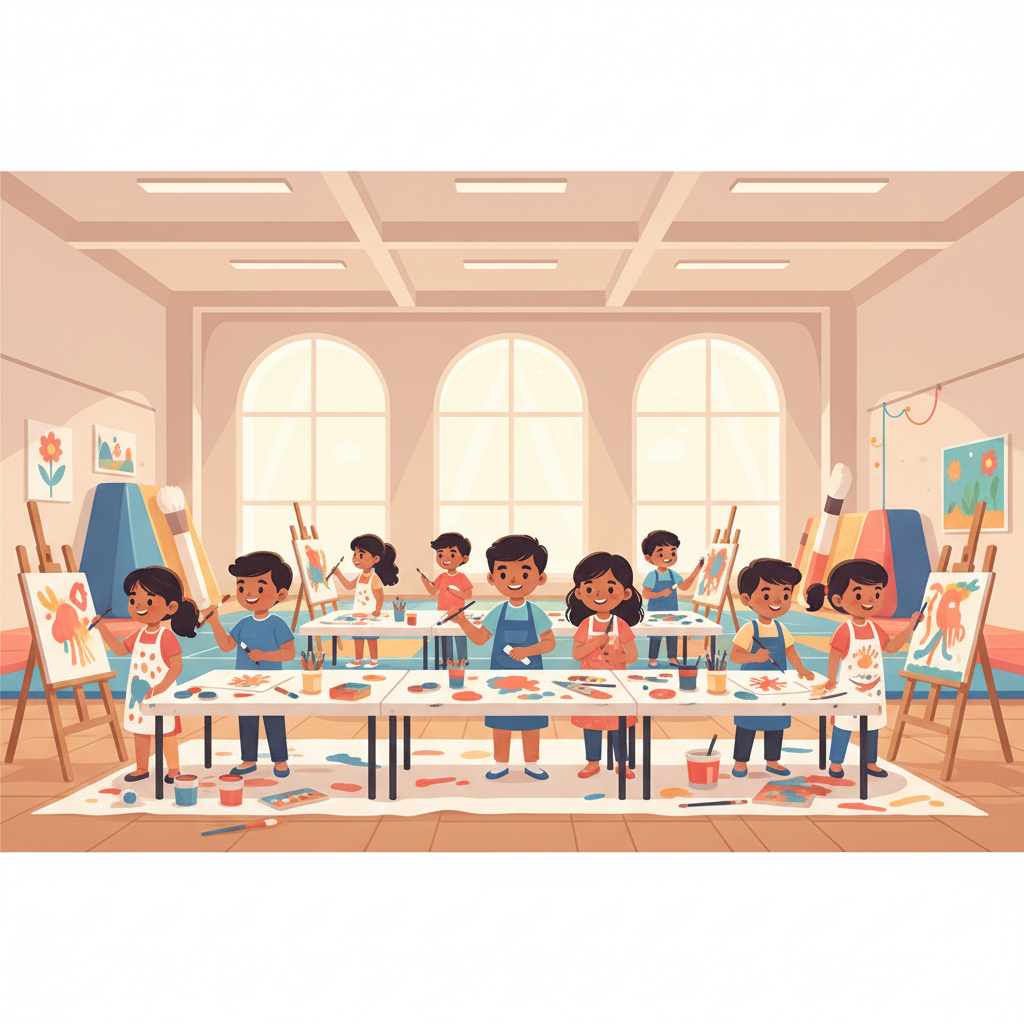
As parents in Jaipur, we often seek enriching activities that spark our children's creativity and support their holistic development. Painting, with its vibrant colours and boundless possibilities, is often high on that list. But navigating the options, especially in bustling areas like Malviya Nagar and its surroundings like Jawahar Nagar or Durgapura, can feel overwhelming. How do you choose the right class? What benefits should you expect? And what's worth paying attention to before you enrol your little artist?
Key Takeaways
- Painting isn't just about art; it’s a powerful tool for cognitive, emotional, and motor skill development in children.
- Consider your child's age and developmental stage when choosing a class; structured lessons aren't always best for very young children.
- Look for studios that prioritize process over product, encourage exploration, and maintain a safe, stimulating environment.
- A good class fosters independence, offers diverse materials, and has engaged, supportive instructors.
- Be wary of overly rigid curriculums, crowded classes, or a lack of transparency regarding materials and safety.
Why Painting is More Than Just Fun for Your Child
It’s easy to see painting as simply a recreational activity, but its impact on a child's development is profound and far-reaching. From the moment they dip a brush into paint, children are engaging multiple parts of their brain and body. It's a journey of discovery, not just of colour and form, but of self and the world around them.
Think about the simple act of choosing a colour. This involves decision-making and expressing a preference. Mixing colours teaches basic science concepts without a single textbook. The strokes they make, whether bold or delicate, refine their fine motor skills, which are crucial for tasks like writing and self-care later on.
Cognitive Benefits: Beyond the Canvas
Painting stimulates problem-solving. How do I make the sky look like it's raining? What colour do I need for the grass? These aren't just artistic questions; they're cognitive challenges. It also enhances observational skills as children try to represent what they see or imagine.
Furthermore, painting encourages critical thinking. Children learn cause and effect (e.g., too much water makes the paint runny) and develop their memory as they recall techniques or colours they've used before. This creative exploration lays foundational pathways for academic learning in subjects like maths and science.
Emotional and Social Development Through Art
Art provides a safe outlet for children to express emotions that they might not yet have the words for. Frustration, joy, sadness – all can be conveyed through colours and strokes. This emotional release is vital for mental well-being and self-regulation.
In a group setting, painting classes can also foster social skills. Children learn to share materials, respect each other's space, and appreciate diverse interpretations of a theme. While art is often solitary, the shared experience in a class can build confidence and a sense of community.
Physical Development: The Hands-On Advantage
The physical act of painting is a fantastic workout for developing muscles. Holding brushes, squeezing paint tubes, and making controlled movements strengthens fine motor skills and hand-eye coordination. These are the same skills needed for writing, tying shoelaces, and using utensils.
Gross motor skills also get a boost, especially in classes that encourage movement around an easel or large canvases. Standing, reaching, and moving the arm freely contribute to overall physical development and body awareness.
What Age is Right to Start Painting Classes?
This is a common question for parents in Jaipur. The truth is, children can engage with art from a very young age, but the type of engagement changes dramatically with their developmental stage. Formal 'classes' might not be suitable for toddlers, but guided exploration certainly is.
| Age | Typical Engagement | Focus for Classes |
|---|---|---|
| 1-2 years | Sensory exploration (finger painting, squishing) | Process-oriented, mess-friendly, parent-accompanied |
| 3-4 years | Scribbling, developing basic shapes, colour recognition | Free exploration, simple tools (large brushes, sponges), storytelling through art |
| 5-7 years | More defined representations, interest in specific subjects, basic techniques | Introduction to colours, shapes, simple themes, encouraging individuality |
| 8+ years | Developing personal style, exploring mixed media, more complex techniques | Skill building, art history, diverse mediums, critical thinking about art |
For the youngest artists, say 1-3 years old, the focus should be purely on sensory experience. Think finger painting, exploring textures, and making a mess without pressure to create a 'masterpiece'. Parent-child classes, like the 'Cuddle & Crawl' or 'Little Makers' programs offered at places like Champions Studio, are ideal for this age, allowing for guided, safe exploration.
As children grow older, around 4-6 years, they start to develop more control and intent. They might begin to draw recognizable shapes or try to represent objects. Classes for this age group should still prioritize process over product, but can introduce basic tools and concepts like primary colours.
By 7-8 years and beyond, children are often ready for more structured learning, where they can explore different mediums, learn specific techniques, and develop their own artistic voice. Even then, the emphasis should remain on creative expression and enjoyment, not just technical perfection.
What to Look For in a Painting Class in Malviya Nagar
Parents in Malviya Nagar, Tonk Road, or Pratap Nagar have several choices, but knowing what truly matters can simplify your decision. It's not just about proximity or price; it's about the philosophy of the studio and the environment they create.
1. Philosophy: Process Over Product
A truly beneficial art class celebrates the journey, not just the destination. Look for studios that emphasize experimentation, exploration, and the joy of creation, rather than producing identical finished pieces. Children should feel free to make mistakes and try new things without fear of judgment.
"Champions Studio has a major role in shaping his early years and wish we could have continued there further."
Vedika Kedia (parent of Rudr)2. Qualified and Engaging Instructors
The instructor is key. They should be passionate about art and, crucially, about teaching children. Look for teachers who are patient, encouraging, and skilled at guiding young artists without imposing their own style. They should be able to adapt to different learning styles and developmental levels.
3. Safe and Stimulating Environment
Is the studio clean, well-lit, and child-friendly? Are the materials non-toxic and age-appropriate? A good painting class will have a designated space that is inspiring and organized, yet allows for creative mess. Consider the location too; for families in Malviya Nagar, ease of access and safety during drop-off and pickup are important.
4. Variety of Materials and Techniques
Children thrive on novelty. A good class will expose them to a range of art materials – tempera, watercolors, acrylics, pastels, clay, collage – and different techniques. This broadens their artistic vocabulary and keeps them engaged. If every class uses the same simple set of paints, it might not be offering enough.
5. Class Size and Individual Attention
Smaller class sizes generally mean more individual attention for your child. While a bustling environment can be fun, ensure that the instructor can still provide personalized guidance and support to each student. Ask about the student-to-teacher ratio.
✅ Your Pre-Enrolment Checklist
- Is the studio's philosophy process-oriented or product-oriented?
- What are the qualifications and teaching style of the instructors?
- Is the facility safe, clean, and well-equipped with non-toxic materials?
- Does the curriculum offer a variety of mediums and techniques?
- What is the student-to-teacher ratio?
- Can you observe a class or speak with other parents?
- Are the class timings and location convenient for your family (e.g., near Malviya Nagar)?
- What's the overall vibe? Does it feel welcoming and inspiring?
What Does a Good Painting Session Look Like?
Imagine walking into a painting class at a place like Champions Studio. What should you expect to see that indicates it's a quality program?
- A Welcoming Start: Children are greeted warmly, perhaps with a quick icebreaker or a story related to the day's theme.
- Clear, Age-Appropriate Instructions: The instructor explains the activity in simple terms, demonstrating techniques without making it prescriptive.
- Freedom to Explore: Children are given materials and encouraged to interpret the theme in their own way. There's no pressure for everyone's artwork to look the same.
- Supportive Guidance: The instructor circulates, offering help, asking open-ended questions (e.g., "What will happen if you mix these two colours?"), and providing positive reinforcement.
- Ample Time: Children aren't rushed. They have enough time to get absorbed in their work, experiment, and complete their pieces at their own pace.
- Clean-up and Reflection: Towards the end, children are guided to help clean up, fostering responsibility. There might be a brief sharing session where children can talk about their art, building confidence and communication skills.
Red Flags to Watch Out For
While many studios genuinely aim to provide excellent experiences, it’s important to be discerning. Here are some signs that a painting class might not be the best fit for your child:
- Overly Rigid Curriculum: If every child's finished painting looks identical, it suggests a focus on replication rather than creativity.
- Lack of Safety or Cleanliness: Untidy spaces, uncleaned brushes, or a failure to use non-toxic materials are major concerns.
- Instructor Disengagement: An instructor who is more focused on their phone, talks down to children, or shows impatience is a clear red flag.
- Pressure for Perfection: If children are made to feel their art isn't 'good enough' or are constantly corrected to achieve a specific outcome, it stifles creativity.
- Hidden Costs or Material Limitations: Ensure transparency about what materials are included and if there are extra charges for certain supplies.
- Crowded Classes with Limited Space: If children are bumping elbows and struggling for space, it can lead to frustration and hinder their ability to work freely.
"Sasha is now focused on tennis and Soham exclusively on art which we discovered his talent at your place 🙏"
Diane Singh (parent of Soham & Sasha)Parents in Malviya Nagar often wonder... (FAQ)
Q: What kind of paint is safest for young children?
A: For young children, especially toddlers and preschoolers, water-based, non-toxic tempera paints or finger paints are ideal. They are washable and safe if accidentally ingested in small amounts. Always check for labels like 'AP Certified' or 'Non-Toxic'.
Q: My child makes a lot of mess when painting. Is that normal?
A: Absolutely! Mess is a natural and often beneficial part of creative exploration, especially for younger children. It allows them to engage all their senses and experiment without inhibition. A good art class will anticipate and manage this mess, providing appropriate protection like smocks and designated messy areas.
Q: How often should my child attend painting classes?
A: Consistency is more important than intensity. Even one session a week can provide significant benefits. For younger children, shorter, more frequent sessions might be better than long, infrequent ones. Consider your child's interest and energy levels.
Q: What if my child isn't 'good' at painting?
A: There's no such thing as being 'good' or 'bad' at painting, especially for children. The value lies in the process, the exploration, and the expression. Encourage effort and enjoyment, not perfection. Every child's artistic journey is unique.
Q: Are there painting classes in Malviya Nagar that also offer other activities?
A: Yes, many activity centres, including some new ones opening, offer painting as part of a broader curriculum. Champions Studio, for example, which has an existing C-Scheme club, offers painting alongside activities like Dance, Gymnastics, and Little Makers programs. This can be convenient for parents looking for multiple engagements for their child.
Q: How do I balance creative freedom with learning techniques?
A: A skilled instructor finds this balance. They might introduce a technique (like blending colours) and then give children the freedom to apply it in their own creative projects, rather than just copying a sample. The goal is to equip them with tools, not to dictate their art.
Choosing a painting class for your child in Malviya Nagar, Jaipur, is about more than just finding a place to send them. It's about investing in their creativity, their emotional well-being, and their overall development. By understanding what makes a good program and what to look out for, you can make an informed decision that genuinely benefits your little artist.
For families in Malviya Nagar looking for a holistic approach to child development, including engaging painting programs, you might be interested to know that Champions Studio, renowned for its diverse activities and child-centric approach, is opening a new centre in your area. You can register your interest for the Malviya Nagar location to learn more about their painting classes and other offerings.