Kids' Fitness in Malviya Nagar, Jaipur: Your Enrolment Guide
Deciding on kids' fitness in Malviya Nagar? Learn age-appropriate activities, what to look for in a facility, and how to choose the right fit for your child's development.
By Champions Studio Team · Sat Jun 20 2026
Key Takeaways
- Start formal, structured fitness activities as early as 3-5 years with focus on play and fundamental movements.
- Prioritise certified instructors, age-appropriate curriculum, and a safe, engaging environment over intense training.
- Look for classes that encourage participation, build confidence, and integrate fun into physical activity.
- Be wary of overly competitive environments, unqualified staff, or facilities that push children beyond their physical limits.
- Regular physical activity significantly boosts cognitive skills, emotional regulation, and social development, not just physical health.
As parents in Jaipur, we’re constantly navigating the balance between screen time and active play for our children. With the bustling energy of areas like Malviya Nagar, Jawahar Nagar, and Durgapura, finding the right outlet for your child’s physical development can feel like a significant decision. It's not just about burning energy; it's about building a foundation for lifelong health, confidence, and essential life skills.
This guide aims to cut through the noise and provide practical, expert-backed advice on choosing the right fitness activity for your child in Malviya Nagar and surrounding areas. We’ll cover everything from when to start to what questions to ask, ensuring you make an informed choice that genuinely benefits your child.
When is the Right Age to Start Kids' Fitness Activities?
This is one of the most common questions from parents, and the answer often surprises them. While babies naturally explore movement, structured fitness activities can begin much earlier than many think, albeit in age-appropriate ways. It's not about lifting weights at five, but about fostering a love for movement.
The Early Years (Ages 0-2): Cuddle & Crawl, Discovery Play
For infants and toddlers, movement is integrated into daily life. Think of it as 'discovery play.' Activities like tummy time, crawling, walking, and exploring safe environments are their primary forms of physical activity. Programs like 'Cuddle & Crawl' found in places like Champions Studio are designed to enhance these natural movements through sensory play and parent-child interaction, building foundational motor skills in a nurturing setting.
Preschoolers (Ages 3-5): Fun, Games & Fundamental Skills
This is a fantastic age to introduce structured physical activity. The focus should be entirely on fun, play, and developing fundamental movement skills (FMS) like running, jumping, throwing, catching, and kicking. Look for classes that use games, music, and imaginative play to keep children engaged. The goal is participation and enjoyment, not perfection. This age group benefits immensely from activities that build coordination and balance.
School-Aged Children (Ages 6-12): Skill Development & Teamwork
As children enter school, their coordination improves, and they can follow more complex instructions. This is an ideal time to introduce specific sports or activities like swimming, soccer, basketball, gymnastics, or skating. The emphasis should still be on skill development, sportsmanship, and teamwork, rather than intense competition. Children at this age are also developing social skills, which team activities can greatly enhance.
Adolescents (Ages 13+): Specialisation & Personal Goals
Teenagers might start to show interest in specialising in a particular sport or activity, or they might prefer fitness approaches like dance, martial arts, or gym workouts (under supervision). The key is to support their interests while ensuring they maintain a balanced approach to fitness and avoid overtraining. This age group can also benefit from understanding the health benefits of exercise and setting personal fitness goals.
| Age Group | Focus | Activity Examples |
|---|---|---|
| 0-2 Years | Discovery, foundational movements | Tummy time, crawling, sensory play, parent-child movement classes (e.g., Cuddle & Crawl) |
| 3-5 Years | Fun, fundamental motor skills | Play-based fitness, basic gymnastics, swimming lessons, dance, simple ball games |
| 6-12 Years | Skill development, teamwork, sportsmanship | Soccer, basketball, swimming, skating, gymnastics, organised dance, martial arts |
| 13+ Years | Specialisation, personal goals, balanced fitness | Specific sports, dance, fitness training (supervised), martial arts, yoga |
What to Look For in a Kids' Fitness Class or Program
Choosing a class involves more than just picking a convenient location in Malviya Nagar or Durgapura. It’s about evaluating the program’s philosophy, safety, and suitability for your child.
1. Qualified and Engaging Instructors
This is non-negotiable. Instructors should have certifications in child fitness, first aid, and ideally, experience working with children. More importantly, they should be enthusiastic, patient, and skilled at making activities fun. Ask about their background and how they handle different energy levels and personalities. A good instructor knows how to motivate without being overly pushy.
2. Age-Appropriate Curriculum
Ensure the activities are tailored to the developmental stage of your child. For younger children, classes should be about exploration and basic movements. For older kids, the curriculum can introduce more complex skills but should always prioritise safety and proper technique over competitive outcomes. A common question from Jaipur families is how programs adapt to various age groups, so don't hesitate to ask for a detailed class breakdown.
3. Safety First: Facilities and Supervision
Visit the facility. Is it clean, well-maintained, and safe? Look for appropriate equipment, soft flooring where needed, and clear safety protocols. How many children are in a class, and what is the instructor-to-child ratio? Adequate supervision is crucial, especially for activities like swimming or gymnastics. Parents in Malviya Nagar often wonder about the safety standards, so check if the facility meets local guidelines.
4. Focus on Fun and Positive Reinforcement
Children learn best when they are enjoying themselves. A good fitness program will use praise, encouragement, and playful methods to build confidence and a positive association with physical activity. Avoid programs that focus heavily on winning or create an overly competitive atmosphere, especially for younger children. The goal is to nurture a love for movement, not to create tiny athletes under pressure.
5. Opportunities for Social Development
Many fitness activities naturally foster social skills. Look for programs that encourage teamwork, communication, and sportsmanship. These interactions teach children valuable lessons about sharing, cooperation, and respecting others, which are just as important as physical prowess.
6. Flexibility and Communication
Life happens, especially with children. Inquire about make-up classes, trial periods, and how the facility communicates with parents regarding schedules, progress, or any concerns. A transparent and accommodating approach shows they value their families.
✅ Your Pre-Enrolment Checklist
- Instructor Qualifications: Certified in child fitness, first aid, background checked?
- Curriculum Appropriateness: Matches your child's age and developmental stage?
- Facility Safety: Clean, well-maintained, appropriate equipment, good supervision?
- Program Philosophy: Focus on fun, positive reinforcement, skill development, or intense competition?
- Class Size & Ratio: Manageable class sizes, adequate instructor-to-child ratio?
- Trial Class: Can your child try a session before committing?
- Feedback Mechanism: How do instructors communicate about your child's progress?
- Logistics: Convenient timings, make-up policies, proximity (e.g., easy commute from Tonk Road or Pratap Nagar)?
What Does a Good Kids' Fitness Session Look Like?
Imagine observing a class. What would you hope to see?
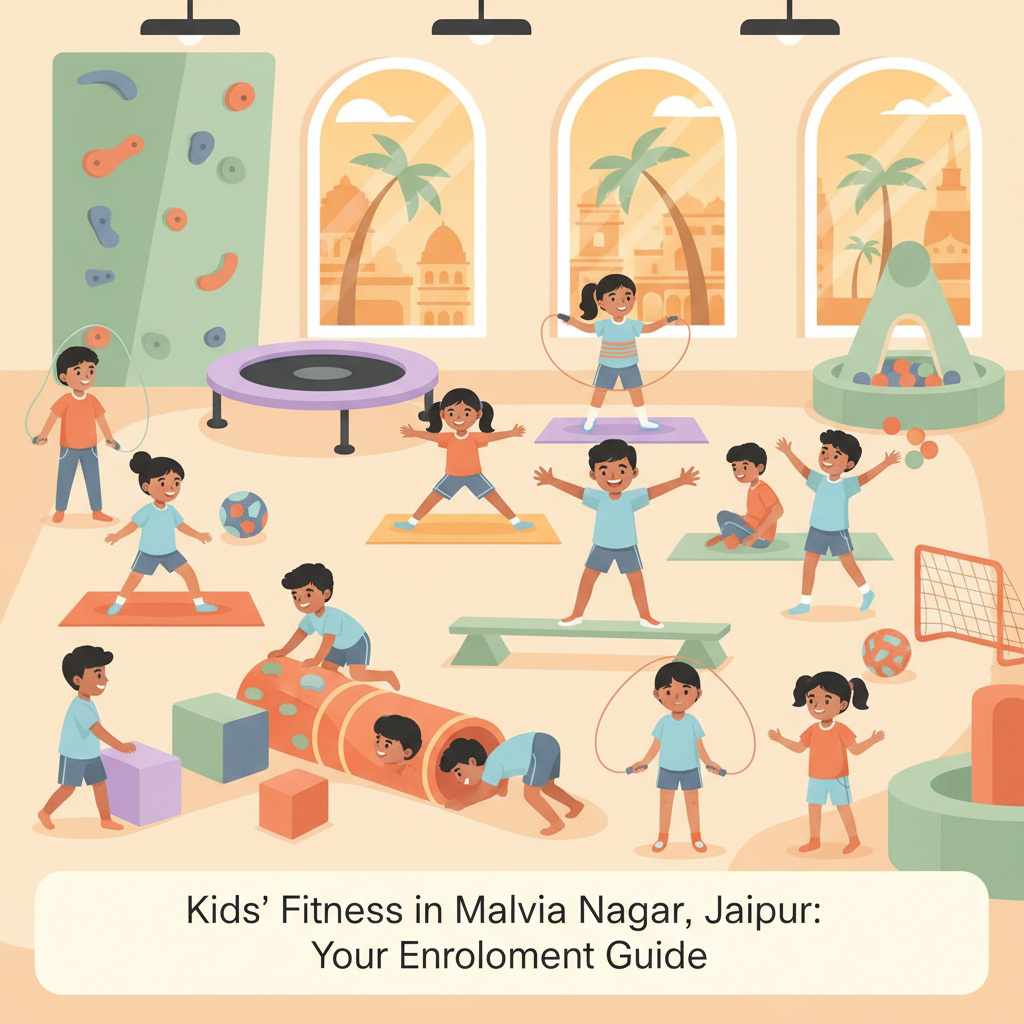
- Warm-up (5-10 minutes): Gentle movements, stretching, and light cardio to prepare the body, often disguised as a game or song for younger children.
- Main Activity (20-40 minutes): The core of the session, focusing on specific skills or activities. For preschoolers, this might be obstacle courses or relay races. For older children, it could involve drills for a sport, dance choreography, or gymnastics routines. The activity should be engaging and dynamic, keeping children moving.
- Cool-down (5-10 minutes): Slower movements, stretching, and breathing exercises to help the body recover and relax.
- Positive Reinforcement: Instructors offering encouragement, feedback, and celebrating effort, not just achievement.
- Child-Centric Focus: The session adapts to the children's energy levels and interests, with options for breaks or modifications as needed.
"Thank you so much! We're very proud of Viaan 😊 Grateful for all your support and guidance. Looking forward to the next milestone! ✨"
– Swati Goyal (parent of Viaan & Vayu)Red Flags to Watch Out For
Just as important as knowing what to look for, is knowing what to avoid.
- Overly Competitive Environment: If the primary focus is on winning, rankings, or intense pressure to perform, it might not be the best fit, especially for younger children. This can lead to burnout and a negative association with exercise.
- Unqualified or Inattentive Staff: Instructors who seem disengaged, lack proper certifications, or don't manage the class safely are a major concern.
- Lack of Age-Appropriate Activities: If toddlers are being pushed into activities meant for older children, or if older kids are bored with overly simplistic routines, it's a sign the curriculum isn't well-designed.
- Poor Safety Standards: Broken equipment, unsupervised play, or unsanitary conditions indicate a facility that doesn't prioritise child well-being.
- High-Pressure Sales Tactics: While businesses need to enrol, pushy sales that don't allow for trial periods or pressure you into long-term, non-refundable contracts should be viewed cautiously.
How Fitness Benefits Child Development Beyond Just Physical Health
The advantages of regular physical activity extend far beyond strong muscles and a healthy heart. It's a holistic investment in your child's overall development.
Cognitive Benefits: Sharper Minds
- Improved Concentration: Physical activity helps children focus better in school and during other tasks.
- Enhanced Memory: Exercise increases blood flow to the brain, supporting brain health and memory function.
- Better Problem-Solving Skills: Many sports and games require strategic thinking, which hones problem-solving abilities.
Emotional & Social Benefits: Resilient Hearts, Confident Spirits
- Stress Reduction: Physical activity is a natural stress reliever, helping children manage their emotions.
- Increased Self-Esteem: Mastering new skills and achieving personal goals boosts confidence and a sense of accomplishment.
- Social Skills Development: Team sports teach cooperation, communication, sharing, and conflict resolution.
- Discipline & Respect: Following rules, respecting coaches and teammates, and learning sportsmanship are invaluable life lessons.
Physical Benefits: Stronger Bodies, Healthier Futures
- Stronger Bones and Muscles: Weight-bearing activities are crucial for bone density and muscle development.
- Improved Coordination and Balance: Essential for everyday activities and preventing injuries.
- Healthy Weight Management: Combats childhood obesity, a growing concern.
- Better Sleep: Active children tend to sleep more soundly, which is vital for growth and recovery.
- Disease Prevention: Reduces the risk of chronic diseases like diabetes and heart disease later in life.
As parents, we want to give our children the best start in life. Investing in their physical development through well-chosen fitness activities is one of the most powerful ways to do this. It’s about building a foundation for a healthy, happy, and well-rounded life.
Considering Options in Malviya Nagar?
For families in Malviya Nagar, Jawahar Nagar, Tonk Road, and surrounding areas, the opening of a new Champions Studio location offers another high-quality option to consider for your child's fitness journey. Known for its diverse range of activities, from swimming and gymnastics to dance and specific sports like basketball and soccer, Champions Studio focuses on holistic development through certified instructors and age-appropriate programs. Their C-Scheme club has already garnered significant praise from parents for its nurturing environment and impact on children's growth across various domains.
"Vinayak is thriving—thanks to the incredible foundation and care he received at Champions Studio! Thank you for always nurturing not just the children but also the trust of every family who walks through your doors. Champions Studio will always hold a special place in our hearts. Here's to many more years of inspiring young minds!"
– Kartikeya R Sharma (parent of Vinayak)When you're exploring options, remember to apply the checklist above to any facility you visit. Look for a place that aligns with your values, prioritises your child's well-being, and makes fitness an enjoyable part of their routine. Whether it's a local park, a community centre, or a dedicated studio, the best choice is the one that sparks joy and consistent engagement in your child.
Frequently Asked Questions (FAQ)
Q: What is the best age to introduce my child to organised sports in Jaipur?
A: While informal play can start very early, most experts recommend introducing organised sports with rules and teams around ages 6-8. Before this, focus on fundamental movement skills through play-based activities like those offered for preschoolers. This allows them to develop coordination and social readiness without undue pressure.
Q: How many days a week should my child be active?
A: The World Health Organization recommends that children aged 5-17 years engage in at least 60 minutes of moderate-to-vigorous intensity physical activity daily. This doesn't have to be structured classes every day; it can include active play, walking to school, or family outings. For structured classes, 2-3 sessions a week are generally sufficient to see developmental benefits.
Q: My child is shy. How can I help them enjoy a new fitness class?
A: Start with trial classes or programs that allow parent participation, especially for younger children. Choose activities that are less competitive and more focused on individual skill development, like swimming or dance. A supportive and encouraging instructor is key. Talking to the instructor beforehand about your child's shyness can help them provide extra attention and integrate your child gently into the group.
Q: What should I consider if my child shows interest in multiple activities?
A: It's wonderful for children to explore various interests! Encourage exploration, but be mindful of over-scheduling. For younger children, a multi-activity program (like those offering painting, music, and sports) can be a great way to try different things without committing to too many separate classes. As they get older, you might help them choose 1-2 primary activities to focus on without burning out. Facilities like Champions Studio often offer packages that allow children to explore multiple interests within one membership, which can be a practical solution for busy families in areas like Malviya Nagar.
Q: Are there options for summer fitness programs for kids in Jaipur?
A: Yes, many facilities, including Champions Studio, offer dedicated summer camps and intensive programs during school breaks. These often combine fitness activities with creative arts, providing a well-rounded experience. When looking for summer camps in Malviya Nagar or nearby, check for daily schedules, instructor qualifications, and the variety of activities offered to ensure it's a good fit for your child's summer break.
Q: How much do kids' fitness classes typically cost in Malviya Nagar?
A: The cost of kids' fitness classes in Jaipur can vary widely based on the activity, facility, duration, and number of sessions. Generally, you might find options ranging from ₹3000 to ₹8000+ per month for a set number of sessions. Some places, like Champions Studio, offer tiered pricing (e.g., Standard for 1 activity, Premium for 4, Deluxe for 6 activities) which can be more cost-effective if your child wants to explore multiple interests. Always ask for a clear breakdown of fees, including registration costs, material charges, and any discounts.
Making an informed decision about your child's fitness journey is a thoughtful process. By focusing on their joy, safety, and holistic development, you'll choose a path that truly helps them thrive. If you're in Malviya Nagar and looking for a place that embodies these principles, you can register your interest for the new Champions Studio location and explore their diverse range of activities.