Choosing the Right Kids' Fitness Class in Jaipur
A parent's guide to selecting the best fitness classes for children in Jaipur, focusing on age-appropriateness, safety, and engagement.
By Champions Studio Team · Wed Apr 08 2026
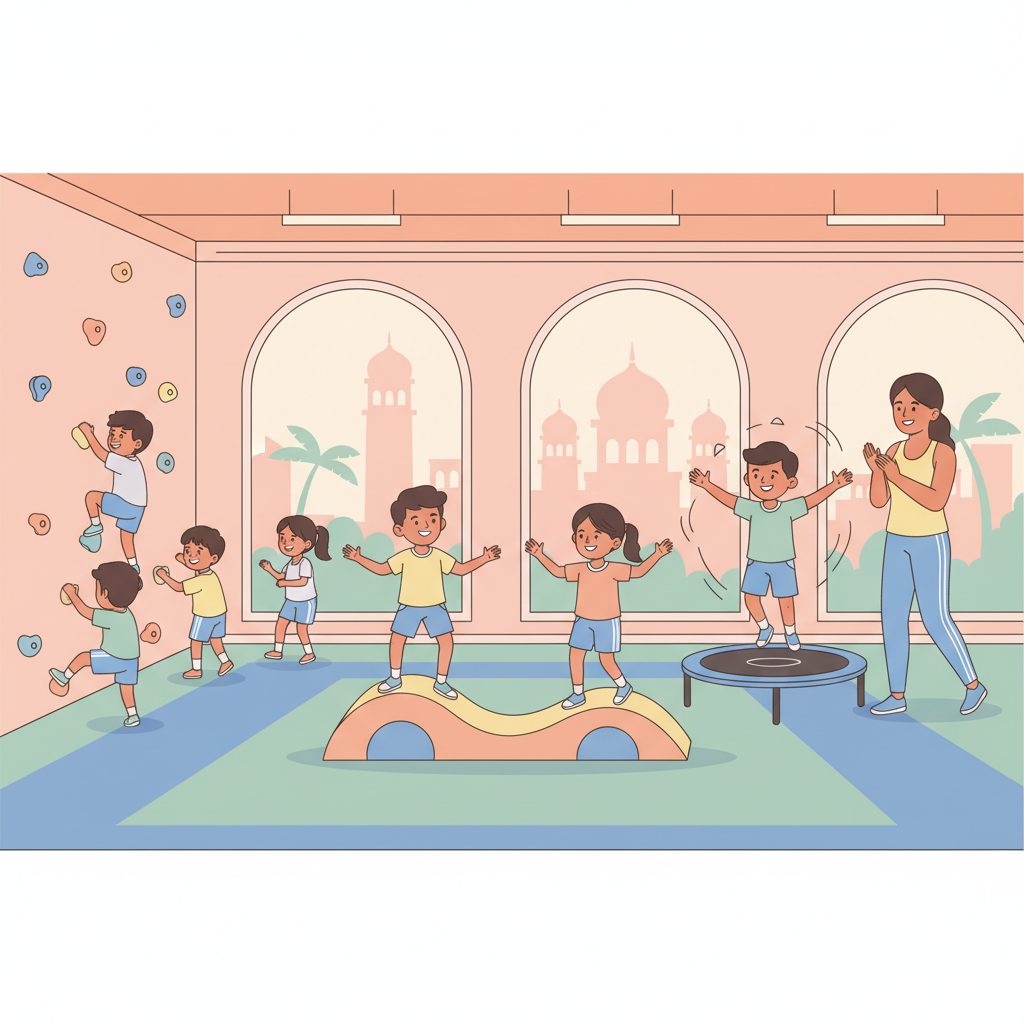
As parents in Jaipur, we’re constantly looking for ways to support our children’s growth and well-being. With so many choices available, deciding on the right fitness class can feel overwhelming. It’s not just about finding a class; it’s about finding an environment where your child can thrive, build confidence, and develop a lifelong love for movement.
This guide aims to cut through the noise and provide practical, actionable advice to help you make an informed decision. We’ll explore what truly matters when evaluating options, from age-appropriateness to instructor qualifications, ensuring your child’s experience is positive and beneficial.
Key Takeaways
- Prioritize Fun & Engagement: For children, fitness should feel like play, not a chore.
- Consider Age-Appropriateness: Activities should match your child's developmental stage.
- Look for Qualified Instructors: Experience with children and a focus on safety are crucial.
- Visit the Facility: Observe a class, check equipment, and assess the overall atmosphere.
- Balance Cost & Value: Understand what’s included in the fees and consider trial classes.
- Involve Your Child: Their interest and enthusiasm are key to sustained participation.
Why is Children's Fitness So Important?
Beyond the obvious physical benefits, regular physical activity plays a critical role in a child’s holistic development. It's about more than just burning energy; it’s about building foundational skills that extend into all areas of life.
Developing Physical Skills
Structured fitness activities help children develop gross motor skills, coordination, balance, and agility. These are crucial for everything from playing at the park to excelling in sports later on. It also strengthens bones and muscles, contributing to better posture and reducing the risk of injuries.
Boosting Mental & Emotional Well-being
Physical activity is a powerful stress reliever for children, just as it is for adults. It can improve mood, reduce anxiety, and even enhance cognitive function, leading to better focus and academic performance. The sense of accomplishment from learning a new skill or mastering a challenge significantly boosts self-esteem.
Fostering Social Connections
Group fitness classes provide an excellent opportunity for children to interact with peers outside of a school setting. They learn teamwork, sportsmanship, and how to navigate social dynamics, all while staying active. This social aspect can be particularly valuable for children who might be shy or need extra avenues for connection.
Understanding Age-Appropriate Fitness for Kids
One of the biggest mistakes parents make is pushing children into activities that are too advanced or not engaging enough for their age. What's perfect for a 10-year-old might be overwhelming for a 4-year-old. Here’s a general guide to what you can expect at different stages:
| Age Group | Developmental Focus | Suitable Activities |
|---|---|---|
| 1-3 Years (Toddlers) | Basic movement, exploration, balance, coordination. Focus on free play. | Cuddle & Crawl, parent-child movement classes, simple dance, unstructured play. |
| 3-5 Years (Preschool) | Gross motor skills, following directions, imaginative play, basic social interaction. | Dance, Gymnastics (introductory), creative movement, Painting, Little Makers, Swimming (water safety). |
| 6-9 Years (School Age) | Skill development, teamwork, rule-following, building stamina. | Soccer, Badminton, Basketball, Skating, Chess, Music, Dance, Swimming, Gymnastics, Art. |
| 10-12+ Years (Pre-Teens/Teens) | Specialized skill development, strategy, fitness for specific sports, personal challenge. | Pickle Ball, Fitness, Basketball, Soccer, Swimming, advanced Gymnastics, Chess, Study Zone, Music. |
Remember, these are general guidelines. Every child develops at their own pace. The key is to find an activity that matches their current abilities and interests, ensuring they feel successful and motivated.
What to Look For in a Kids' Fitness Class in Jaipur
When you start researching options in areas like C-Scheme, Malviya Nagar, or Vaishali Nagar, keep these crucial aspects in mind:
1. The Instructor: The Heart of the Class
The instructor’s approach can make or break a child’s experience. Look for someone who is:
- Experienced with Children: Do they understand child development? Can they manage a group effectively while keeping it fun?
- Patient and Encouraging: Children need positive reinforcement, not pressure.
- Safety-Conscious: Does the instructor prioritize proper form and injury prevention?
- Engaging and Enthusiastic: Their energy is contagious!
For example, coaches like Roshan Sikdar, who makes fitness fun and accessible, or Kaushik Ghatak, a dedicated dance instructor with a passion for movement, demonstrate the kind of positive energy that can truly inspire children.
2. Class Structure and Philosophy
- Fun-First Approach: For younger children, fitness activities should be disguised as play. Are games, stories, or imaginative scenarios incorporated?
- Appropriate Challenge: Is there a balance between instruction and free exploration? Is the pace suitable for the age group?
- Focus on Participation, Not Just Performance: Especially for younger kids, the goal should be active involvement and enjoyment, not competitive outcomes.
- Small Class Sizes: This allows for more individual attention and a safer environment.
3. Facility and Equipment
A safe and stimulating environment is non-negotiable:
- Cleanliness: Is the space well-maintained and hygienic?
- Safety: Are floors padded where necessary? Is equipment in good condition and age-appropriate? Are there clear safety protocols?
- Space: Is there enough room for children to move freely without bumping into each other?
- Accessibility: Is it conveniently located for you? Many parents in Jaipur appreciate options in areas like Ashok Nagar or Mansarovar.
4. Trial Classes and Observation
This is perhaps the most valuable step. Most reputable programs offer trial sessions. If not, ask if you can observe a class. This allows you to:
- See the instructor in action.
- Gauge the children’s engagement and happiness.
- Assess the overall atmosphere and safety of the facility.
- See if your child connects with the activity and the group.
Questions to Ask Before Enrolling
Once you’ve found a few promising options, arm yourself with these questions:
- What is the instructor's experience and certification in teaching children?
- What is the class philosophy? Is it play-based, skill-focused, or competitive?
- What is the typical class size? What is the instructor-to-child ratio?
- What safety measures are in place (first aid, emergency procedures)?
- Can I observe a class or sign up for a trial session?
- What is the monthly fee, and what does it include (equipment, uniforms, performances)?
- Are there options for different commitment levels (e.g., once a week vs. multiple times)?
- How do you handle behavioral challenges or children who are struggling?
- What are the long-term goals for children in this program?
Navigating Costs and Schedule
Parents in Jaipur often wonder about the balance between cost and value. Fitness classes can represent a significant investment in time and money. Consider your family's budget and schedule realistically.
Understanding Pricing Models
Some centers offer varied packages. For instance, Champions Studio provides options like:
- Standard: ₹5000/month (3 sessions/week, 1 activity) – good for trying out one activity.
- Premium: ₹8500/month (6 sessions/week, 4 activities) – offers more variety and frequency.
- Deluxe: ₹14000/month (6 sessions/week, 6 activities) – ideal for children who want extensive engagement across multiple disciplines.
Think about whether your child thrives with one dedicated activity or enjoys experimenting with several. A common question is whether more expensive means better. Not always. Focus on the value proposition – what you get for the price in terms of instruction quality, facility, and variety.
Fitting it into Your Family's Routine
Consider:
- Travel Time: How far is the facility from your home or school? Is it manageable multiple times a week?
- Other Commitments: Does the class schedule clash with homework, family time, or other extracurriculars?
- Child's Energy Levels: Will the activity energize or exhaust your child? For younger children, often shorter, more frequent sessions are better than long, intense ones.
For example, if you're looking at a fitness class for a 3-4 year old, you might see slots like Monday, Wednesday, Friday from 4 PM-5 PM. This consistency can be great for routine, but ensure it aligns with your child's nap schedule or energy peaks.
✅ Your Pre-Enrolment Checklist
- Checked instructor qualifications and experience with children?
- Observed a class or scheduled a trial session?
- Confirmed safety protocols and facility cleanliness?
- Discussed class philosophy and teaching style?
- Understood all fees and what's included?
- Considered your child's interest and enthusiasm?
- Evaluated the convenience of the location and schedule?
- Read reviews or sought recommendations from other parents?
- Ensured the activity aligns with your child's age and developmental stage?
Real Parent Perspectives
Hearing from other parents can provide valuable insights. Many parents share how a good fitness program positively impacts their children.
"Vinayak is thriving—thanks to the incredible foundation and care he received at Champions Studio! Thank you for always nurturing not just the children but also the trust of every family who walks through your doors."
Kartikeya R Sharma (parent of Vinayak)This highlights the importance of a nurturing environment. Another parent, Vedika Kedia, shared, "Rudr misses Champions so badly...it will always be a part of his growing up as Champions was practically his second home." Such feedback underscores the lasting impact a positive experience can have.
The Role of Variety: Exploring Different Activities
Sometimes, the right fitness class isn't just one activity. Children often benefit from exploring different types of movement. This not only keeps them engaged but also develops a broader range of physical skills.
- Sports: Basketball, Soccer, Badminton, Pickle Ball, Skating – build teamwork, coordination, and strategy.
- Movement & Expression: Dance, Gymnastics, Swimming – enhance flexibility, rhythm, and body awareness.
- Mind & Body: Chess (yes, it's a mental workout!), Study Zone – develop focus and cognitive skills alongside physical activity.
- Creative: Painting, Art, Little Makers – foster fine motor skills, creativity, and self-expression, which can be a great balance to high-energy activities.
Parents in Jaipur often look for centers that offer this kind of diverse programming. A place where children can try different things, from the energy of fitness to the calm of chess or art, can be incredibly beneficial for discovering their true passions.
Final Thoughts: Trust Your Instincts (and Your Child's)
Ultimately, choosing the right fitness class is a personal decision. Do your research, ask questions, and visit the facilities. But most importantly, observe your child. Are they excited to go? Do they talk about what they learned? Are they making friends and feeling good about themselves?
If they are, you've likely found a winner. If not, it's okay to try something new. The goal is to instill a love for movement and healthy habits, not to force them into a specific activity.
For parents exploring options in Jaipur, especially around C-Scheme, a place like Champions Studio offers a wide array of activities designed to engage children of various ages and interests, from Swimming and Fitness to Painting and Chess. They focus on creating a supportive environment where children can explore, learn, and grow. You can visit Champions Studio to see their facilities and programs firsthand.
Frequently Asked Questions by Jaipur Parents
Q1: At what age should my child start a structured fitness class?
A1: While unstructured play is best for toddlers (1-3 years), structured parent-child movement classes can begin around age 2-3. For independent classes, 3-5 years is a great starting point for activities like dance or introductory gymnastics, focusing on fun and basic motor skills.
Q2: How do I know if the instructor is good for my child?
A2: Observe a class. Look for patience, positive reinforcement, clear communication, and the ability to manage the group while keeping children engaged and safe. An instructor who connects well with kids, like Savita Sharma who helps children develop hand-eye coordination, makes a huge difference.
Q3: What's the ideal number of classes per week for a young child?
A3: For younger children (3-6 years), 1-2 sessions per week of 45-60 minutes each is often sufficient to introduce them to the activity without overwhelming them. Older children (7+) might enjoy 2-3 sessions, especially if they are developing specific skills.
Q4: My child is shy. Will a fitness class help them socialize?
A4: Absolutely! Group fitness classes provide a natural, low-pressure environment for socialization. They learn to interact, share, and work with peers towards a common goal. A supportive instructor can also help shy children gradually open up.
Q5: How important is location when choosing a class in Jaipur?
A5: Location is very important for consistency. Choosing a center conveniently located in areas like Malviya Nagar, Vaishali Nagar, or C-Scheme (like Champions Studio) minimizes travel time and makes it easier to stick to the schedule, especially for multiple weekly sessions.
Q6: What if my child loses interest after a few weeks?
A6: It's common for children's interests to shift. First, try to understand why. Is it the activity, the instructor, or just a phase? If it persists, it's okay to explore other options. The goal is to keep them active and engaged, even if it means trying a different sport or creative outlet.