Explorer, Builder, Performer, Competitor, Champion: What a Child Actually Has to Do to Move Up a Level; The Five Levels, and the Written Criteria for Each One; What 'Beginner to Advanced' Should Mean, and What It Usually Does Not; Our Level System, Published in Full, Including What Happens When a Child Does Not Clear One; A Level Is Not an Age Band: How Progression Works at Champions Studio
Understand kids activity class levels. Learn how Champions Studio defines Explorer, Builder, Performer, Competitor, Champion levels with clear, written criteria.
By Champions Studio · Fri Aug 07 2026
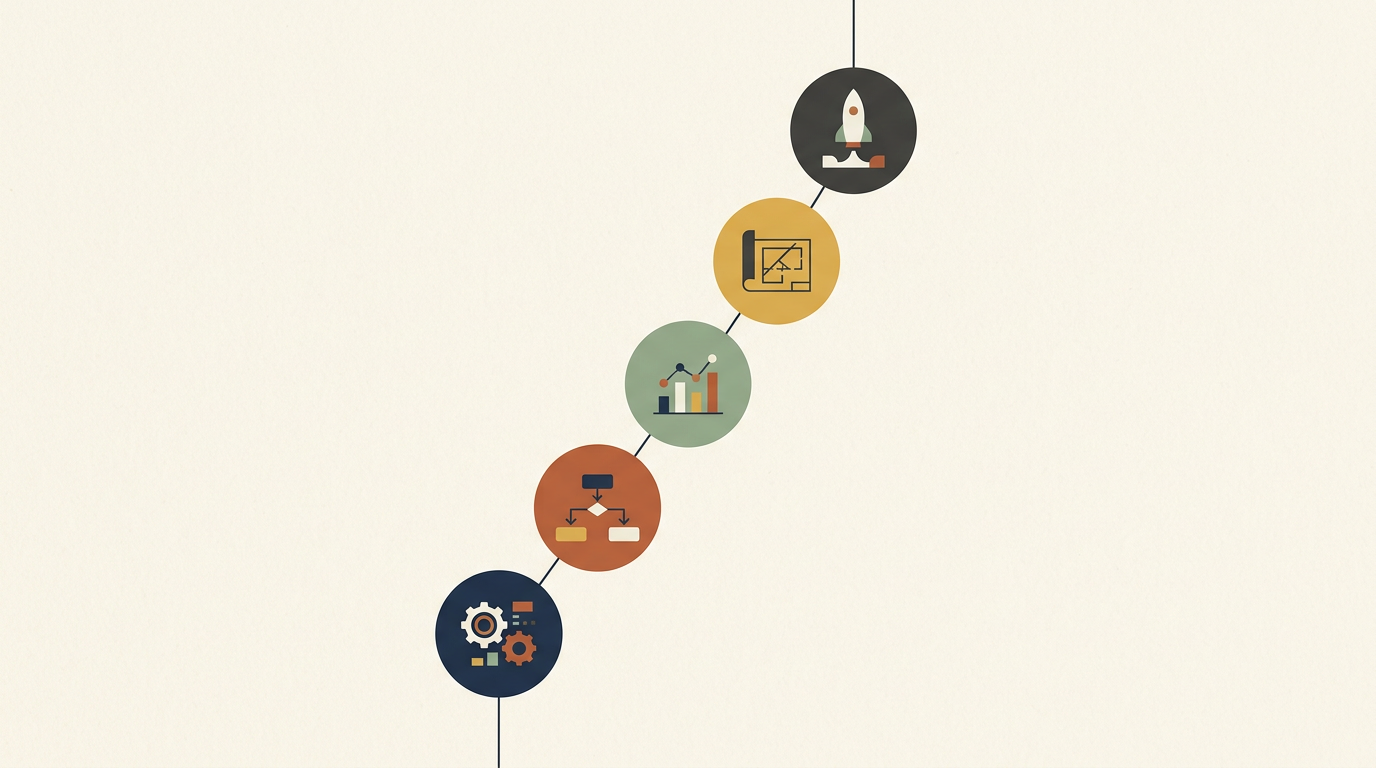
Many activity programmes use terms like 'beginner' or 'advanced' to describe a child's progress. However, without clear definitions, these labels can feel more like marketing than a genuine measure of development. At Champions Studio in Jaipur, we believe in transparency regarding your child's journey. This article outlines our five distinct levels of progression, the specific criteria for moving between them, and what this structured approach means for your child's growth.
Why we are publishing this
A parent once shared with us the frustration of not knowing what a 'level' truly meant at their child's previous activity programme. They asked us, directly, what level their own son was at in our programme, and we were able to provide a clear answer grounded in documented criteria. That clarity, and the understanding it fosters, is precisely why this page exists. We aim to offer a transparent framework for understanding a child's developmental journey through structured activities.
First, what a level is not
It is important to clarify what our progression levels are not:
- Not an age band: A level is not determined by a child's age. A seven-year-old might be an Explorer in swimming while simultaneously being a Performer in an art activity, based on their individual skill development.
- Not a batch designation: While children within a level often train together, the level itself is a measure of skill, not merely a group assignment.
- Not a certificate of attendance: Progression through levels requires demonstrated skill acquisition, not just participation.
- Not automatic: Advancing to the next level is based on meeting specific, objective criteria, not on elapsed time or automatic promotion.
The five levels
Our progression system categorises a child's skill development into five distinct levels: Explorer, Builder, Performer, Competitor, and Champion. Each level represents a stage of increasing mastery and application of skills. The criteria listed below are examples from our current coaching sheets for illustrative purposes. For the precise checklist for a specific activity and age group, we invite parents to review the actual documents at Champions Studio Ji.
Explorer
The Explorer level focuses on foundational understanding and initial skill acquisition. Children at this stage are learning basic movements and concepts, developing familiarity with the activity environment, and building initial confidence.
- Working on: Basic movement patterns, understanding rules, body awareness.
- Concrete checklist examples:
- Gymnastics: Holds a supported handstand for 5 seconds.
- Basketball: Bounces the ball once and catches it.
- Art: Correctly identifies primary colours.
- Typical time window: 4 to 8 weeks to clear initial milestones.
Builder
At the Builder level, children refine foundational skills, performing them with greater independence and consistency. The focus shifts from initial exposure to developing reliable execution without constant support.
- Working on: Independent skill execution, consistency, basic sequences.
- Concrete checklist examples:
- Gymnastics: Holds an unsupported handstand for 5 seconds, three times out of five attempts.
- Basketball: Bounces the ball five consecutive times while stationary and catches it.
- Art: Independently mixes two primary colours to create a secondary colour.
- Typical time window: 8 to 16 weeks to progress through Builder milestones.
Performer
The Performer level involves demonstrating learned skills in a structured, observable context, often in front of others. This level introduces elements of presentation, routine, and application under mild pressure.
- Working on: Skill application in routines, demonstration, stage presence.
- Concrete checklist examples:
- Gymnastics: Successfully executes a two-part floor routine at the term showcase.
- Basketball: Successfully completes a dribbling obstacle course within a time limit during a demonstration.
- Art: Presents a finished artwork and explains their creative choices to a small group.
- Typical time window: 12 to 24 weeks, depending on the activity's complexity.
Competitor
At the Competitor level, children apply their skills in a structured, comparative environment. This involves understanding strategies, working with teammates, and performing under the explicit pressure of evaluation or competition.
- Working on: Strategic application, teamwork, performance under evaluative conditions.
- Concrete checklist examples:
- Gymnastics: Achieves a score of 7.0 or higher in a simulated competition routine.
- Basketball: Successfully executes a pre-planned play with teammates during a scrimmage.
- Art: Wins a studio-level art challenge based on specific criteria.
- Typical time window: Varies significantly by individual and competitive opportunities, often 24+ weeks.
Champion
The Champion level represents mastery, where a child can not only perform complex skills but also articulate and teach them to others. It signifies a deep understanding and the ability to mentor younger participants.
- Working on: Mentorship, advanced problem-solving, teaching and demonstrating.
- Concrete checklist examples:
- Gymnastics: Can effectively coach a younger child through an Explorer-level skill.
- Basketball: Explains and demonstrates a basic dribbling technique to a new student.
- Art: Guides a peer through a complex drawing technique.
- Typical time window: Achieved over an extended period of sustained engagement and leadership.
How long a level takes
Milestone assessments are conducted on a 4 to 6 week cycle. A level typically encompasses two to four milestones. Therefore, the time it takes for a child to clear a full level can range from approximately 8 weeks to 24 weeks or more. This duration is highly individual and depends on the specific activity, the child's engagement, and their pace of learning. Some children may progress more quickly through certain levels or activities than others, and this is a natural part of development.
What happens when a child does not clear it
If a child does not meet the criteria for a particular milestone within the assessment cycle, they do not repeat the entire level. Instead, they focus on repeating that specific milestone. This targeted approach ensures that the child receives the necessary support and practice to master the particular skill before moving forward, without feeling held back unnecessarily. More details on our approach to individual milestone challenges are available in our post, A Milestone System Where Every Child Passes Is Not A Milestone System.
Who decides, and what the parent sees
Progression is determined by our coaches through careful observation and assessment against the written checklist criteria. Our small batch sizes, typically 8 to 10 children per coach, allow for individual attention, ensuring that each child's progress is genuinely observed and evaluated. Parents receive a digital progress report at the end of each assessment cycle. This report details which milestones have been cleared, which are still in progress, and includes specific feedback from the coach on areas of strength and areas for continued development.
The three questions to ask any programme
When evaluating any children's activity programme, including Champions Studio, we encourage parents to ask these three foundational questions to understand their progression system:
- Can you show me the written criteria for moving a child up a level?
- How many children does one coach typically assess for these criteria?
- What happens if my child does not clear a specific milestone or level?
These questions help illuminate the robustness and transparency of a programme's approach to skill development.
If you want to see the checklist
We understand the importance of informed decisions. We are happy to provide you with the actual written checklist for your child's age group and the activity you are interested in, before you commit. We offer a trial session for Rs 500 at our facility: A-4 Sardar Patel Marg, Ashok Nagar, C-Scheme, Jaipur. Please reach out to us on WhatsApp at https://wa.me/919509671632 and tell us your child's age and the activity you are curious about. We look forward to discussing your child's potential with you Ji.
Frequently asked questions
What is the difference between a level and a batch?
A level refers to a child's demonstrated skill proficiency in a specific activity, based on written criteria. A batch refers to the group of children who train together. While children of similar levels are often grouped into batches for effective coaching, the level itself is a measure of individual skill, not just a group designation.
How long does a level take?
The time it takes to clear a level varies. Each level is composed of several milestones, and milestones are assessed every 4 to 6 weeks. Depending on the child and activity, a level can take anywhere from 8 weeks to over 24 weeks to complete.
What happens if my child does not clear a level?
If your child does not meet the criteria for a particular milestone within a level, they repeat that specific milestone, not the entire level. This focused approach ensures they master the necessary skill before moving on, without delaying progress in other areas.
Who decides?
Coaches decide based on their direct observation and assessment against the published, written checklist criteria for each milestone. Our small class sizes allow coaches to closely monitor each child's progress.
Does my child get moved up because of age?
No, a child is not moved up levels based on age. Progression is solely based on demonstrated skill acquisition and meeting the specific written criteria for each milestone within a level.
Can a 3 year old be a Builder in art and an Explorer in swimming?
Yes, absolutely. A child's progression is individual and activity-specific. A three-year-old might show advanced motor skills and creativity in an art activity, qualifying them as a Builder, while simultaneously being an Explorer in swimming as they learn foundational water safety and basic strokes.