Choosing the Best Study Zone Class for Your Child in Jaipur
A parent's guide to finding the right study zone class in Jaipur. Learn what to consider, age-appropriate expectations, and key questions to ask.
By Champions Studio Team · Sun Mar 01 2026
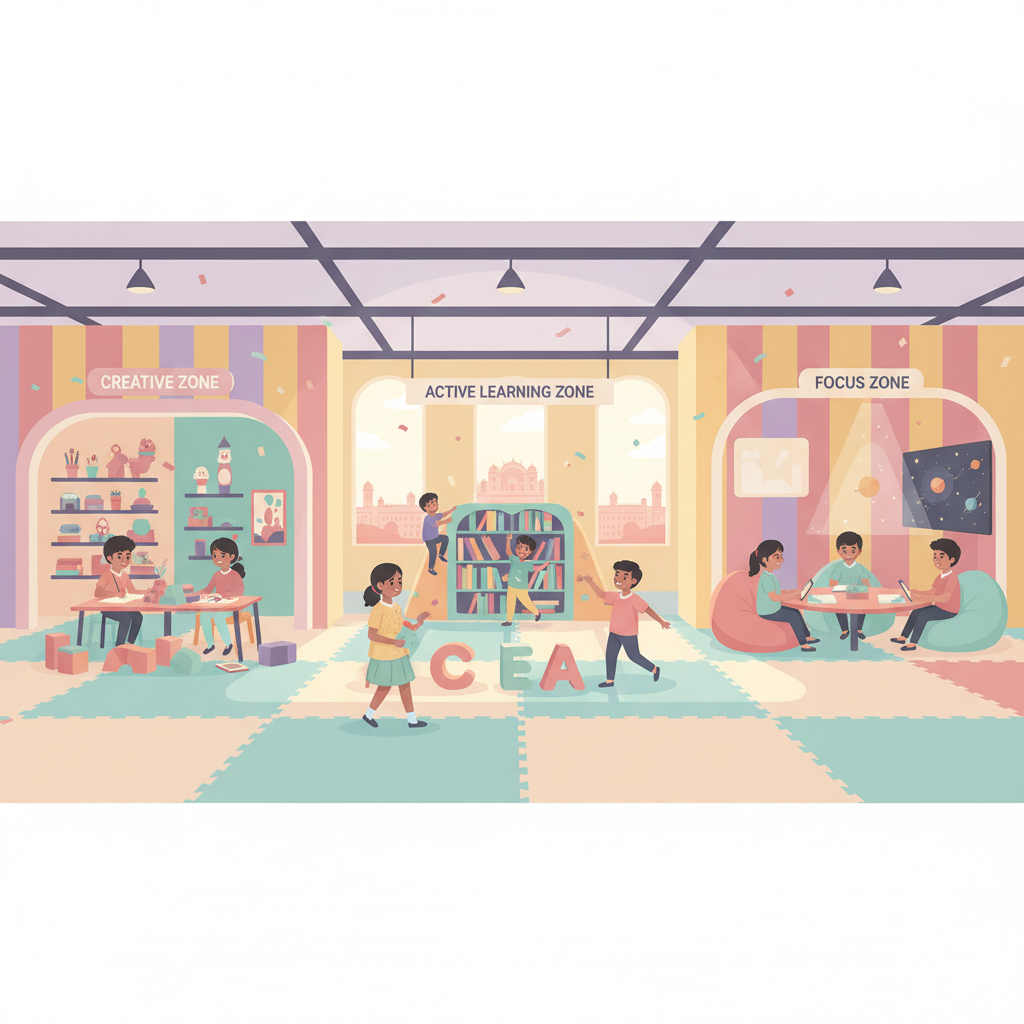
As parents in Jaipur, we constantly juggle school schedules, extracurricular activities, and the ever-present question: "How can I help my child focus better on their studies?" The idea of a dedicated 'study zone class' often comes up. But what exactly is it, and how do you choose the right one for your unique child?
It's not just about finding a place for homework; it's about fostering good study habits, building confidence, and sometimes, simply providing a quiet, distraction-free environment that might be harder to achieve at home with younger siblings or other household activities.
Key Takeaways
- Understand the 'Why': Is it for homework help, skill building, or just a quiet space?
- Age-Appropriate Expectations: What can you realistically expect from different age groups?
- Beyond Academics: Look for programs that also teach organization and time management.
- Location Matters: Consider convenience in areas like C-Scheme, Malviya Nagar, or Vaishali Nagar.
- Ask the Right Questions: Inquire about coach qualifications, student-to-coach ratio, and curriculum.
What is a Study Zone Class, Really?
At its heart, a study zone class offers a structured environment designed to support a child's academic journey outside of regular school hours. It’s distinct from traditional tuition, which often focuses on specific subject matter. Instead, a study zone typically emphasizes developing independent study skills, completing homework, and preparing for assessments.
Think of it as a dedicated workspace with guidance. It's a place where children can concentrate without the distractions of home, and where they have access to support if they get stuck on a problem or need clarification on a concept.
"Champions Studio was practically his second home. Champions has a major role in shaping his early years and wish we could have continued there further."
Vedika Kedia (parent of Rudr)Why Consider a Study Zone for Your Child?
Parents in Jaipur often wonder if a study zone is truly necessary. The reasons are varied and personal to each family. For some, it's about addressing specific academic challenges. For others, it's about creating a routine that promotes responsibility and discipline.
Building Independence and Self-Discipline
One of the biggest benefits is fostering independence. In a study zone, children learn to manage their tasks, prioritize, and seek help when needed—skills crucial for long-term academic success. It’s a gentle transition from relying solely on parents for homework supervision to taking ownership of their learning.
A Distraction-Free Environment
Homes, especially with multiple children, can be bustling. TVs, siblings, pets, and even dinner preparations can make focused study difficult. A good study zone provides a quiet, dedicated space free from these common distractions, helping your child concentrate more effectively.
Access to Guidance and Support
Even if your child doesn't need intensive tutoring, having an experienced educator like Sandhya Garg, who provides a calm and focused environment, on hand to answer quick questions or offer a different perspective can be invaluable. This immediate support prevents frustration and helps keep learning momentum going.
Age-Appropriate Expectations for Study Zone Classes
The ideal study zone experience changes significantly with your child's age. What works for a 4-year-old is very different from what a 10-year-old needs.
| Age Group | Focus Areas | Expected Duration |
|---|---|---|
| 3-5 Years (Early Learners) | Introduction to letters/numbers, fine motor skills, listening, following instructions, short attention spans. | 30-45 minutes |
| 6-8 Years (Primary Grades) | Homework completion, reading practice, basic math, developing routines, introduction to organization. | 45-60 minutes |
| 9-12 Years (Middle Grades) | Independent study, project work, research skills, time management, test preparation, deeper problem-solving. | 60-90 minutes |
For Younger Children (3-6 years)
For children aged 3-4.5, like the Thursday and Tuesday slots at Champions Studio, the focus is less on 'homework' and more on foundational readiness. This might include pre-writing skills, number recognition, listening comprehension through storytelling, and developing the patience to sit and focus for short periods.
It’s about gently introducing the concept of a dedicated learning time. The environment should be nurturing and engaging, with activities that build concentration rather than demanding it rigidly.
For Primary Schoolers (6-9 years)
At this stage (like the 4.5-7 year slots at Champions Studio on Monday, Wednesday, Friday), children often start having regular homework. A study zone can help them establish a routine for completing it. They'll benefit from assistance with reading comprehension, basic arithmetic, and understanding instructions for projects.
The goal here is to build good habits: putting away distractions, organizing materials, and reviewing their work. The guidance should be more about facilitating their learning process than giving direct answers.
For Older Children (10+ years)
As children move into higher primary and middle school, the demands increase. A study zone for this age group should support more independent project work, research skills, and time management. They might need help breaking down larger assignments, understanding complex concepts, or preparing for exams.
The role of the educator shifts to a facilitator and mentor, encouraging critical thinking and self-advocacy. They should be able to guide children toward resources and strategies rather than just providing answers.
Key Considerations When Choosing a Study Zone Class in Jaipur
With several options potentially available across areas like C-Scheme, Malviya Nagar, Vaishali Nagar, and Mansarovar, how do you narrow it down? Here’s a practical guide.
1. The Environment: More Than Just Four Walls
Visit the space. Is it well-lit, clean, and organized? Does it feel calm and conducive to concentration? Overly stimulating environments can be counterproductive, but so can sterile, uninviting ones. Look for a balance.
2. The Educator: The Guiding Hand
Who will be supervising your child? Are they experienced in working with children in that age group? An educator like Sandhya Garg, known for creating a calm and focused environment, can make a significant difference. Do they focus on fostering independence or simply providing answers?
3. Approach and Philosophy: Homework Help or Skill Building?
Some study zones primarily offer a place to do homework. Others, like Champions Studio, might integrate skill-building elements—like organizational techniques, time management, or even quiet reading time—into their sessions. Understand what the program aims to achieve.
4. Student-to-Coach Ratio: Individual Attention Matters
A lower ratio means more personalized attention. This is crucial for identifying individual learning styles, addressing specific challenges, and ensuring your child doesn't get lost in the crowd. Ask about their typical classroom size.
5. Flexibility and Schedule: Fitting into Your Life
Life in Jaipur is busy! Does the schedule align with your family’s routine? Champions Studio, for example, offers various timings for different age groups throughout the week, including options like the 18:00–19:00 slot for 4.5-7 year olds on Mondays, Wednesdays, and Fridays, and 3-4.5 year olds on Tuesdays and Thursdays.
6. Location and Logistics: Convenience is Key
Consider how easy it is to get to the study zone from home or school. A location like C-Scheme – A-4/1, Sardar Patel Marg, Ashok Nagar, Jaipur, can be convenient for many families. Factor in travel time and traffic, especially during peak hours.
✅ Your Pre-Enrolment Checklist
- Define Your Goal: What do you hope your child gains?
- Visit the Facility: Observe the environment firsthand.
- Meet the Educator: Discuss their approach and experience.
- Inquire About Ratio: What's the typical student-to-educator ratio?
- Review the Schedule: Does it fit your family's needs?
- Understand the Curriculum: Is it just homework, or are other skills taught?
- Ask for a Trial: Can your child try a session or two?
- Talk to Other Parents: Gather insights from existing families.
Questions to Ask Before Enrolling
Don't hesitate to ask specific questions. Good programs welcome them.
- What is your philosophy on helping children with homework?
- How do you encourage independent learning?
- What resources (books, computers, etc.) are available?
- How do you communicate progress or concerns with parents?
- What is your policy on snacks, breaks, and screen time?
- Are there opportunities for quiet reading or creative thinking?
Integrating Study Zone Time with Other Activities
A common question is how a study zone fits into an already packed schedule of activities like swimming, music, or sports. The key is balance. A well-chosen study zone should complement, not compete with, these enriching experiences.
For example, if your child is passionate about Art with Suryanshi Bandua or Dance with Kaushik Ghatak, a structured study zone can ensure academic responsibilities are met efficiently, freeing up time for those creative pursuits. It’s about making the most of every hour.
"Vinayak is thriving—thanks to the incredible foundation and care he received at Champions Studio!"
Kartikeya R Sharma (parent of Vinayak)The Role of Parent Communication
No matter how excellent the study zone, your involvement remains crucial. Establish open lines of communication with the educators. Share any academic concerns or upcoming projects. This partnership ensures a consistent approach to your child's learning journey.
Regular check-ins, even brief ones, can help you stay informed about your child's progress and any areas where they might need extra support, whether that's at the study zone or at home.
Understanding Pricing Structures
Pricing for study zone classes can vary. It's important to understand what's included. Options might range from basic access to a supervised space to more comprehensive packages that include multiple activities.
- Standard: ₹5000/month (3 sessions/week, 1 activity) – good for focused study time.
- Premium: ₹8500/month (6 sessions/week, 4 activities) – offers more frequent study support and a broader range of enrichment.
- Deluxe: ₹14000/month (6 sessions/week, 6 activities) – combines extensive study time with a wide array of activities, potentially including things like Skating with Devanshu Gupta or Fitness with Roshan Sikdar.
Consider your family's budget and your child's specific needs when evaluating these options. Sometimes, investing in a slightly higher tier that includes other developmental activities can provide better value and a more holistic experience.
FAQ: Parents in Jaipur Often Ask...
Q: Is a study zone class just another form of tuition?
A: Not typically. While tuition focuses on specific subject teaching, a study zone emphasizes developing independent study habits, completing homework, and providing a structured environment. The guidance is usually facilitative rather than direct instruction.
Q: How long should my child stay in a study zone class?
A: This depends on their age and attention span. For younger children (3-5 years), 30-45 minutes is often sufficient. Older children (6-12 years) might benefit from 60-90 minutes. The key is quality, focused time, not just duration.
Q: Will a study zone make my child too dependent on external help?
A: A well-designed study zone, like the one guided by Sandhya Garg, aims to foster independence. Educators should guide children to find answers, organize their work, and manage their time, rather than simply providing solutions. The goal is to build self-reliance.
Q: What if my child doesn't have much homework?
A: A good study zone can still be beneficial. It can be a place for quiet reading, practicing basic skills, working on personal projects, or developing organizational techniques. It establishes a routine for focused, academic-oriented time, even without specific homework tasks.
Q: How do I know if it's the right fit for my child?
A: The best way is to observe a session or arrange a trial. Pay attention to your child's feedback. Do they feel comfortable? Are they engaged? Do they seem less stressed about schoolwork? Trust your instincts and your child's reactions.
Q: Are there study zones in specific Jaipur localities like Malviya Nagar or Vaishali Nagar?
A: Yes, many local centers offer similar programs. While Champions Studio is located in C-Scheme, it's worth exploring options closer to home if daily commute is a significant concern. However, sometimes the right program is worth the travel, especially if it offers a unique approach or highly qualified educators.
Final Thoughts
Choosing a study zone class for your child in Jaipur is a thoughtful decision. It's about finding a supportive environment that complements your child's learning style and your family's needs. Look for a place that values not just academic completion, but also the development of crucial life skills like organization, focus, and independence.
When considering your options, remember that places like Champions Studio, located in C-Scheme, offer dedicated study zones with experienced educators like Sandhya Garg, alongside a wide array of other enriching activities. Their structured environment and focus on holistic development can be a valuable asset in your child's educational journey.