Finding the Right Music Class for Your Child in Jaipur
A parent's guide to selecting the best music class in Jaipur, covering age, teaching styles, and what questions to ask.
By Champions Studio Team · Sun Jun 07 2026
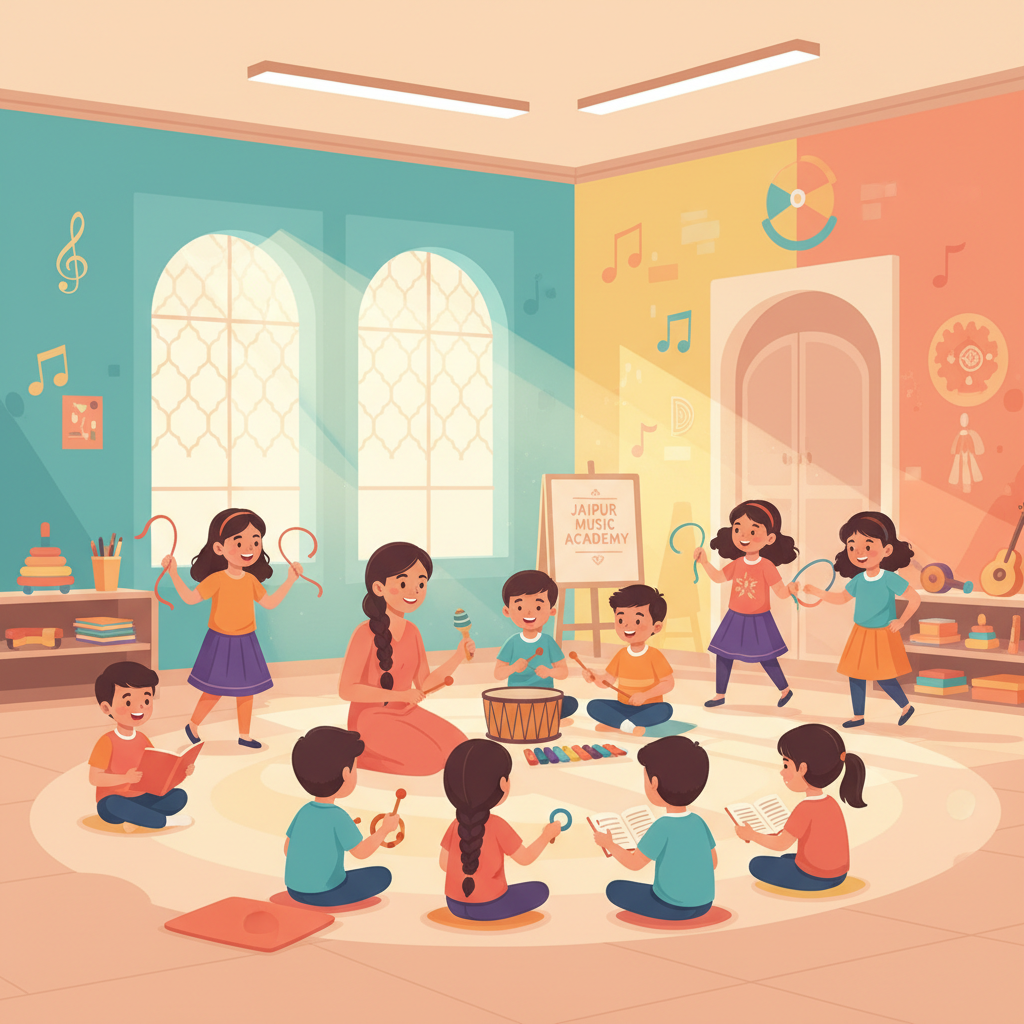
As parents in Jaipur, we’re constantly looking for ways to enrich our children’s lives, and music often comes up as a wonderful avenue for growth. But with so many options available, from private tutors to group classes across C-Scheme, Malviya Nagar, and Vaishali Nagar, how do you decide what’s truly best for your little maestro? It’s not just about finding a class; it’s about finding the right class that sparks joy and nurtures a lifelong love for music.
Key Takeaways
- Start with Age-Appropriate Goals: Understand what's realistic for your child's developmental stage.
- Consider Teaching Philosophy: Look for joy and engagement over strict instruction, especially for younger children.
- Observe a Class: See the teacher and environment in action before committing.
- Ask Key Questions: Inquire about curriculum, class size, and parent communication.
- Prioritize Fun: A positive experience is more important than early mastery.
Why Music Matters: More Than Just Notes
Before diving into the 'how,' let's briefly touch on the 'why.' Music education offers a symphony of benefits beyond just learning an instrument. Studies show it can boost cognitive development, improve language skills, enhance mathematical reasoning, and even strengthen emotional intelligence. For a child in Jaipur, a good music class can be a creative outlet, a social space, and a foundation for discipline and perseverance.
It's about developing listening skills, understanding patterns, and experiencing the satisfaction of creating something beautiful. These are universal skills that will serve your child well, no matter their future path.
Understanding Age and Readiness: What to Expect When
One of the biggest misconceptions is that children need to be a certain age to start formal music lessons. The truth is, musical engagement can begin much earlier than you might think, but the approach needs to be age-appropriate.
For the Littlest Learners (0-3 Years): The Introduction to Sound
At this age, it's all about exposure and exploration. Think of activities like 'Cuddle & Crawl' or parent-child music groups. These aren't about learning to read notes but about experiencing rhythm, melody, and different sounds. It's about singing, dancing, clapping, and using simple percussion instruments. The goal is to foster an innate love for music and movement.
- Focus: Sensory experience, rhythmic play, singing, bonding.
- What to look for: Interactive classes, engaging facilitators, a playful environment.
- Avoid: Structured instrument lessons or expectations of memorization.
Pre-Schoolers (3-5 Years): Discovering Instruments and Movement
This is a fantastic age for group music classes that introduce various instruments and concepts through games and stories. Children might learn about different instrument families, basic rhythms, and simple songs. They're developing fine motor skills and attention spans, making them ready for a bit more structure, but still with a strong emphasis on fun and exploration.
Classes like 'Little Makers' that incorporate art and music can be wonderful. Your child might be introduced to a keyboard, guitar, or drums in a very playful way, without the pressure of formal lessons.
| Age Group | Typical Focus | Recommended Activities |
|---|---|---|
| 0-3 Years | Sensory & Rhythmic Play | Parent-child music groups, singing, movement, simple shakers |
| 3-5 Years | Instrument Exploration, Basic Rhythm | Group music classes, introduction to keyboard/percussion, singing, dance |
| 6-8 Years | Foundational Instrument Skills | Piano, guitar, violin, vocal lessons (group/individual), music theory basics |
| 9+ Years | Advanced Instrument/Vocal, Ensemble Play | Specialized instrument lessons, band/orchestra, composition |
Early School Years (6-8 Years): The First Formal Steps
Around this age, many children are ready for more structured lessons, whether it’s piano, guitar, violin, or vocal training. Their fine motor skills are more developed, and they can focus for longer periods. However, it's crucial that the teacher maintains an engaging approach. Look for instructors who incorporate games, songs, and performance opportunities to keep motivation high.
Vandana Siyotra, for example, is known for introducing children to the joy of music with patience and care, helping young learners discover rhythm – a testament to finding the right coach for this age group.
Older Children (9+ Years): Specialization and Deeper Engagement
By this age, children might express a strong interest in a particular instrument or genre. They can handle more complex theory and technique. This is when individual lessons often become more beneficial, allowing for personalized instruction and faster progress. They might also enjoy joining a choir or a school band, which builds teamwork and performance skills.
What to Look For in a Music Class or Teacher in Jaipur
Once you have a sense of what's age-appropriate, it's time to evaluate the options available in Jaipur. Here’s what to prioritize:
1. The Teacher: The Heart of the Experience
The instructor's personality and teaching style are perhaps the most critical factors. A great music teacher:
- Is Patient and Encouraging: Music learning has its challenges. A patient teacher builds confidence.
- Makes Learning Fun: Especially for younger children, games, stories, and movement should be integrated.
- Understands Child Development: They know how to tailor lessons to a child's attention span and learning style.
- Communicates Clearly: With both the child and you, the parent, about progress and challenges.
- Has a Passion for Music: Their enthusiasm is contagious.
When searching for music classes in areas like Ashok Nagar or Mansarovar, inquire about the coaches' backgrounds and teaching philosophies. Coaches like Vandana Siyotra, who focuses on joy and patience, are invaluable for young learners.
2. Teaching Philosophy & Curriculum: Play vs. Perfection
Consider the class's overall approach. Is it highly structured and focused on classical technique from day one, or is it more exploratory and play-based?
- Play-based learning: Ideal for younger children, focusing on exposure, rhythm, and enjoyment.
- Structured learning: More suitable for older children ready for formal instrument instruction and theory.
- Balanced approach: Many good programs blend fun with foundational skills.
A good curriculum will introduce concepts progressively and ensure the child feels successful. It shouldn't be about rigid adherence to a textbook but adapting to the child's pace.
3. Class Size & Setting: Group vs. Individual
Both group and individual lessons have their merits:
- Group Classes: Great for social interaction, peer learning, and often more affordable. They can be less intimidating for beginners.
- Individual Lessons: Offer personalized attention and tailored instruction, which can lead to faster progress for some children.
For very young children or beginners, a small group setting can be excellent for building confidence and making music a shared experience. As they grow and specialize, individual lessons might become more appropriate.
✅ Your Pre-Enrolment Checklist for Music Classes
- Observe a class session (if possible).
- Talk to the instructor directly.
- Inquire about the curriculum and teaching methods.
- Ask about class size and student-to-teacher ratio.
- Understand the commitment required (practice at home, performance opportunities).
- Check for a trial class or a flexible initial enrollment period.
- Consider the location (e.g., C-Scheme, Malviya Nagar, Vaishali Nagar) and convenience for your family.
- Read reviews or seek recommendations from other parents.
4. Location & Logistics: Practical Considerations
Parents in Jaipur often wonder about convenience. A music class located conveniently in areas like C-Scheme, Malviya Nagar, Vaishali Nagar, or Ashok Nagar can make a big difference in maintaining consistency. Consider:
- Proximity: How far is it from your home or school?
- Schedule: Does it fit your family's routine without being overly stressful?
- Cost: What are the monthly fees, and are there additional costs for materials or performances?
Remember, consistency is key in music learning, and an easy commute helps immensely. Champions Studio, for instance, offers flexible programs and is conveniently located, making it a viable option for many families looking into various activities, including music.
Questions to Ask Before Enrolling
Don't be shy about asking detailed questions. This is an investment in your child's development.
- “What is your philosophy on teaching music to young children?”
- “How do you adapt your teaching for different learning styles or attention spans?”
- “What kind of practice is expected at home, and how can parents support it?”
- “Are there opportunities for children to perform or showcase what they've learned?”
- “What is the typical class size for this age group?”
- “How do you handle a child who is struggling or losing interest?”
"Champions has a major role in shaping his early years and wish we could have continued there further. Wishing you all the best for future.. ❤️"
Vedika Kedia (parent of Rudr)The Importance of Enjoyment: The Long Game
Ultimately, the most important factor is whether your child enjoys the experience. If music becomes a chore, the benefits diminish quickly. Look for clues: do they talk about the class? Do they hum the songs? Do they willingly practice (even if it's just a few minutes)?
Sometimes, the first class isn't the perfect fit, and that's okay. It’s a process of discovery. Be open to trying different instruments or different teachers until you find what resonates with your child. The goal is to cultivate a love for music, not to create a prodigy overnight.
FAQs: Parents in Jaipur Often Ask...
Q: What's the best age to start piano lessons in Jaipur?
A: While early exposure to music can start from infancy, formal piano lessons often begin around age 5-7. At this age, children usually have the fine motor skills and attention span needed to grasp basic concepts and hand positioning. However, group exploratory music classes can introduce keyboard concepts much earlier.
Q: Are group music classes effective for young children, or should I opt for individual lessons?
A: For young children (under 6-7), group classes are often highly effective. They provide a social environment, reduce pressure, and introduce music through play and interaction. Individual lessons become more beneficial as children get older and require personalized technical instruction.
Q: How much practice is expected for a beginner music student?
A: For beginners, especially younger children, short, consistent practice sessions are more effective than long, infrequent ones. 10-15 minutes a day, 4-5 times a week, can be a great start. The key is making it enjoyable, not a battle.
Q: What if my child loses interest after a few months?
A: It's common for interests to wane. First, try to understand why. Is it the teacher? The instrument? The method? Sometimes a break, a change of instrument, or a different teacher can rekindle interest. Don't force it, but do encourage perseverance through small challenges.
Q: How do I find reputable music schools or teachers in areas like Malviya Nagar or C-Scheme?
A: Start by asking for recommendations from other parents, especially those whose children genuinely enjoy their music classes. Online searches, local community groups, and visiting activity centers in your area can also provide leads. Don't hesitate to visit and observe before making a decision.
Q: Does Champions Studio offer music classes, and who teaches them?
A: Yes, Champions Studio offers music programs designed to introduce children to the joy of music. Our dedicated instructor, Vandana Siyotra, helps young learners discover rhythm and melody with patience and care, creating a nurturing environment for musical exploration. You can explore activities like music and dance at our various Jaipur locations, including C-Scheme.
Choosing the right music class for your child in Jaipur is a journey, not a destination. By focusing on age-appropriateness, teacher quality, and above all, your child's enjoyment, you can set the stage for a wonderful relationship with music. Remember, the goal is to ignite a spark, not to enforce a rigorous curriculum. If you're exploring options, do consider a visit to Champions Studio, where we believe in nurturing every child's potential through engaging and supportive activities, including music. You can learn more about our programs and meet our coaches like Vandana Siyotra by visiting Champions Studio.