Your Child's First Art Class in Vaishali Nagar: A Parent's Guide
Discover what to expect, how to prepare, and tips for your child's first art class in Jaipur. Learn about attire, separation anxiety, and recognizing progress.
By Champions Studio Team · Wed Sep 23 2026
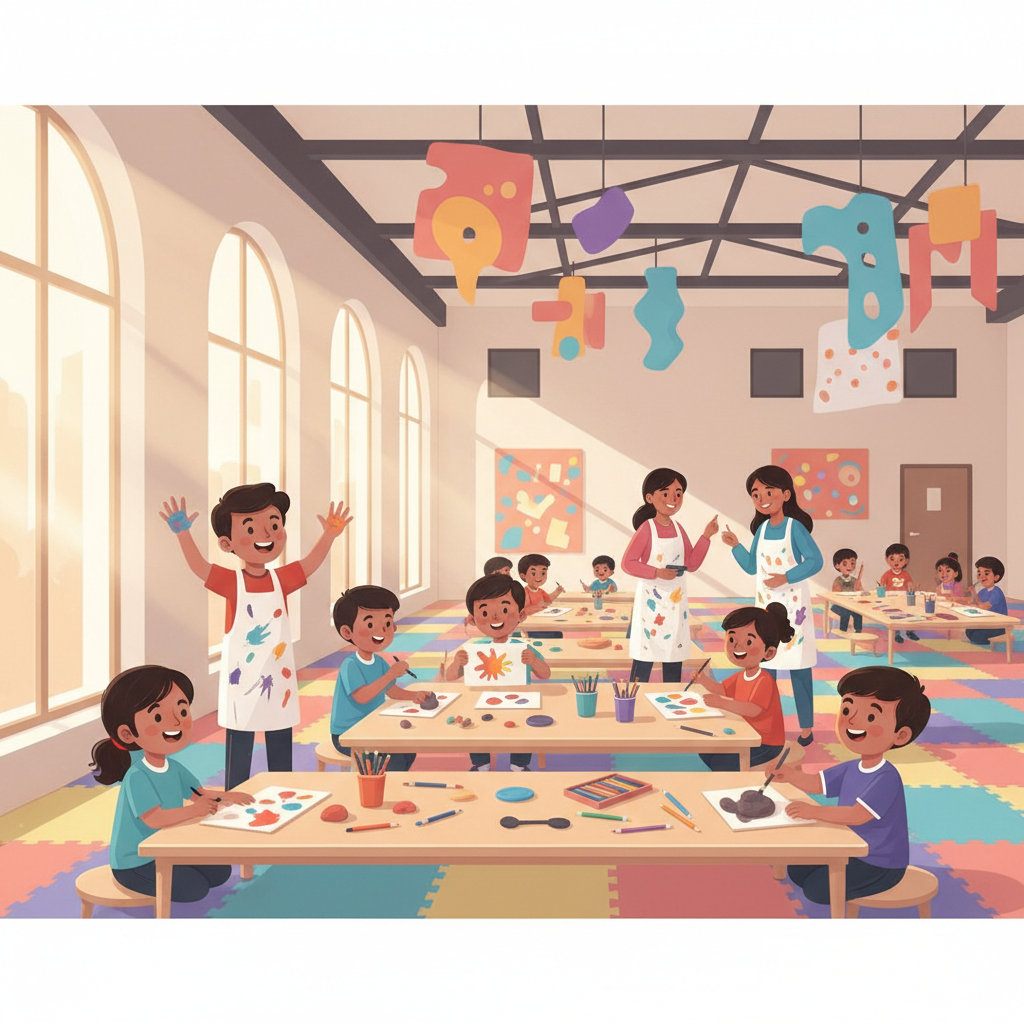
As parents, we often dream of our children discovering their passions. For many, that journey begins with a splash of color and a blank canvas – their first art class! But stepping into a new environment, especially one that involves messy creativity, can bring a mix of excitement and apprehension for both you and your little one.
Parents in Vaishali Nagar, Chitrakoot, and Nirman Nagar frequently ask us about preparing for this wonderful milestone. It's perfectly normal to wonder how to best support your child, what to expect from the instructors, and how to know if they're truly enjoying the experience.
Key Takeaways
- Preparation is key: Dress for mess, pack essentials, and discuss the class positively.
- Separation anxiety is normal; gentle goodbyes and consistent routine help.
- Focus on process, not just product: The joy is in the creation.
- Look for engagement and happiness, not just perfect artwork, to gauge enjoyment.
- Art fosters crucial developmental skills beyond just drawing.
Setting the Scene: What to Expect from a First Art Class
A good first art class for young children isn't about creating masterpieces. It's about exploration, sensory engagement, and building confidence. Your child will likely be introduced to various materials – paints, clay, crayons, paper – and encouraged to experiment freely.
The focus is on the process of creation, not the final product. This freedom allows children to develop fine motor skills, hand-eye coordination, and problem-solving abilities without the pressure of perfection. They learn to make choices, express themselves, and interact with peers in a new setting.
Dressing for Success (and Mess!)
This is perhaps the most practical piece of advice for any art class. When paint, glue, and glitter are involved, things will get messy. And that's a good thing! It means your child is fully immersed in the creative process.
- Old Clothes are Gold: Dress your child in clothes you don't mind getting stained. Think well-worn t-shirts, shorts, or track pants. Even with aprons, splashes can happen.
- Comfort is Key: Ensure their clothing allows for free movement. They'll be bending, reaching, and possibly sitting on the floor.
- Closed-Toe Shoes: Protect little toes from accidental spills or dropped items. Sandals or open-toed shoes are best avoided.
- Hair Tied Back: If your child has long hair, a ponytail or bun will keep it out of the paint and away from their face.
Navigating Separation Anxiety: Gentle Goodbyes
It's completely normal for children, especially younger ones, to experience some separation anxiety when starting a new activity. This isn't a sign they don't want to be there; it's a sign they feel safe and connected to you.
Here's how to make goodbyes easier:
- Talk About It Beforehand: Explain what will happen: "We're going to art class, you'll paint with new friends, and then I'll be back to pick you up."
- Arrive Early: Give your child time to settle in, explore the room, and get comfortable before the class officially starts.
- Establish a Routine: A consistent drop-off routine can be incredibly reassuring. A quick hug, a special phrase ("See you soon, my little artist!"), and then a confident departure. Lingering can sometimes make it harder.
- Trust the Instructors: Reputable art studios, like Champions Studio in C-Scheme (and soon in Vaishali Nagar!), have experienced instructors who are adept at comforting children and redirecting their attention to the exciting activities. They'll know how to engage your child.
- Positive Reinforcement: When you pick them up, focus on their bravery and the fun they had, even if they cried at drop-off.
What Coaches and Instructors Look For in Young Artists
Art instructors aren't looking for the next Picasso in a beginner's class. Instead, they observe:
- Engagement: Is your child participating, even if quietly? Are they exploring the materials?
- Curiosity: Are they asking questions, trying new things, or observing others?
- Problem-Solving: How do they react when something doesn't go as planned? Do they try to fix it or ask for help?
- Fine Motor Development: How they hold a brush, cut with scissors, or manipulate clay gives insights into their developmental stage.
- Social Interaction: How do they share materials, communicate with peers, or follow instructions?
They're nurturing creativity and building foundational skills, not judging artistic merit. Many parents from areas like Raja Park and Vidyadhar Nagar appreciate this focus on holistic development.
"Vinayak is thriving—thanks to the incredible foundation and care he received at Champions Studio! Thank you for always nurturing not just the children but also the trust of every family who walks through your doors."
Kartikeya R Sharma (parent of Vinayak)Realistic Timelines for Progress: It's a Journey, Not a Race
When it comes to creative development, progress isn't linear, and it certainly isn't about achieving a certain "level" by a specific date. Art is deeply personal. Here's a realistic outlook:
- First Few Weeks: Your child might mostly explore textures, make abstract marks, or even just watch others. This is critical observation and experimentation.
- After 1-3 Months: You might start to see more intentional marks, perhaps recognizable shapes, or a preference for certain colors or materials. They'll likely be more comfortable with the routine and the instructors.
- Longer Term (6+ Months): This is when you might observe more complex ideas emerging, better control over tools, and a more confident approach to their creations. They might start narrating stories about their artwork.
Remember, "progress" in art often means increased confidence, longer attention spans for creative tasks, and a willingness to try new techniques, rather than perfectly rendered drawings.
| Age Group | Common Art Milestones | Expected Progress Timeline |
|---|---|---|
| 2-3 Years | Scribbling, sensory exploration (clay, finger paint), color recognition. | Focus on engagement and exploration for 3-6 months. |
| 4-5 Years | Emerging shapes, basic human forms (tadpole figures), storytelling through art, scissor skills. | Noticeable increase in intentionality and fine motor control over 6-12 months. |
| 6-8 Years | More detailed drawings, perspective awareness, mixing colors, experimenting with different mediums. | Developing personal style and problem-solving skills over 12+ months. |
How to Tell If Your Child is Enjoying Art Class
Sometimes children can't articulate exactly how they feel, but their behavior speaks volumes. Look for these signs that your child is thriving in their art class:
- Eagerness to Go: Do they talk about class during the week? Are they excited on the day of the class?
- Positive Talk: Do they share stories about what they did, what they learned, or who they played with?
- Bringing Home Work: Are they proud to show you their creations, even if they seem like "just scribbles" to an adult eye?
- Continued Creativity at Home: Do they show increased interest in art supplies at home, initiating their own creative projects?
- No Major Resistance: While some initial shyness is normal, a sustained and strong resistance to attending might warrant a conversation with the instructors.
One parent of a Champions Studio child shared, "Sasha is now focused on tennis and Soham exclusively on art which we discovered his talent at your place 🙏." This kind of discovery is a wonderful indicator of true enjoyment and engagement.
✅ Your Pre-Enrolment Checklist for Art Class
- Research local options: Look for studios in Vaishali Nagar, Chitrakoot, or Nirman Nagar that prioritize process over product.
- Check class structure: Is there a good balance of guided activity and free exploration?
- Meet the instructors: Do they seem warm, patient, and engaging?
- Ask about materials: Are they child-safe and varied?
- Consider trial classes: Many places offer a trial to see if it's a good fit.
- Discuss cost and schedule: Be realistic about what fits your family's budget and routine. Options can range from 1 session/week to multiple activities like those offered at Champions Studio.
Beyond the Canvas: The Broader Benefits of Art
An art class is far more than just learning to draw. It's a rich environment for:
- Emotional Expression: Art provides a non-verbal outlet for feelings.
- Cognitive Development: Problem-solving, critical thinking, and understanding cause and effect.
- Sensory Integration: Engaging with different textures, colors, and smells.
- Cultural Awareness: Learning about different art forms and artists.
- Patience and Persistence: Seeing a project through from start to finish.
By investing in your child's creative education, you're not just nurturing a potential artist; you're fostering a well-rounded, confident, and expressive individual.
Frequently Asked Questions by Jaipur Parents
Q: At what age should my child start art classes in Jaipur?
A: Most studios in Jaipur, including those in Vaishali Nagar, offer classes for children as young as 2.5 or 3 years old. These early classes focus heavily on sensory play, exploration, and developing fine motor skills rather than specific techniques.
Q: What's the difference between a school art class and a dedicated art studio?
A: School art classes often follow a curriculum with specific projects. Dedicated art studios, like Champions Studio, typically offer more specialized instructors, a wider range of materials, and a greater emphasis on individual expression and process-based learning, often with smaller class sizes.
Q: How do I choose the best art class in Vaishali Nagar for my child?
A: Look for a studio that emphasizes fun, exploration, and process over product. Consider the instructor's approach, class size, and the variety of mediums offered. Read reviews from other parents in Vaishali Nagar, Chitrakoot, or Nirman Nagar. A trial class is always a good idea.
Q: My child is shy. Will an art class help them open up?
A: Yes, art can be a wonderful way for shy children to express themselves without the pressure of verbal communication. The structured yet free environment of an art class, with supportive instructors, often helps build confidence and encourages social interaction over time.
Q: How can I encourage my child's art at home without interfering?
A: Provide a dedicated "art space" with accessible materials. Encourage them to create freely without directing their work. Display their art prominently. Ask open-ended questions like "Tell me about your drawing?" instead of "What is it?" Focus on their effort and enjoyment.
Q: Are art classes expensive in Jaipur? What are the typical fee structures?
A: Fees for art classes in Jaipur vary widely depending on the studio, duration, and frequency. You might find options ranging from ₹2000-₹5000 per month for a single class once or twice a week. Some premium studios, like Champions Studio, offer comprehensive packages with multiple activities and sessions per week. For instance, their Standard plan might be around ₹5000/month for 3 sessions/week of one activity, while Premium or Deluxe plans (with more activities and sessions) could range from ₹8500 to ₹14000/month. It's best to check with individual studios for their specific pricing.
Embarking on the journey of an art class is a rewarding experience for both you and your child. By understanding what to expect and how to prepare, you can ensure it's a vibrant and joyful step in their developmental path.
If you're in Vaishali Nagar or nearby areas, consider exploring the offerings at Champions Studio, opening soon in Vaishali Nagar. They offer a diverse range of activities, including art, skating, dance, and more, designed to foster holistic development in children, building on the success of their established C-Scheme club.