Chess for Kids: Brain Boosters & Fun in Vaishali Nagar, Jaipur
Discover how chess benefits your child's development, what to expect at different ages, and tips for parents in Jaipur. Learn about the cognitive and social advantages of this classic game.
By Champions Studio Team · Wed Aug 05 2026
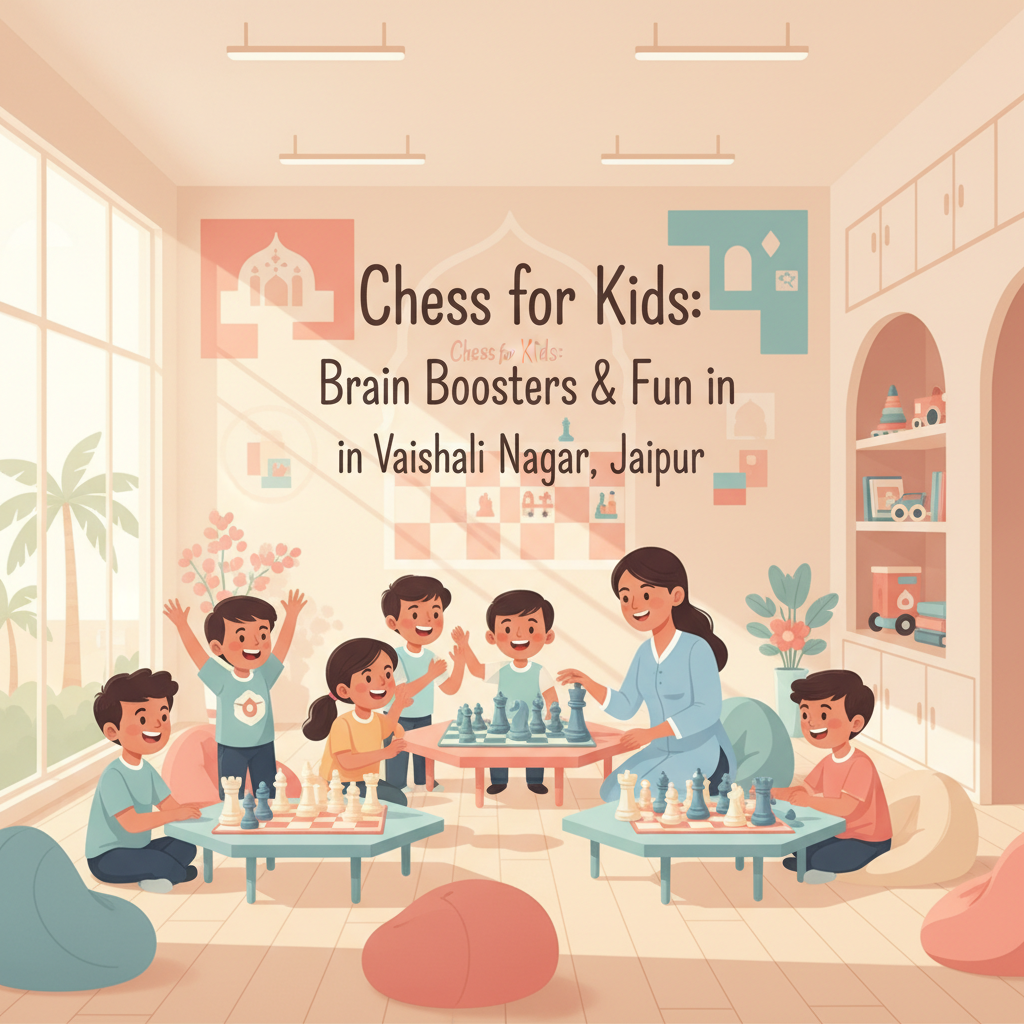
As parents in Jaipur, we're constantly looking for activities that not only keep our children engaged but also genuinely contribute to their growth. Amidst the myriad of choices, from sports academies in Chitrakoot to art classes near Raja Park, a timeless game often gets overlooked: chess. It's more than just moving pieces on a board; it's a powerful tool for cognitive development.
Key Takeaways
- Chess significantly enhances critical thinking, problem-solving, and concentration in children.
- It's beneficial for emotional regulation and teaches sportsmanship.
- Start early with simplified versions; formal instruction can begin around age 5-7.
- Look for programs that balance learning with fun, fostering a love for the game.
- Consider factors like location (e.g., Vaishali Nagar), class size, and instructor experience when choosing a chess club.
The Unseen Benefits: How Chess Builds Brainpower
When your child sits down at a chessboard, they're not just playing; they're engaging in a complex mental workout. Chess demands focus, strategic thinking, and the ability to anticipate consequences. These are skills that extend far beyond the chessboard, influencing academic performance and daily decision-making.
Research consistently shows that children who play chess tend to perform better in subjects like mathematics and reading. This isn't surprising, as chess strengthens the same neural pathways used for logical reasoning and pattern recognition.
Boosting Cognitive Skills: More Than Just Moves
At its core, chess is a game of problem-solving. Each move presents a challenge, and your child must analyze the board, evaluate options, and predict their opponent's responses. This process hones several crucial cognitive functions:
- Critical Thinking: Children learn to analyze situations deeply rather than reacting impulsively.
- Problem-Solving: Every game is a series of problems to solve, encouraging creative solutions.
- Concentration and Focus: Maintaining attention for extended periods is vital in chess, a skill often challenging for children but greatly improved through practice.
- Memory: Remembering opening lines, tactical patterns, and past game scenarios sharpens memory recall.
- Spatial Reasoning: Visualizing how pieces move and interact on the board enhances spatial awareness.
Emotional Intelligence and Social Growth
Beyond academics, chess also nurtures emotional intelligence. Children learn to manage frustration when a plan goes awry, to show humility in victory, and grace in defeat. It’s a safe space to experience the ups and downs of competition.
Playing chess with others, whether friends or family, also encourages social interaction. They learn to communicate, negotiate, and respect their opponent's strategy. This can be particularly valuable for children who might be shy, as the game provides a structured way to interact.
"Vinayak is thriving—thanks to the incredible foundation and care he received at Champions Studio! Thank you for always nurturing not just the children but also the trust of every family who walks through your doors. Champions Studio will always hold a special place in our hearts. Here's to many more years of inspiring young minds!"
Kartikeya R Sharma (parent of Vinayak)When to Start: Age-Appropriate Chess Milestones
Parents often wonder at what age their child can begin playing chess. There's no single right answer, as every child develops differently. However, we can look at general guidelines and what to expect at various stages.
Early Explorers (Ages 3-5): Playful Introduction
At this age, formal chess lessons might be too intense. The goal is to introduce the pieces and their movements in a fun, pressure-free way. Think of it as a 'pre-chess' stage.
- Focus: Learning piece names, how each piece moves.
- Activities: Playing with just a few pieces, simple 'capture the king' games, story-telling about the pieces.
- Expectations: Short attention spans, lots of questions, enjoyment of the physical pieces.
Budding Strategists (Ages 6-8): Formal Learning Begins
This is often an ideal age to begin more structured chess instruction. Children at this stage can understand basic rules, strategize simple attacks, and grasp the concept of checkmate.
- Focus: Understanding all rules, basic checkmates, simple tactics (forks, pins).
- Activities: Playing full games, solving simple chess puzzles, learning about opening principles.
- Expectations: Developing patience, understanding consequences of moves, early strategic thinking.
| Age Group | Developmental Focus | Recommended Duration per Session |
|---|---|---|
| 3-5 years | Piece recognition, basic movement | 15-20 minutes |
| 6-8 years | Rules, simple tactics, checkmate | 30-45 minutes |
| 9+ years | Advanced tactics, strategy, game analysis | 45-60+ minutes |
Advanced Players (Ages 9+): Deeper Understanding
Children in this age group are ready for more complex strategies, opening theory, and end-game studies. They can analyze their games, learn from mistakes, and participate in tournaments.
- Focus: Complex tactics, strategic planning, opening theory, end-game technique.
- Activities: Analyzing famous games, participating in tournaments, using chess software.
- Expectations: Independent game analysis, strong sportsmanship, deeper strategic insight.
Choosing a Chess Program in Jaipur: What to Look For
For parents in areas like Vaishali Nagar, Chitrakoot, or even those commuting from Vidyadhar Nagar, finding the right chess program is key. It's not just about finding a class; it's about finding an environment that fosters a love for the game.
Instructor Quality Matters
A good chess instructor does more than just teach moves. They should be able to connect with children, make learning fun, and adapt their teaching style to different learning paces. Look for instructors with experience teaching children, not just playing chess.
Curriculum and Teaching Philosophy
Does the program offer a structured curriculum that progresses logically? Is there a balance between learning theory and playing actual games? Some programs, like the one at Champions Studio, focus on a holistic approach, integrating chess with other activities to prevent burnout and keep engagement high.
Class Size and Environment
Smaller class sizes often allow for more personalized attention. Consider the overall atmosphere of the learning space. Is it bright, engaging, and conducive to learning? For parents in Vaishali Nagar, a local and accessible center can significantly reduce commute stress.
✅ Your Pre-Enrolment Checklist for Chess Clubs
- Trial Class: Can your child attend a trial session to experience the environment?
- Instructor Background: What is their experience with teaching children?
- Curriculum Overview: Does it match your child's age and learning style?
- Class Size: How many students per instructor?
- Location & Schedule: Is it convenient for your family's routine in Jaipur? (e.g., easy access from Vaishali Nagar, Nirman Nagar)
- Cost & Packages: Understand all fees and what's included.
Practical Tips for Parents: Nurturing a Chess Enthusiast at Home
Even if your child is enrolled in a class, parental involvement at home can make a huge difference. You don't need to be a grandmaster to support their chess journey.
Make it Fun, Not a Chore
Avoid pressuring your child to win or to study for hours. Keep chess light and enjoyable. Play casual games together, even if you're a beginner yourself. The goal is to foster a positive association with the game.
Encourage, Don't Criticize
Focus on effort and learning, rather than just results. Celebrate good moves and strategic thinking, even if they don't lead to a win. When reviewing games, gently guide them to see alternatives rather than pointing out mistakes harshly.
Resources at Your Fingertips
There are countless online resources, apps, and books designed for young chess players. Websites like Lichess.org or Chess.com offer free puzzles and games. Local libraries in Jaipur might also have beginner-friendly chess books.
Balance with Other Activities
While chess is fantastic, ensure your child has a well-rounded schedule. Physical activity, creative pursuits like painting or dance, and other interests are equally important for holistic development. For example, at Champions Studio in Jaipur, children can explore chess alongside activities like swimming, soccer, and art, providing a diverse range of experiences.
Frequently Asked Questions by Jaipur Parents
Q: Is chess only for gifted children?
A: Absolutely not! Chess benefits children of all intellectual levels. While some may pick it up faster, the game's beauty lies in its ability to improve cognitive skills in anyone who plays consistently. It's about developing potential, not just identifying existing talent.
Q: My child gets frustrated easily when playing chess. What should I do?
A: Frustration is common! Start with very simple games, perhaps even just playing with pawns initially. Emphasize that making mistakes is how we learn. Keep sessions short and fun. Praise effort and positive attitude more than winning. Sometimes, a break or switching to another activity, like a quick game of basketball or some art, can help reset their mood.
Q: How much screen time is too much if my child is playing chess online?
A: While online chess platforms are great learning tools, balance is crucial. For younger children (under 8), aim for no more than 30-45 minutes of online chess at a time. For older children, it can extend to an hour, but ensure it's interspersed with offline play and other activities. Always monitor content and interactions.
Q: Are there local chess tournaments for kids in Jaipur?
A: Yes, the Rajasthan Chess Association frequently organizes tournaments for various age groups. Keep an eye on their announcements or ask your child's chess instructor for information on local events. Many clubs, including Champions Studio, also host internal tournaments to give children a taste of competitive play in a supportive environment.
Q: My child wants to learn chess but I don't know how to play. Can I still help?
A: Definitely! You can learn alongside them, which can be a wonderful bonding experience. There are many beginner-friendly resources. Even if you don't play, you can encourage them, ask about their games, celebrate their progress, and ensure they have access to good instruction and practice opportunities.
Q: What's the difference between private lessons and group classes for chess?
A: Private lessons offer individualized attention and a tailored curriculum, which can be great for rapid progress or addressing specific weaknesses. Group classes, on the other hand, provide a social environment, peer learning, and the chance to play against different opponents, which is vital for developing game sense and sportsmanship. Many parents find a combination of both to be ideal.
Introducing your child to chess is an investment in their cognitive and emotional development. Whether you're in the bustling heart of C-Scheme or the growing community of Vaishali Nagar, Jaipur offers resources to help your child embark on this enriching journey. By choosing the right environment and fostering a love for the game, you're equipping them with skills that will serve them for a lifetime.
If you're exploring options for chess and other enriching activities for your child in Vaishali Nagar, you might consider Champions Studio, opening soon in Vaishali Nagar. They offer chess as part of their diverse activity packages, alongside options like swimming, dance, and art, designed to provide a holistic developmental experience for children across Jaipur.