5 Mistakes Jaipur Parents Make Choosing Chess Classes in Malviya Nagar
Learn common pitfalls Jaipur parents face when selecting chess classes for kids, focusing on Malviya Nagar. Avoid mistakes with class size, coaches, and age-appropriateness.
By Champions Studio Team · Wed Jul 01 2026
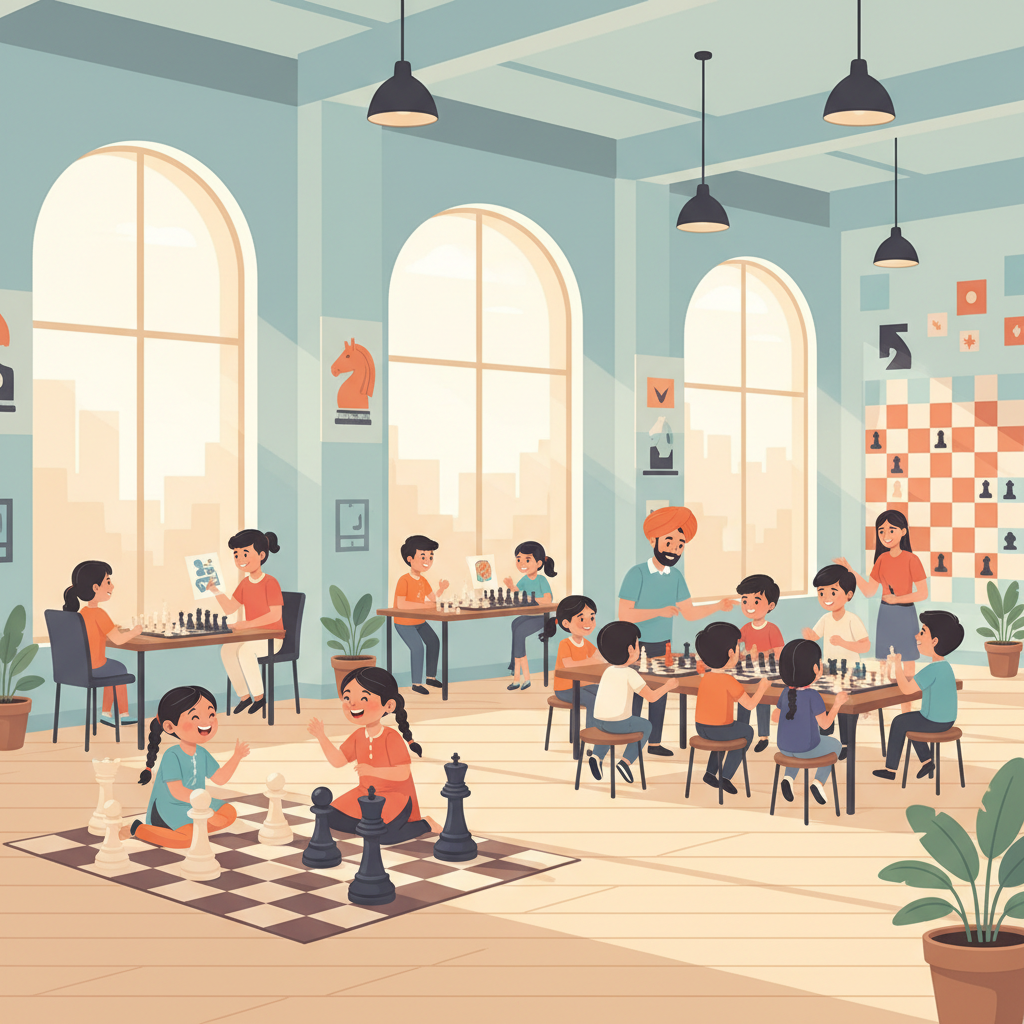
As a parent in Jaipur, the desire to give our children every advantage is strong. We want them to develop critical thinking, problem-solving skills, and focus. Chess, with its rich history and intellectual demands, often comes to mind as an excellent activity. But navigating the options for chess classes, especially in bustling areas like Malviya Nagar, can feel overwhelming. It's easy to fall into common traps that might not serve your child's best interests.
Key Takeaways
- Don't prioritize trophies over learning: Focus on foundational skills and enjoyment first.
- Small class sizes matter: Individual attention is crucial for chess development.
- Coach qualifications go beyond rating: Look for teaching ability and child-friendliness.
- Age-appropriate learning is key: Tailor activities to your child's developmental stage.
- Manage expectations realistically: Chess is a journey, not a sprint.
This article isn't about finding the 'best' class, but about empowering you to make the right choice for your child. Let's explore five common mistakes Jaipur parents make and how you can wisely avoid them, ensuring a positive and enriching chess journey for your little one.
Mistake #1: Prioritizing Tournament Wins Over Foundational Learning
It's natural to dream of your child bringing home medals. However, an overemphasis on competitive results too early can be detrimental. Many parents, eager for quick progress, enrol their child in programs that rush through basics to focus on opening theory and tactical puzzles, without truly solidifying understanding.
Chess is like building a house; a strong foundation is paramount. Without a deep understanding of piece movement, basic tactics, and strategic principles, advanced concepts become rote memorization rather than genuine comprehension. This can lead to frustration and burnout.
How to Avoid It: Focus on Enjoyment and Understanding
- Seek a curriculum that emphasizes fundamentals: Look for programs that dedicate ample time to basic checkmates, simple tactics (forks, pins, skewers), and endgame principles before diving into complex openings.
- Observe a class: Before enrolling, ask if you can observe a session. Watch if the children seem engaged and if the coach makes learning fun, rather than just drill-focused.
- Talk to other parents: Parents in areas like Jawahar Nagar, Tonk Road, or Durgapura who have children in chess classes can offer valuable insights into a centre's approach.
- Prioritize a playful approach: Especially for younger children (4-7 years old), chess should be introduced through games and stories, not just dry lectures.
Mistake #2: Overlooking Class Size and Individual Attention
In a city like Jaipur, where many activities are popular, it's common to find large class sizes. While a bustling environment can be energetic, for a game as intricate as chess, individual attention is absolutely critical. A coach overseeing too many students might miss a child's specific struggles or unique talents.
Chess requires personalized feedback. A child might be making the same positional mistake repeatedly, and without a coach noticing and correcting it, that habit can become ingrained. In large groups, quiet children might get overlooked, and their questions might go unanswered.
How to Avoid It: Ask About Student-to-Coach Ratios
- Inquire about the maximum class size: A good ratio for beginner chess is often around 6-8 students per coach, ideally not exceeding 10. For advanced groups, it might be slightly higher, but personalized game analysis is still essential.
- Ask about personalized feedback: Does the program include one-on-one game reviews, even brief ones? How does the coach track individual student progress?
- Consider semi-private or small group options: If available, these can offer a good balance between cost and individual attention.
- Parents in Malviya Nagar often wonder: 'Will my child get enough attention in a group class?' This is a valid concern, and reputable centres should have clear answers.
Mistake #3: Not Vetting Coach Qualifications Beyond Just Rating
A high FIDE rating doesn't automatically make someone an excellent chess coach for children. While playing prowess is important, the ability to teach, communicate, and inspire young minds is a completely different skill set. A brilliant player might struggle to simplify complex concepts or engage a fidgety six-year-old.
A good coach understands child psychology, knows how to make learning fun, and can adapt their teaching style to different learning speeds and personalities. They are patient, encouraging, and celebrate small victories.
"A great chess player can show you the move, but a great chess coach can teach you how to find it yourself."
Experienced Parent, Malviya NagarHow to Avoid It: Look for Teaching Skills and Child-Friendliness
- Ask about coaching experience with children: How long have they been teaching? What age groups do they specialize in?
- Look for passion and patience: During your observation, gauge the coach's demeanor. Do they seem genuinely enthusiastic? Are they patient with mistakes?
- Check for structured curriculum: A good coach often follows a well-thought-out curriculum rather than just ad-libbing lessons.
- Seek testimonials specific to coaching: While a centre might have general positive feedback, look for comments specifically praising the coaches' teaching abilities.
Mistake #4: Ignoring Age-Appropriate Training Methods
A common pitfall is expecting a 5-year-old to learn chess the same way a 10-year-old does. Younger children have shorter attention spans and learn best through play, visual aids, and hands-on activities. Trying to force them into long lectures or complex tactical exercises too early can lead to disinterest and a negative association with chess.
For preschoolers and early primary school children, the focus should be on understanding piece movement, basic checkmates, and developing logical thinking through fun, interactive games. As children grow, the approach can gradually become more structured and analytical.
| Age Group | Activity Focus | Recommended Duration |
|---|---|---|
| 4-6 years | Piece movement, basic captures, fun games, storytelling | 30-45 minutes |
| 7-9 years | Basic tactics (forks, pins), checkmate patterns, simple strategy, short games | 45-60 minutes |
| 10+ years | Advanced tactics, opening principles, endgame theory, game analysis | 60-90 minutes |
How to Avoid It: Inquire About Age-Specific Curricula
- Ask about the curriculum for your child's age group: Does it sound engaging and appropriate for their developmental stage?
- Observe a class with children of similar age: This is the best way to see if the teaching methods resonate with your child's peer group.
- Look for centres offering different programs for different ages: This indicates an understanding of varied learning needs. Champions Studio, for instance, offers diverse activities including chess, with programs often tailored by age group, recognizing that a 4-year-old's learning style differs vastly from a 9-year-old's.
- A common question from Jaipur families is: 'Is my child too young for chess?' The answer often depends on the teaching method, not just the age.
Mistake #5: Setting Unrealistic Expectations and Over-Scheduling
Parenthood in Jaipur often involves juggling school, tuition, and multiple extracurriculars. It's easy to fall into the trap of over-scheduling, hoping that more classes will lead to faster progress in chess. However, learning chess, like any complex skill, requires consistent, focused effort and time for absorption, not just more hours in a classroom.
Expecting professional-level play after just a few months, or pushing for tournaments when a child isn't ready, can lead to stress and resentment. Chess is a marathon, not a sprint, and progress is often gradual.
✅ Your Pre-Enrolment Checklist for Chess Classes
- Observe a class session and note student engagement.
- Inquire about student-to-coach ratio.
- Ask about the coach's experience teaching children.
- Review the age-specific curriculum.
- Discuss class timings and your child's existing schedule.
- Consider your child's interest level – are they genuinely curious?
- Ask about trial classes or introductory sessions.
- Check location convenience, especially from Malviya Nagar to areas like C-Scheme or Pratap Nagar.
How to Avoid It: Encourage Patience and Balance
- Listen to your child: Pay attention to their enthusiasm levels. If they seem stressed or uninterested, it might be a sign of over-scheduling or an unsuitable class.
- Prioritize quality over quantity: One good class a week with home practice might be more effective than three rushed classes.
- Foster a love for the game: Encourage them to play casually, solve puzzles for fun, and watch chess videos. The long-term benefits come from sustained interest.
- Manage your own expectations: Celebrate effort and small improvements, not just big wins. Remember, the journey of learning is the true reward.
Frequently Asked Questions About Chess Classes for Kids in Jaipur
Q: What is the ideal age to start chess classes for a child in Jaipur?
A: Most children can begin learning chess basics around 4-6 years old. At this age, the focus should be on fun, understanding piece movements, and short, engaging activities. The key is their ability to focus for short periods and follow simple instructions, which varies by child.
Q: How can I tell if a chess coach is good for my child in Malviya Nagar?
A: Beyond their chess rating, look for patience, clear communication skills, and an ability to make learning fun. A good coach can adapt to different learning styles and encourages questions. Observing a class or asking for testimonials from parents of similar-aged children can be very helpful.
Q: Are online chess classes effective for young children in Jaipur?
A: Online classes can be effective, especially for older children or those with some basic understanding. For very young beginners (under 7), in-person classes often provide better hands-on interaction and direct supervision. However, for convenience, especially with Jaipur's traffic, online options can be considered for supplemental practice or for children who are already self-motivated.
Q: My child is resisting chess; should I push them?
A: Gentle encouragement is good, but persistent resistance might indicate the class isn't a good fit, or they're simply not ready. Forcing an activity often leads to aversion. Try to understand the reason for their resistance: Is the class too hard? Is it boring? Is it too long? Perhaps a break or a different approach is needed.
Q: How much practice should my child do outside of class?
A: For beginners, 15-20 minutes of focused practice a few times a week is often sufficient. This could include playing short games, solving simple puzzles, or reviewing concepts taught in class. The goal is consistent, enjoyable engagement, not overwhelming them with hours of practice.
Choosing the right chess class for your child in Jaipur, particularly if you're in Malviya Nagar or nearby areas like Pratap Nagar or Durgapura, doesn't have to be a gamble. By avoiding these common mistakes and focusing on a holistic, child-centric approach, you can ensure your child develops a genuine love for the game and reaps its many benefits.
If you're seeking a centre that understands these nuances, Champions Studio offers chess programs designed with age-appropriate learning and skilled coaches. You can register interest for Malviya Nagar to learn more about their approach to nurturing young minds in chess and other activities. Their C-Scheme location also provides a wide range of activities you can explore.