Chess classes for kids in Jaipur: a parent's decision guide
Deciding if chess is right for your child in Jaipur? Learn the ideal age to start, what a quality beginner class offers, and key questions for trial visits.
By Champions Studio · Wed Jun 17 2026
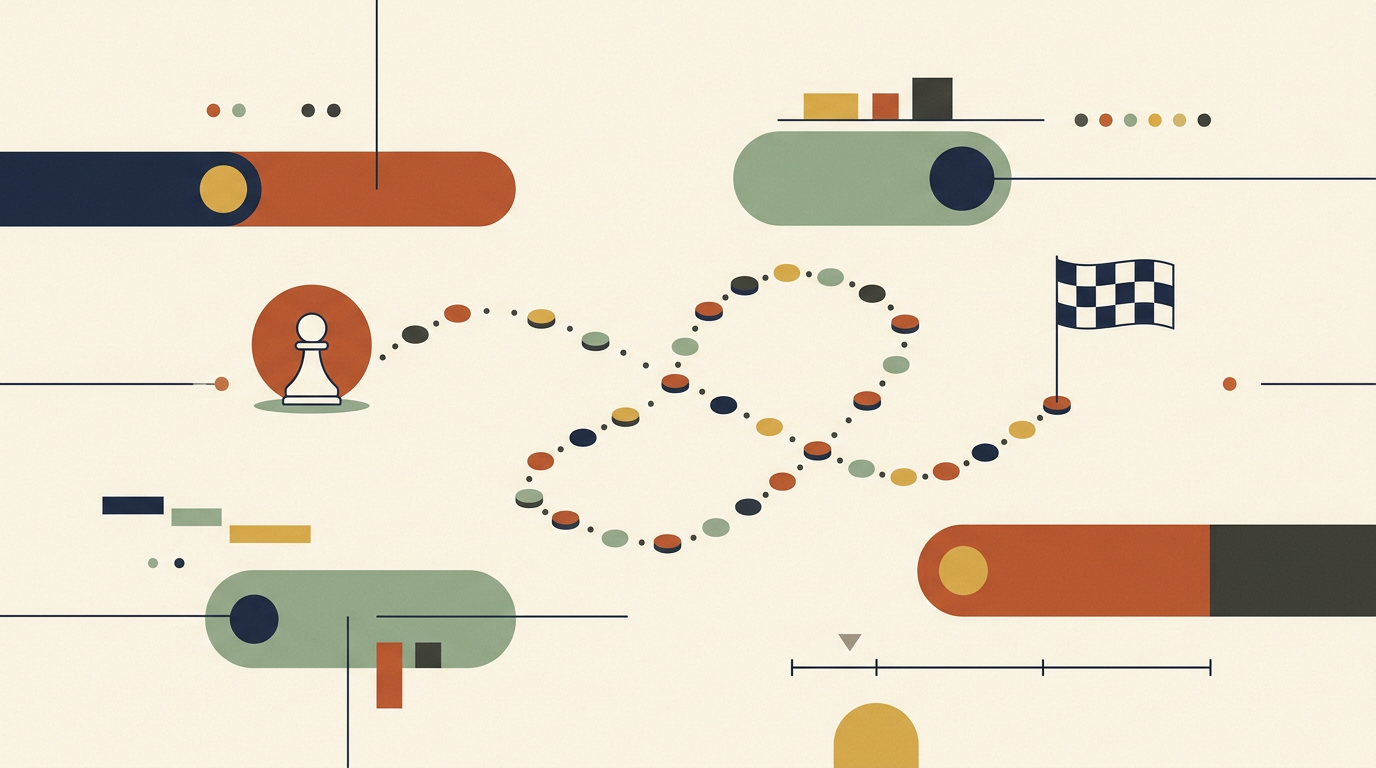
For parents in Jaipur considering enrichment activities, chess often comes up as a strong contender. It is possible for most children to begin learning the fundamentals of chess, including piece movements, between the ages of five and six years, with some children as young as four benefiting from a play-based approach.
Is your child ready for chess?
While age provides a general guideline, a child's readiness for chess depends more on certain developmental milestones. Observational indicators that suggest a child may be prepared for formal chess instruction include the ability to focus on a single activity for approximately 15 minutes, consistently follow two-step instructions, and manage the experience of losing a game without it disrupting the entire session. These capabilities typically emerge as children mature and indicate an attentional capacity suitable for learning the game's rules and strategies [1].
For parents wondering about specific age groups, here is a more detailed perspective:
- Chess classes for 3 year olds: At this age, children are primarily developing gross and fine motor skills, and an understanding of consequences. While board games can be introduced, formal chess instruction is often premature. Activities that develop pattern recognition, problem-solving, and hand-eye coordination lay a strong foundation for future chess learning.
- Chess classes for 4 year olds: Some children at this age possess the required attention span and rule-following ability. For a 4-year-old, a class focused on playful interaction with the pieces, learning basic movements through stories, and very short game segments is more beneficial than a highly structured, competitive environment. The emphasis should be on exploration and familiarity with the board, rather than complex strategy.
- Chess classes for 5 year olds: Many 5-year-olds are cognitively ready to grasp all basic piece movements and simple rules like check. Their ability to sit for longer periods, typically 15-20 minutes, allows for more structured learning. Classes for this age group can introduce basic tactical concepts in a simplified manner.
- Can a 7 year old learn chess?: Absolutely. Seven-year-olds often have a well-developed capacity for abstract thought, strategy, and understanding consequences, making it an excellent age to begin chess. They can quickly learn rules, understand tactical concepts, and even develop basic positional awareness. A 7-year-old starting chess can make rapid progress and often enjoys the strategic challenge the game presents.
What a real beginner term should teach (8 to 12 weeks)
A well-structured beginner chess course, spanning approximately 8 to 12 weeks, focuses on foundational skills rather than complex strategies. The objective is to ensure children understand the mechanics of the game and can play a complete, basic game independently. Parents should expect concrete, measurable learning outcomes. Here is what a quality beginner term should cover:
- Piece Recognition and Movement: Every piece (Pawn, Knight, Bishop, Rook, Queen, King) should be identified by name, and its specific movement pattern on the board should be mastered.
- Board Setup: The child should be able to correctly set up the chessboard from an empty state to the starting position for both sides.
- Basic Rules of Play: Understanding how to move pieces, the concept of capturing, and the objective of the game (checkmating the opponent's king).
- Understanding "Check": The child should be able to identify when their King is in "check" and articulate ways to get out of check (move the king, block the attack, capture the attacking piece).
- Simple Checkmates: Introduction to basic checkmating patterns, such as King and Rook vs. King.
- Pawn Promotion: Understanding that a pawn reaching the eighth rank can be promoted to another piece.
- Special Moves: Learning castling and en passant, though these may be introduced later in the beginner phase or early intermediate.
- One-Move Tactics: Solving very simple puzzles that involve identifying a single winning move, such as capturing an undefended piece or creating a fork.
The emphasis at this stage is on building a solid understanding of the game's grammar. A good class will measure progress against these specific learning points, not general improvements in "concentration" alone.
How to judge any chess class on a trial visit
When selecting chess coaching classes in Jaipur, a trial visit provides an opportunity to evaluate the learning environment beyond its advertised claims. Parents, Ji, should observe closely and ask specific questions to assess the quality of instruction and suitability for their child.
- Batch Size: Observe the number of children in a batch. An ideal size for beginner chess is typically 8 to 10 students. This allows the coach to provide individual attention to each child's board, observe their thought process, and offer timely feedback. In larger batches, such as those with 20 or more children, individual learning can be significantly hampered, as a child may spend substantial time waiting for assistance.
- Curriculum Transparency: Ask to see the written curriculum document, specifically for the beginner level. A high-quality chess program will have a structured, progressive curriculum that outlines learning objectives for each stage. If an academy cannot provide a clear document detailing what will be taught and when, it may indicate a less structured approach to teaching. Without a written progression, it is difficult to measure actual learning outcomes.
- Progress Reporting: Enquire about how progress is monitored and communicated to parents. A good program will have a system in place, whether through regular written reports, parent-teacher meetings, or digital updates, that details what the child has learned and areas for continued development. This transparency helps parents understand their child's growth.
- Progression Beyond Beginner: Ask what happens once a child completes the beginner batch. A common pitfall in less structured academies is for children to repeat the same beginner content for prolonged periods out of convenience, rather than advancing to new concepts. A clear pathway to intermediate and advanced levels, with defined criteria for moving up, is crucial for sustained engagement and learning.
By focusing on these practical aspects during your visit to a chess academy near me Jaipur, you can make an informed decision about the best fit for your child.
Where chess fits in a week that already has school
Integrating extracurricular activities into a child's weekly schedule, particularly alongside school commitments, requires careful planning. For many families in Jaipur, the ideal approach involves balancing cognitive activities with physical engagement. Chess, as a thinking activity, complements a physical activity, such as a sport or dance class. This combination ensures a diverse developmental experience, addressing both mental agility and physical well-being [2].
A practical consideration for parents is logistics. Managing multiple classes at different locations across the city can lead to logistical challenges and increased travel time. Choosing a facility that offers a variety of activities under one roof can consolidate schedules and reduce the demands on parents' time, effectively saving the need for multiple school runs or class drop-offs throughout the week.
How chess works at Champions Studio
At Champions Studio, located at A-4 Sardar Patel Marg, Ashok Nagar, chess is part of a comprehensive offering designed for children aged 6 months to 10 years. Our approach to chess is structured to foster development through a clear, progressive pathway. We offer a five-level curriculum, starting from the Explorer level, guiding children towards becoming proficient players.
Progress is regularly reviewed through milestone assessments conducted every 4 to 6 weeks, ensuring that each child is mastering concepts before moving forward. Parents receive digital progress reports, providing transparent updates on their child's learning journey and achievements. To maximize individual attention and effective learning, our batches are kept small, typically comprising 8 to 10 children. This allows our coaches to provide personalised guidance and observe each child's engagement with the board. Chess at Champions Studio is one of over 13 activities available, allowing families the convenience of managing multiple enrichment pursuits at a single, accessible location in C-Scheme.
Try one session first
To help you determine if chess is the right fit for your child and to experience our teaching environment firsthand, Ji, we invite you to book a trial session. A single session allows your child to engage with the board and our coaches, and for you to observe their interaction and interest. You can book a trial session for ₹500 by contacting us on WhatsApp. https://wa.me/919509671632
Frequently asked questions
What is the best age to start chess for kids?
While many children can begin to grasp basic chess concepts around 5 or 6 years old, some may be ready at 4 years old, particularly with a play-based approach. Readiness is more about a child's ability to focus for 15 minutes, follow two-step rules, and handle losing, rather than a strict age number.
Can a 7 year old learn chess?
Yes, a 7-year-old is typically an excellent age to learn chess, as they often have the cognitive development necessary for understanding rules, strategy, and abstract concepts more readily than younger children. They can make significant progress quickly.
Can I teach my 3 year old chess?
While formal chess instruction is generally premature for 3-year-olds, you can introduce them to the pieces and the chessboard through playful exploration. Focus on developing their attention span, rule-following, and cause-and-effect understanding rather than structured gameplay.
What is the 20 40 40 rule in chess?
The "20/40/40 rule" is not a standard, widely recognised principle in chess training or strategy. It may refer to an informal or specific coaching guideline not universally applied.
What is the best age for a child to learn chess?
The optimal age often lies between 5 and 7 years, when children can absorb rules and basic strategies effectively, and have the attention span for lessons. However, readiness varies by individual child.
Can I teach a 4 year old chess?
You can introduce a 4-year-old to chess through very simple, game-oriented methods focusing on piece recognition and basic movements. Structured lessons should be kept short and highly engaging, as attention spans are still developing at this age.
Can a 7 year old be good at chess?
Absolutely. With consistent practice and good instruction, a 7-year-old can develop a strong understanding of chess fundamentals, tactical awareness, and even basic strategic thinking, leading to competitive play.
Sources
- Wang, M., Zhou, M., & Su, Y. (2013). Children's executive functions in response to playing chess. Journal of Child and Family Studies, 22(6), 846-857.
- Sala, G., & Gobet, F. (2018). Chess training improves cognitive ability, but not always chess skill: A meta-analysis. Frontiers in Psychology, 9, 2382.