Chess for Kids: Brain Boosts in Malviya Nagar, Jaipur
Discover how chess benefits your child's brain development, problem-solving, and focus. A guide for Jaipur parents, including age-appropriate tips and local options.
By Champions Studio Team · Tue Jun 02 2026
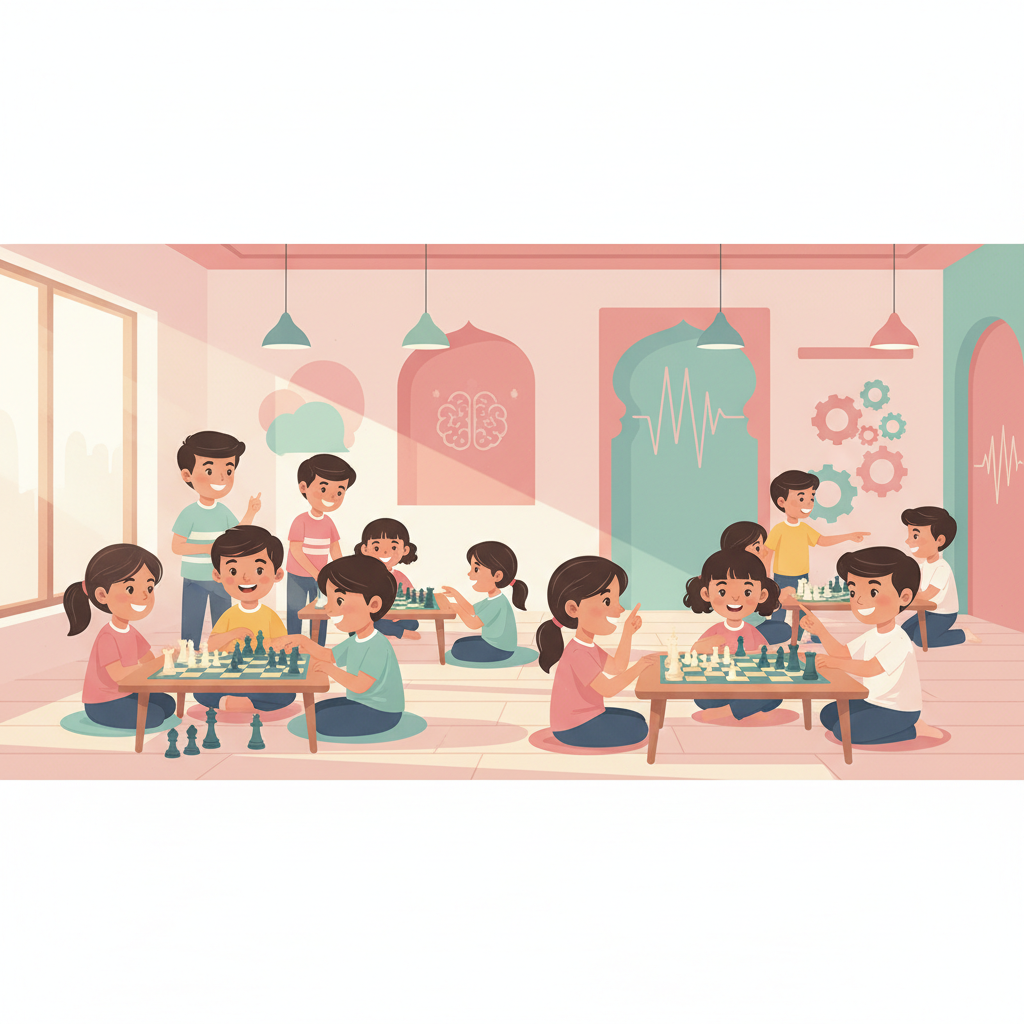
In our bustling city of Jaipur, where children are often balancing school, extracurriculars, and screen time, parents are constantly seeking activities that truly enrich their child's development. Among the myriad options, a classic game stands out for its profound impact on young minds: chess. It's more than just moving pieces on a board; it's a mental workout that cultivates critical skills for life.
Key Takeaways
- Chess significantly enhances critical thinking, problem-solving, and concentration in children.
- It helps develop strategic planning and decision-making skills from an early age.
- Age 4-6 is ideal for introducing basic concepts, while 7+ can delve into more complex strategies.
- Look for programs that focus on fun and foundational understanding, not just competition.
- Even 15-30 minutes of regular play can yield considerable benefits.
Why Chess? Unpacking the Brain Benefits for Your Child
Parents often ask, "Is chess really that impactful, or is it just another hobby?" The answer, backed by research and countless anecdotes, is a resounding yes. Chess engages multiple parts of the brain simultaneously, offering a unique form of cognitive exercise.
Think about it: every move requires analysis, foresight, and adaptability. Your child isn't just reacting; they're planning several steps ahead, considering their opponent's potential responses, and evaluating risks. This process builds what psychologists call 'executive functions' – the mental skills that help us organize, plan, and manage our time and attention.
For children growing up in areas like Malviya Nagar, where academic competition can be intense, developing strong executive functions early on can provide a significant advantage, not just in school but in navigating everyday challenges.
The Cognitive Edge: How Chess Builds Smarter Thinkers
Chess is often called "the game of kings," but it's also a game for developing young leaders and thinkers. Here’s a deeper look at its cognitive benefits:
- Enhances Problem-Solving Skills: Every chess position presents a problem to be solved. Children learn to analyze complex situations, identify threats, and devise solutions. This translates directly to academic subjects and real-life dilemmas.
- Boosts Concentration and Focus: A chess game demands sustained attention. Children learn to block out distractions and focus deeply for extended periods, a skill invaluable in a world full of digital interruptions.
- Develops Strategic Thinking: Chess teaches children to think several moves ahead, anticipate consequences, and understand cause and effect. This strategic mindset is crucial for planning, goal-setting, and decision-making.
- Improves Memory: Remembering openings, tactics, and past game patterns strengthens both short-term and long-term memory.
- Fosters Logical Reasoning: Children learn to deduce, infer, and use logical steps to reach conclusions, improving their analytical abilities.
"Vinayak is thriving—thanks to the incredible foundation and care he received at Champions Studio! Thank you for always nurturing not just the children but also the trust of every family who walks through your doors. Champions Studio will always hold a special place in our hearts. Here's to many more years of inspiring young minds!"
Kartikeya R Sharma (parent of Vinayak)When to Start? Age-Appropriate Chess Introduction
Parents in Jaipur, from Jawahar Nagar to Pratap Nagar, often wonder about the "right" age to introduce chess. There's no single perfect age, but understanding developmental milestones can guide your approach.
| Age Range | Developmental Focus | Chess Activities |
|---|---|---|
| 4-6 years | Rule-following, symbolic play, short attention spans | Learn piece names, how they move, basic captures. Focus on fun, short games. |
| 7-9 years | Developing logical thought, strategy beginnings, extended focus | Basic checkmates, simple tactics (forks, pins), opening principles. Introduce tournaments. |
| 10+ years | Abstract thinking, complex strategy, deeper analysis | Advanced tactics, positional play, endgames, game analysis, competitive play. |
For younger children (4-6), the goal isn't to create a grandmaster but to familiarize them with the board and pieces, making it a fun, engaging activity. In Malviya Nagar, with its vibrant community, finding peer groups for this age can be an excellent way to introduce the game socially.
Tips for Introducing Chess at Home
- Start Small: Don't overwhelm them with all the rules at once. Teach one or two pieces at a time. Play "pawn games" first, then add knights, and so on.
- Make it Playful: Use stories to describe how pieces move (e.g., the knight is a horse that jumps in an 'L' shape). Let them win sometimes to build confidence.
- Keep it Short: Young children have limited attention spans. A 10-15 minute session is often more effective than a forced hour-long one.
- Use Visual Aids: Chess apps or online tutorials with animated pieces can be very engaging.
- Don't Force It: If your child resists, take a break and try again another day. The goal is enjoyment, not obligation.
Beyond the Board: Life Skills Chess Cultivates
The benefits of chess extend far beyond cognitive development. It's a powerful tool for building character and essential life skills.
- Patience and Perseverance: Chess teaches children that hasty decisions lead to mistakes. It encourages them to think before acting and to persist even when a position seems difficult.
- Sportsmanship: Winning and losing gracefully are fundamental to chess. Children learn to respect their opponents, shake hands, and analyze their games objectively, whether they won or lost.
- Decision-Making Under Pressure: In timed games or critical positions, children learn to make important decisions with limited time and information, a skill vital for academic exams and future careers.
- Independence and Self-Reliance: Chess is a solitary battle of wits. Children learn to rely on their own judgment and take responsibility for their choices.
- Creativity: While logical, chess also allows for immense creativity in finding unique tactical solutions and positional ideas.
✅ Your Pre-Enrolment Checklist for Chess Programs
- Instructor Experience: Do they have a background in teaching children, not just playing chess?
- Teaching Methodology: Is it fun and interactive, or purely lecture-based?
- Class Size: Smaller groups allow for more personalized attention.
- Curriculum: Does it progress logically and cater to different skill levels?
- Flexibility: Are there options for different schedules, especially for busy Jaipur families?
- Location: Is it conveniently located, perhaps in areas like Malviya Nagar, Durgapura, or close to your child's school?
- Trial Classes: Do they offer a trial to see if it's a good fit for your child?
Choosing a Chess Program in Jaipur
Once you've decided to explore chess further, the next step is finding a suitable program. Parents in Jaipur have several options, from private tutors to specialized academies.
When evaluating programs, consider their approach. Does it emphasize rote memorization of openings, or does it focus on understanding the underlying principles and fostering a love for the game?
For families in and around Malviya Nagar, including those from nearby Tonk Road or Pratap Nagar, accessibility and a nurturing environment are key. A good program will understand that children learn at different paces and will celebrate effort as much as victory.
Champions Studio, soon opening in Malviya Nagar, offers a structured yet engaging approach to chess. Their programs, available at their existing C-Scheme club, are designed to make learning chess enjoyable and impactful. They understand that for many parents, finding a balance between academic rigor and playful learning is crucial. Their instructors focus on building foundational skills while ensuring children remain enthusiastic about the game.
Whether your child is just starting out or looking to refine their skills, a good chess program can provide the guidance and community needed to thrive.
Frequently Asked Questions by Jaipur Parents
Parents in Malviya Nagar often wonder about the practicalities of chess for their kids. Here are some common questions:
Q: My child already has a lot of screen time. Won't more chess on a tablet add to it?
A: While many excellent chess apps exist, balance is key. Encourage playing on a physical board primarily. Screen time for chess can be beneficial if it's interactive learning or playing against an opponent, rather than passive consumption. Consider setting time limits for digital chess.
Q: Is chess only for 'smart' kids? My child struggles with academics.
A: Absolutely not! Chess is a tool that can *make* kids smarter. It doesn't require prior academic brilliance. In fact, for children who struggle with traditional learning, the visual and logical nature of chess can be a highly effective way to build confidence and cognitive skills. Many children who are not academically strong excel at chess.
Q: How much time should my child dedicate to chess each week?
A: Consistency is more important than duration. For beginners, 15-30 minutes, 2-3 times a week, is a great start. For more serious players, 1-2 hours of focused play or study daily might be appropriate. The goal is to avoid burnout and keep it enjoyable.
Q: My child gets frustrated when they lose. How can I help them?
A: This is a common challenge! Emphasize learning from mistakes. Instead of focusing on the win/loss, ask "What did you learn from that game?" or "What could you have done differently?" Celebrate effort and improvement. Remind them that even grandmasters lose.
Q: What if my child isn't interested in competitive chess?
A: That's perfectly fine! The benefits of chess aren't exclusive to competitive players. Many children enjoy chess purely for the intellectual challenge and fun. Encourage them to play casually with family and friends. The goal is skill development and enjoyment, not necessarily trophies.
Q: Where can we find chess clubs or classes in Malviya Nagar?
A: Several local community centers and schools in Malviya Nagar offer chess programs. Additionally, specialized activity centers like Champions Studio, which is opening a new branch in Malviya Nagar, provide dedicated chess coaching. It's always a good idea to visit and inquire about their curriculum and trial classes.
In conclusion, introducing your child to chess is an investment in their cognitive and personal development. It's an activity that transcends age and background, offering a lifelong source of intellectual stimulation and enjoyment. As parents in Jaipur, we have the opportunity to provide our children with tools that will serve them well in navigating a complex world.
If you're in Malviya Nagar and looking for a nurturing environment where your child can learn and grow through activities like chess, you might consider Champions Studio. They offer a range of programs designed to engage young minds and bodies. You can register interest for their new Malviya Nagar location to learn more about their offerings, including chess.