An after-school routine that does not run on a screen
Discover a realistic after-school routine for Jaipur parents to reduce screen time. Learn India-specific guidelines and replacement strategies for the 4-7 pm window.
By Champions Studio · Fri Jul 03 2026
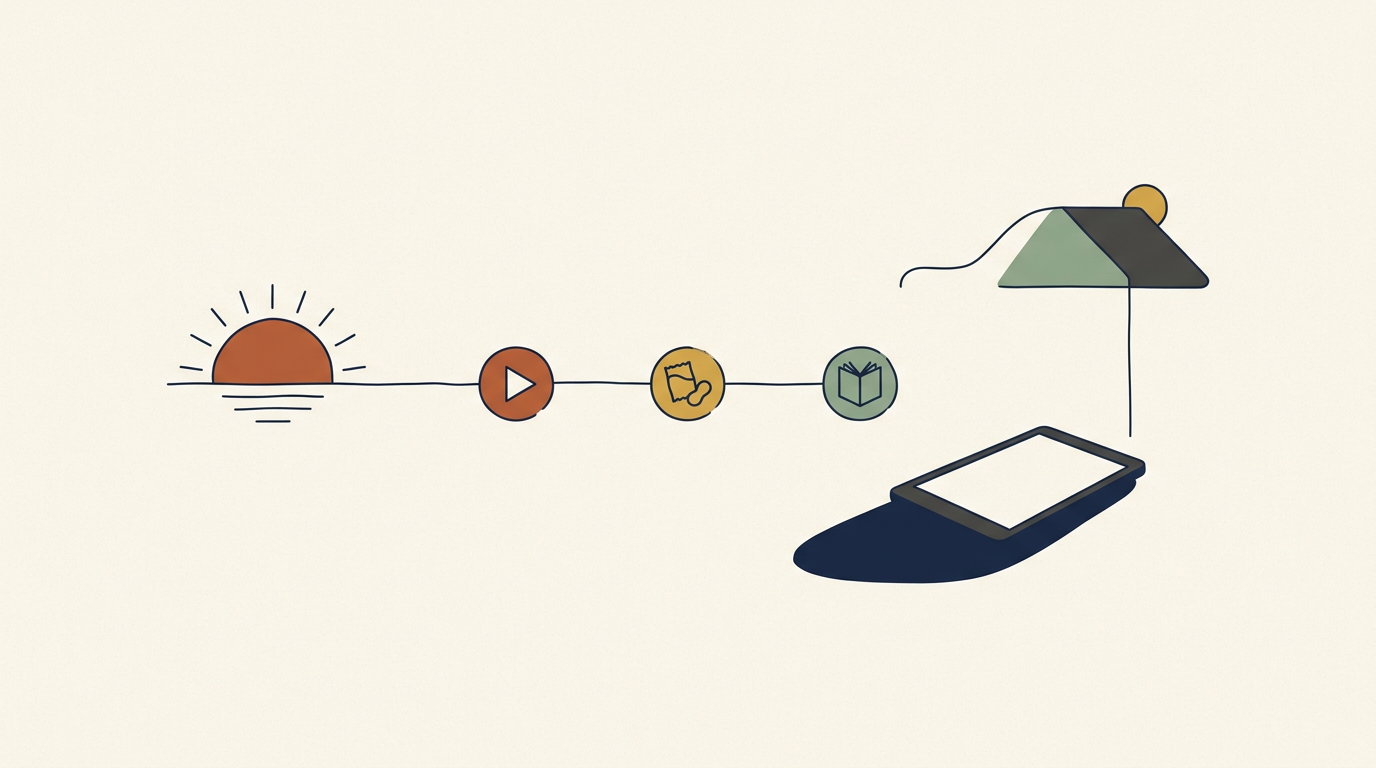
For many parents in Jaipur, the iPad has quietly become the default after-school companion, filling the hours between school pickup and dinner. This article offers a supportive, blame-free approach to reclaiming that 4 to 7 pm window, grounding practical replacement strategies in India-specific guidelines and real-world family dynamics.
The 4 to 7 pm problem
It often begins innocuously enough: a quick game while waiting for tea, a cartoon to smooth the changeover from school clothes to home clothes. Gradually, the screen extends its reach, becoming the undisputed monarch of the after-school hours. This 4 to 7 pm window, from the moment children arrive home until they sit down for dinner, is the critical battleground for screen time in many Indian households.
Start with the honest number
The Indian Academy of Pediatrics (IAP) offers clear guidelines for screen use in young children: zero screen time for those under two years old, and a maximum of one supervised hour per day for children aged two to five years [1]. However, the reality on the ground often differs significantly. A hospital-based study conducted in India revealed that only about 9 percent of families with children aged two to five actually adhere to these IAP guidelines [2].
What this number means, dear parents, is that if your evenings currently involve screens for more than an hour, you are not an outlier or a failure. You are, in fact, navigating the common landscape of modern parenting. This piece is not about judgment; it is about constructing a workable routine, not critiquing parenting choices.
Why the after-school window is the whole game
Consider the typical weekday afternoon. School ends, and children, often brimming with both energy and the residual structure of their school day, return home. Parents, however, might be mid-work, immersed in household responsibilities, or simply needing a moment to transition themselves. In this gap, the screen often emerges as the most convenient, and seemingly cooperative, caregiver. It never tires, never says no, and consistently engages. As a result, the bulk of children's weekday screen time tends to concentrate precisely between roughly 4 and 7 pm.
If this specific after-school window can be thoughtfully restructured, the overall daily screen time total often manages itself. The goal is to address the hours when the screen is most likely to default to 'on'.
Removal fails. Replacement works.
The conventional wisdom often focuses on establishing strict limits: 'only 30 minutes of screen time', or 'no screen time before dinner'. While well-intentioned, a firm limit introduced without a compelling, child-preferred alternative often sets the stage for a daily negotiation you are likely to lose. A child whose primary form of entertainment has been a screen will understandably resist its removal if there is a void left in its place. The replacement activity must offer something genuinely engaging, something that can compete with the immediate gratification of a screen.
What can genuinely contend with a child's screen preference? Usually, it involves other children, active movement, or the tangible satisfaction of visible achievement through structured activity. The World Health Organization (WHO) recommends that children under five engage in at least 180 minutes of physical activity throughout the day, including vigorous intensity activities. Sadly, many urban Indian children, engrossed in indoor, screen-based play, fall significantly short of this target [3]. Addressing this activity gap offers a dual benefit: reducing screen time and promoting physical development.
A weekday routine that survives contact with reality
Here is a template for a realistic 4 to 7 pm weekday routine, designed for a Jaipur school-going child, that prioritises physical activity and constructive engagement while acknowledging the practicalities of a busy household. This approach integrates screens as a bounded slot, not an open tap.
- 3:45 PM – 4:15 PM: School Pickup and Transition
This is not the time for battle. Allow for a calm transition. A brief, non-engaging podcast in the car, or gentle conversation, can ease the shift from school to home. Avoid immediately handing over a device. - 4:15 PM – 4:45 PM: Snack and Downtime
Children returning from school are often hungry and mentally fatigued. Trying to limit screens or introduce a new activity when a child is hungry or tired is rarely successful. Offer a nutritious snack and allow for a period of unstructured, non-screen-based quiet time. This could be reading a physical book, quiet drawing, or simply resting. - 4:45 PM – 5:45 PM: Structured Activity Block
This is the core replacement. This hour is dedicated to an engaging activity outside the home, preferably involving other children and physical movement. Examples include sports classes, dance, or a creative workshop. The key is that the activity is engaging enough to be genuinely preferred over a screen. - 5:45 PM – 6:30 PM: Unstructured Outdoor Play (or indoor if weather prohibits)
Upon returning from the structured activity, children still have energy to burn. Encourage free play, either in a dedicated outdoor space like a park or society garden, or an indoor area set up for creative, imaginative play. This is where crucial social and motor skills develop naturally. - 6:30 PM – 7:00 PM: Bounded Screen Time
This is the designated screen slot. It is a scheduled, time-bound period, not an extension of boredom or a default activity. Establish clear rules: one device, in a common area of the house (following the IAP recommendation for screens to be used in public spaces where interaction is possible), with co-viewing encouraged [1]. A family cartoon, an age-appropriate educational game, or a video call with a distant relative fits well here. The natural end point of dinner provides a clear, non-negotiable conclusion to screen time. - 7:00 PM onwards: Dinner and Family Time
Dinner should be a screen-free zone, fostering conversation and connection. This also reinforces the boundary established for screen time.
This routine is designed to make the screen a specific, enjoyable part of the day, rather than an omnipresent background hum. The 'one device, one place' rule and co-viewing are crucial elements from the IAP guidelines that can genuinely transform how screens are experienced in the home [1].
What a structured activity block changes
The 'structured activity block' is central to this routine. It is not about magic, but rather about sound mechanics of habit formation and child psychology. Here is how it works:
- Fixed Days Build the Habit Loop: When activities happen on consistent days and at consistent times, they become ingrained in the weekly rhythm. Children know what to expect, reducing resistance and making the transition smoother.
- Other Kids Beat the Screen Socially: For many children, the primary draw of a screen is engagement. The presence of peers, the dynamics of group play, and the desire for social connection are often far more compelling than a solitary screen experience. The social reward of playing with friends is a potent antidote to screen fixation.
- Visible Achievement Motivates: Unlike endless scrolling on a tablet, many structured activities offer tangible milestones: mastering a new dance step, completing an art project, scoring a goal, or progressing through levels in a structured programme. This sense of progress and accomplishment provides intrinsic motivation that screens, by their nature, rarely sustain. This is where a class with structured levels and milestones every 4 to 6 weeks, focused on skill development, differs significantly from simple open play.
- Logistical Ease for Parents: Recognising that parent logistics are a barrier, some centres, like Champions Studio, offer a wide array of activities under one roof. With 13+ enriching activities available, from creative arts to physical activities and academic enrichment, parents Ji can often enrol children in two or three activities that run consecutively or on different days, reducing the need for multiple pickups and drops. This removes a significant logistical excuse, making it easier to replace screen time slots with engaging alternatives.
The objective is not merely to occupy time, but to fill it with experiences that are developmentally beneficial, socially enriching, and intrinsically motivating for the child, thus making the screen a less attractive default.
One evening to test it
Breaking old habits and establishing new ones takes time and patience. We understand that finding the right activity to fill that crucial 4 to 7 pm slot is sometimes the missing piece. If the idea of a structured, engaging activity block resonates with you, consider giving it a try. To experience how a well-designed activity can transform an afternoon, you can test it with a trial session at our C-Scheme studio. Discover the potential replacement for that screen-filled slot for a nominal fee of Rs 500. You can book your trial session and learn more by connecting with us on WhatsApp at +91 95096 71632.
Frequently asked questions
How do I detox my child from screen time?
A 'detox' implies abrupt removal, which can often lead to heightened frustration and resistance. A more sustainable approach is gradual replacement. Identify the times your child uses screens most, particularly the 4-7 pm after-school window. Introduce engaging alternatives during these times, focusing on activities involving other children, physical movement, or creative expression. The key is to fill the void with something equally or more appealing to your child, rather than simply removing the screen without a substitute. Consistency and parental involvement in these new activities are crucial.
What is the 7 7 7 rule for kids?
The '7-7-7 rule' is not a widely recognised or evidence-based guideline from paediatric organisations regarding screen time for children. Typically, screen time recommendations are structured by age groups and focus on cognitive, social, and physical developmental stages, such as the IAP guidelines (zero under 2, one supervised hour for 2-5 year olds). It is advisable to follow guidelines from established health bodies.
How can I limit my child's screen time?
Limiting screen time is most effective when combined with providing attractive alternative activities. Start by identifying specific screen-heavy periods, like the after-school hours. Implement a structured routine that dedicates time for physical activity, creative play, and family interaction. Introduce clear, consistent boundaries for screen use, such as having a designated 'screen time' slot, using screens only in common household areas, and encouraging 'co-viewing' where parents watch with their children. These strategies, outlined by guidelines like those from the IAP, help integrate screens mindfully rather than making them the default activity.
What is the 3-6-9-12 rule for screen time?
The '3-6-9-12 rule' is a French guideline for children's screen exposure, developed by psychiatrist Serge Tisseron. It suggests:
- No screens (TV, tablets, smartphones) before age 3.
- No video games before age 6.
- No internet surfing alone before age 9 (with parental guidance).
- No social media before age 12.
While not universally adopted, it offers a developmentally-focused framework. The underlying principle aligns with recommendations from bodies like the IAP and WHO, which emphasise protecting early childhood from excessive screen exposure to support crucial developmental milestones in physical activity, social interaction, and language acquisition.
Sources
- Indian Academy of Pediatrics (IAP) Guidelines on Digital Screen Time for Children and Adolescents.
- Rathi, N., et al. (2023). Digital Screen Time in Preschool Children and Associated Factors: A Hospital Based Cross-Sectional Study. Indian Journal of Community Medicine, 48(4), 633-637.
- World Health Organization (WHO) Guidelines on Physical Activity, Sedentary Behaviour and Sleep for Children under 5 Years of Age.