Activities for 3-7 Year Olds: A Malviya Nagar Parent's Guide
Discover age-appropriate activities for 3-7 year olds in Jaipur. Learn about motor skills, socialisation, and balancing play for your child's growth.
By Champions Studio Team · Fri Sep 11 2026
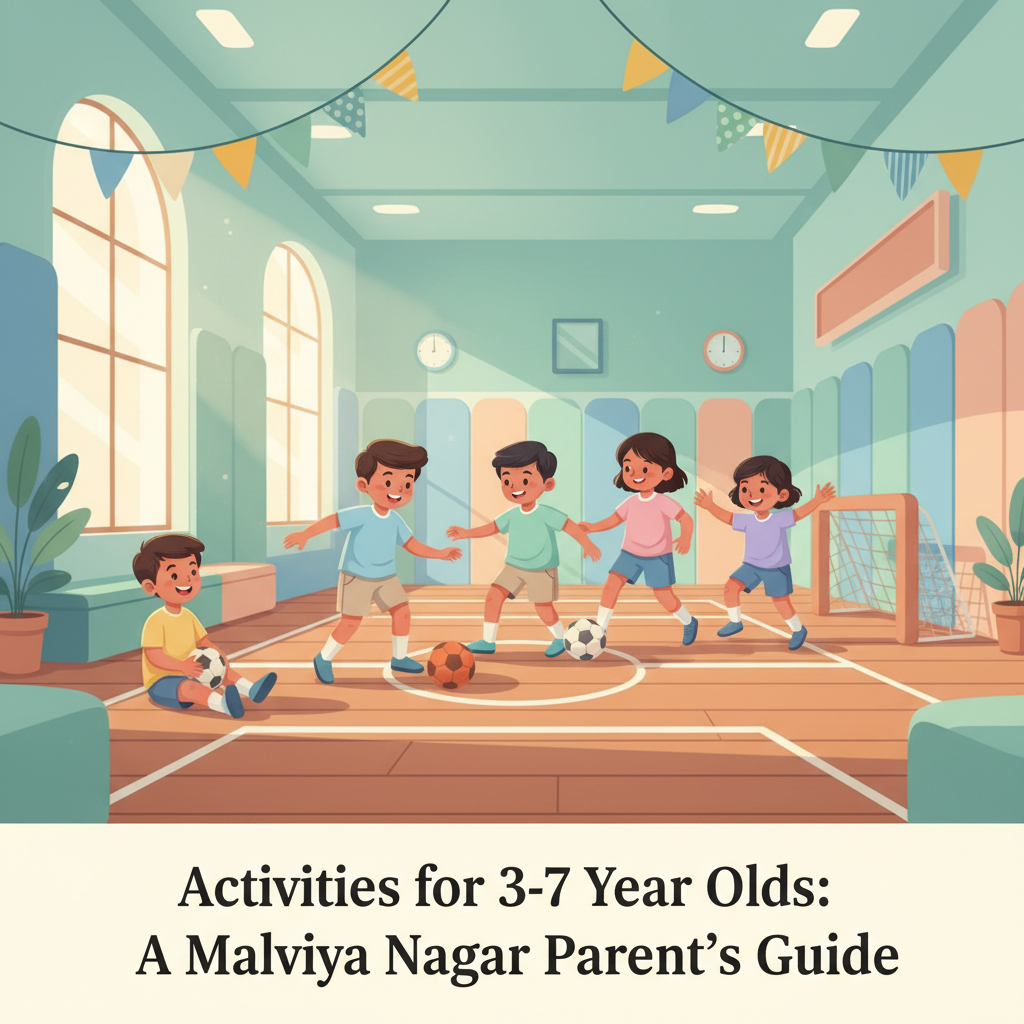
As a parent in Jaipur, the years between three and seven are a whirlwind of discovery for your child. They're growing at an astonishing rate, not just physically, but emotionally, socially, and cognitively. It's a time when every new experience helps shape who they become. But with so many options, from sports to arts, how do you decide what's truly beneficial for your little one?
The goal isn't to fill every moment with structured lessons, but to provide a rich environment where they can explore, learn, and develop crucial skills. It's about finding that sweet spot between guided growth and the magic of spontaneous play, right here in our vibrant city, whether you're in Malviya Nagar, Jawahar Nagar, or closer to Tonk Road.
Key Takeaways
- Focus on Foundational Skills: For 3-7 year olds, activities should primarily support gross and fine motor skills, language development, and early social-emotional intelligence.
- Balance is Key: Combine structured classes with ample free play, outdoor time, and quiet creative pursuits.
- Listen to Your Child: Observe their interests and energy levels. Their enjoyment is the most important indicator of a good fit.
- Consider Practicalities: Factor in commute, cost, and scheduling before committing to an activity.
- Local Options: Explore centres in Malviya Nagar, Pratap Nagar, and Durgapura that offer diverse programs.
Understanding Your 3-7 Year Old's Developmental Needs
Before diving into specific activities, let's understand what's happening developmentally in these crucial years. Your child isn't just getting taller; their brain is forming countless connections, their muscles are strengthening, and their understanding of the world is expanding rapidly.
The Thriving Toddler (3-4 years old)
At this age, children are active explorers. Their gross motor skills are developing rapidly – they're running, jumping, climbing, and kicking. Fine motor skills are still emerging, but they're gaining control over crayons, blocks, and simple puzzles.
Socially, they're moving from parallel play (playing alongside others) to associative play (playing with others, but without much organisation). Language is blossoming, and they love to ask 'why?' and tell stories, even if they're a little fantastical.
The Curious Kindergartener (4-5 years old)
Five-year-olds are often more coordinated and can follow multi-step instructions. Their fine motor skills allow for more detailed drawing, cutting, and manipulating small objects. They are beginning to understand rules and enjoy cooperative games.
Socially, friendships become more meaningful. They're learning about sharing, taking turns, and empathy. Their imagination is boundless, making pretend play a vital part of their day.
The Emerging Scholar (6-7 years old)
By six and seven, children are refining both gross and fine motor skills. They can ride a bike without training wheels, catch a ball more consistently, and write letters and numbers with greater precision. Their attention spans are longer, allowing for more complex activities and structured learning.
Socially, they understand complex social cues and enjoy team-based activities. They are developing a stronger sense of self and independence, often wanting to make their own choices.
What Kinds of Activities Truly Benefit This Age Group?
The best activities for 3-7 year olds aren't about creating future prodigies. They're about fostering a love for learning, building confidence, and developing a wide range of skills that will serve them throughout life.
1. Gross Motor Skill Development: Getting Them Moving!
This is paramount for children in Jaipur, especially with our often-warm climate encouraging indoor play. Gross motor skills involve the large muscles of the body for walking, running, jumping, throwing, and balancing. These are foundational for overall physical health, coordination, and even cognitive development.
- Sports-Based Play: Think less competitive sports, more playful exploration. Soccer, for instance, teaches running, kicking, and spatial awareness. Basketball introduces throwing and catching. Gymnastics builds strength, flexibility, and balance.
- Outdoor Play: Simply letting them run in a park, climb on safe play structures, or ride a scooter is invaluable.
- Dance & Movement: Creative movement classes or just dancing to music at home enhances coordination and rhythm.
2. Fine Motor Skill Development: Hands-On Learning
These skills involve the small muscles in the hands and fingers, essential for writing, drawing, fastening buttons, and self-care. They are crucial for school readiness.
- Art & Craft: Painting, drawing, cutting with child-safe scissors, playdough, building with LEGOs or blocks.
- Puzzles & Manipulatives: Jigsaw puzzles, threading beads, connecting toys.
- Everyday Tasks: Helping in the kitchen (stirring, pouring), setting the table, dressing themselves.
3. Cognitive & Language Development: Sparking Curiosity
Activities that challenge their minds and expand their vocabulary are vital. This isn't just about academics but about fostering critical thinking and problem-solving.
- Reading Aloud: The single most impactful activity. Discuss the story, ask questions, let them 'read' to you.
- Storytelling & Pretend Play: Encourage them to create their own narratives and scenarios.
- Board Games & Puzzles: Simple board games teach turn-taking, counting, and strategy.
- Discovery & Exploration: Visit local museums, parks, or even just exploring the backyard can be a learning adventure.
4. Social-Emotional Development: Learning to Connect
These skills are about understanding and managing emotions, building relationships, and navigating social situations. They are arguably the most important skills for future success and happiness.
- Group Classes: Dance, music, or sports classes provide opportunities for interaction, sharing, and following instructions from another adult.
- Playdates: Unstructured time with peers allows them to practice negotiation, empathy, and conflict resolution.
- Family Time: Eating meals together, talking about their day, and participating in family activities strengthens bonds and teaches communication.
| Age Group | Recommended Activities (Examples) | Key Developmental Focus |
|---|---|---|
| 3-4 Years | Free Play (indoors/outdoors), Story Time, Simple Art (finger painting, playdough), Basic Movement Classes (e.g., 'Little Movers' dance, introductory gymnastics), Sandbox play. | Gross Motor Skills, Language Acquisition, Sensory Exploration, Early Socialisation (parallel play). |
| 4-5 Years | Pre-Soccer/Basketball, Art & Craft (cutting, gluing), Music Classes, Building Blocks, Imaginative Play (dress-up), Simple Board Games. | Fine Motor Coordination, Following Instructions, Cooperative Play, Creative Expression. |
| 6-7 Years | Team Sports (e.g., Soccer, Basketball), Structured Dance/Martial Arts, Chess, Painting/Drawing Classes, Reading & Writing Practice, Science Experiments. | Refined Motor Skills, Strategic Thinking, Teamwork, Independence, Problem Solving. |
Balancing Structure with Free Play: The Jaipur Way
Parents in Malviya Nagar often wonder how many structured classes are 'too many'. The truth is, unstructured, child-led free play is just as vital as any organised activity. It fosters creativity, problem-solving, and independence in ways scheduled classes cannot.
Think about the rhythm of life in Jaipur. After a busy school day, especially with the commute from areas like Pratap Nagar or Durgapura, children need downtime. This could be playing with toys at home, drawing, or simply relaxing.
"Champions has a major role in shaping his early years and wish we could have continued there further. Wishing you all the best for future.. ❤️"
Vedika Kedia (parent of Rudr)A good balance might look like one or two structured activities per week for a 3-4 year old, gradually increasing to two to three for a 6-7 year old, leaving plenty of time for free play, family time, and rest. Remember, children learn through play.
Choosing the Right Activity Centre in Jaipur
When you're looking for activity centers, especially around Malviya Nagar, Jawahar Nagar, or Tonk Road, consider a few practical aspects beyond just the activity itself.
Location and Logistics
Jaipur traffic can be challenging. An activity centre close to home or school, such as one in Malviya Nagar, can make a huge difference in reducing stress for both you and your child. Consider the commute time, especially during peak hours.
Qualified Instructors
Look for places where instructors are not only skilled in their craft but also trained in child development and positive reinforcement techniques. They should understand how to engage young children and create a supportive environment.
Variety of Offerings
A centre that offers a range of activities, from sports like Soccer or Basketball to creative arts like Painting and Dance, allows your child to explore different interests without you having to travel to multiple locations across Jaipur.
✅ Your Pre-Enrolment Checklist
- Does the activity align with my child's current interests and energy levels?
- Is the instructor experienced with this age group and does their teaching style fit my child?
- Is the location convenient (e.g., Malviya Nagar, close to home/school)?
- What is the class size? Smaller groups often mean more individual attention.
- Are trial classes available? This is a great way to gauge interest and fit.
- What is the centre's philosophy on competition versus participation?
- Does the schedule fit our family's routine without over-scheduling?
- What are the safety protocols and hygiene standards?
A Note on Champions Studio (Malviya Nagar)
As you explore options in our city, you might consider places like Champions Studio. They've been a trusted name for many parents in Jaipur, with their established C-Scheme club.
Their upcoming centre in Malviya Nagar aims to bring a similar range of activities closer to families in areas like Pratap Nagar, Durgapura, and Jawahar Nagar. They offer a diverse curriculum including Skating, Basketball, Painting, Dance, Soccer, Gymnastics, Little Makers, Discovery Room, Chess, and Art. This variety allows children to explore different passions under one roof, catering to various developmental stages and interests.
They focus on creating an environment where children can discover their talents and build confidence, as parents like Diane Singh have shared: Sasha is now focused on tennis and Soham exclusively on art which we discovered his talent at your place 🙏
Frequently Asked Questions by Jaipur Parents
Q: How do I know if my child is ready for a structured activity?
A: Look for signs like their ability to follow simple instructions, separate from you without distress, and show interest in group play. A trial class is a great way to test readiness without full commitment.
Q: My child loses interest quickly. How can I keep them engaged?
A: It's normal for young children to have fleeting interests. Don't force it. Offer a variety of experiences and let them lead. Sometimes a break and revisiting an activity later can spark renewed enthusiasm. Keep activities fun and process-oriented, not outcome-focused.
Q: Is it better to specialise in one activity or try many?
A: For 3-7 year olds, broad exploration is generally more beneficial. It helps them discover what they truly love and develops a wider range of skills. Specialisation can come later, typically after age 8 or 9.
Q: How much screen time is too much for this age group?
A: The American Academy of Pediatrics recommends no more than 1 hour per day of high-quality programming for children aged 2-5, with parental co-viewing. For 6-7 year olds, it's about setting consistent limits and ensuring screen time doesn't replace physical activity, social interaction, or sleep.
Q: What if my child is resistant to trying new activities?
A: Start small. Visit the centre together, watch a class, or talk about what they might do. Frame it as an adventure, not a requirement. Sometimes, having a friend join can also make a big difference. Patience and gentle encouragement are key.
Q: What's a reasonable monthly budget for children's activities in Malviya Nagar, Jaipur?
A: This varies greatly depending on the type and number of activities. For a single activity, costs might range from ₹2000-₹5000 per month. Multi-activity packages, like those offered at some centres, can range from ₹8500 for a few activities to ₹14000+ for comprehensive programs. Always compare what's included in the fee.
Ultimately, the most important thing is to create a nurturing environment where your child feels loved, safe, and encouraged to explore. Whether it's kicking a soccer ball, painting a masterpiece, or building a towering fort, every experience contributes to their growth.
If you're a parent in Malviya Nagar or nearby areas, and looking for a place where your child can explore diverse activities, you might want to learn more about the new Champions Studio opening soon. You can register your interest for the Malviya Nagar location here to stay updated on their offerings.