1) Born in April or Born in March: What Forty Years of Relative Age Research Means for a Batch of 6 to 8 Year Olds in Jaipur. 2) Your Child's Batch Is Drawn on a Birthday. The Research Says That Is the Wrong Line. 3) Two Children of the Same Age Can Be Years Apart in Maturity. Ask What the Batch Is Actually Grouped By. 4) Why the March-Born 7 Year Old Loses the Sports Day Heat, and What It Does Not Mean. 5) Age Bands or Ability Levels: The Question to Ask Before You Enrol.
Discover how the relative age effect impacts 6 to 8 year olds in Jaipur, and why grouping children by ability rather than just birthdays offers a more equitable approach to development.
By Champions Studio · Mon Sep 21 2026
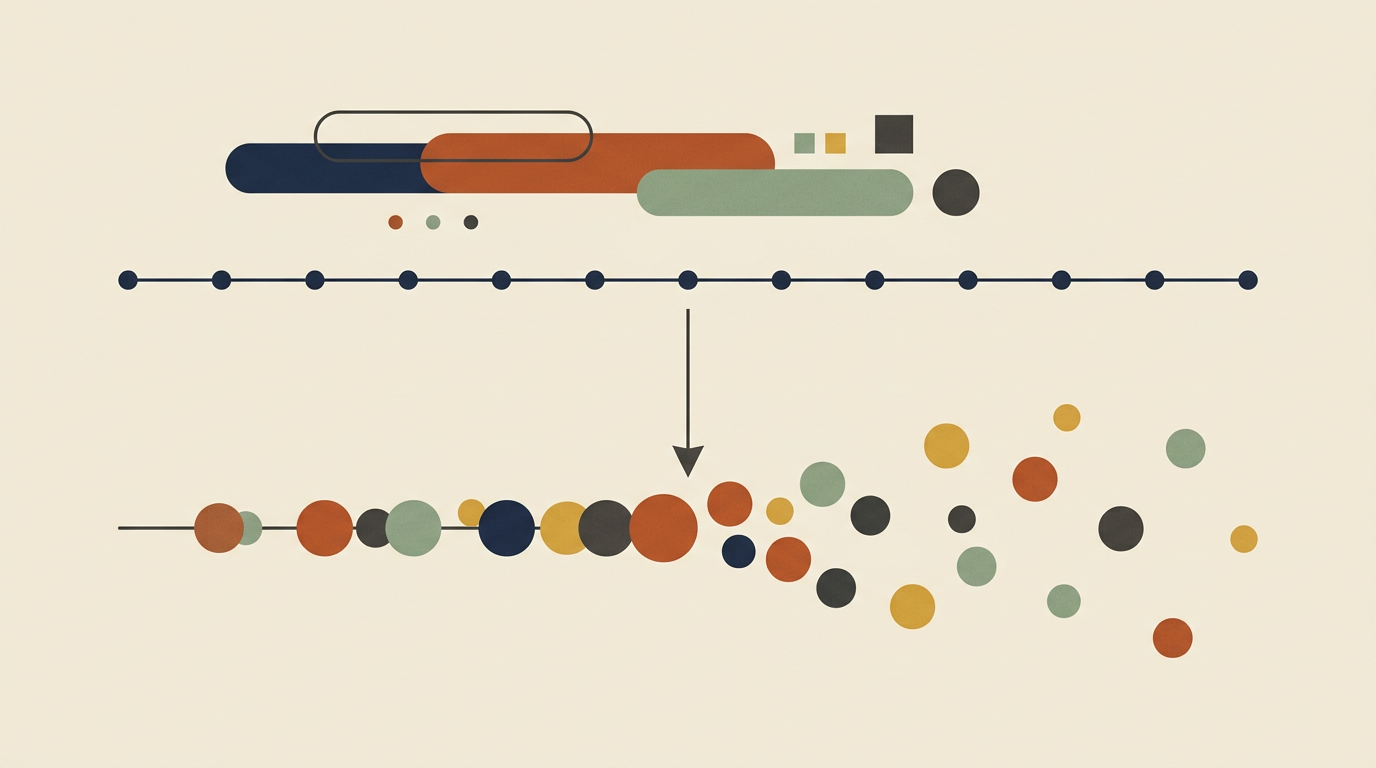
Whether children's classes should be grouped by age or skill level depends on the type of activity. While age-based grouping supports general social development, skill-based grouping is often more effective for targeted academic or athletic progress, addressing developmental differences that can be significant even among children of the same chronological age.
As a parent in Jaipur, Ji, you might have observed something curious about children in the same school class or activity batch: some seem significantly more developed than others, despite being chronologically similar. This observation is not uncommon, and it points to a phenomenon with a substantial research history, particularly relevant to children aged 6 to 8 years.
Two children, same class, eleven months apart
The academic year in India typically runs from April to March. This administrative convenience means that a child born in April 2019 and a child born in March 2020 can find themselves in the very same school class. On Sports Day, they might compete in the same heats. At a local activity centre, they are likely placed in the same beginner batch.
At six years old, eleven months represents a substantial portion of a child's life, and an even larger fraction of their motor and cognitive development. This grouping is not a deliberate developmental strategy; it is an administrative line drawn for convenience that has been widely adopted across various children's activities.
The effect has a name, and it has been studied for forty years
This systematic advantage given to those born earlier in the intake year is known as the relative age effect. It describes how children who are older within their age-group cohorts tend to perform better than their younger peers. This effect has been documented across various fields, particularly in sports and education.
A comprehensive meta-analytical review by Cobley, Baker, Wattie, and McKenna (2009) published in Sports Medicine [1] examined annual age-grouping and athlete development. Their findings indicated that annual age-grouping as an organisational strategy does indeed promote relative age effects. However, their review also offered crucial qualifications:
- The risk of the relative age effect is generally higher before adulthood and tends to decrease or become insignificant in later years.
- Females typically show slightly lower values for the effect compared to males.
- The more popular and competitive a sport, the higher the risk of pronounced relative age effects.
- Significantly, sports with higher skill requirements often show a lower risk of this effect. This suggests that in activities demanding intricate skills, chronological age becomes less of a determining factor compared to specific abilities, which is a distinction worth considering.
How a small head start becomes a real gap
The mechanism behind the relative age effect is straightforward. The child who is relatively older within their cohort is often, on average, slightly bigger, a little faster, and more coordinated. In group settings like sports or activities for 6 year olds, this often means they are picked first, receive more turns, and consequently attract more coaching attention. They are told they are 'good at it,' leading to increased enjoyment and more practice. The younger child in the same cohort often experiences the inverse: fewer turns, less attention, and potentially a diminished sense of enjoyment or competence.
Within a couple of years, this initial difference, born simply out of a birthday, can evolve into a significant gap. This gap is no longer solely about chronological age, but about accumulated opportunities, repetitions, and the self-perceptions each child develops about their abilities. It is not necessarily a claim about innate talent; it is a claim about accumulated experience and the feedback received.
What the research does NOT say
It is important to approach the relative age effect research with nuance. Much of the literature primarily focuses on selection into competitive squads and academies, often among adolescents and predominantly in team sports, and largely originates outside of India. There is no direct evidence to suggest that a March-born 6 year old attending a casual Tuesday gymnastics class is inherently being harmed.
A systematic review from Frontiers in Psychology (2020) [2] further complicates the picture, questioning whether the relative age effect consistently translates into long-term performance outcomes across all contexts. What the literature does firmly establish, however, is narrower yet profoundly useful: when an arbitrary line is drawn based on birthdays for grouping and subsequent selection, it systematically advantages one side of that line. This restraint in interpretation builds trust and accurately represents the current understanding of the subject.
The alternative already exists, and professional sport uses it
The awareness of developmental disparities among same-age children has led to the exploration of alternative grouping methods, notably bio-banding. This approach involves grouping individuals based on attributes related to growth and biological maturation, rather than just chronological age. Cumming and colleagues (2019), in their work published in Sports Medicine [3], highlight a critical point: differences in biological maturity among children of the same chronological age can be as significant as six years. This means a 7-year-old might be biologically akin to an 11-year-old, while another 7-year-old might be closer to a 5-year-old in their developmental stage.
Institutions like the University of Bath have been instrumental in developing bio-banded squads, and concepts like the 'Futures XI' have emerged to protect and nurture late developers. The Belgian FA has also implemented such models. While a parent of a 7-year-old in Jaipur might not need to consider formal bio-banding assessments, the core takeaway is significant: organisations with a high stake in youth development have moved beyond using birthdays as the sole determinant for grouping, recognising its limitations.
What this means for a 6 to 8 year old in Jaipur
For parents of 6 to 8 year olds in Jaipur, the practical application of this research is straightforward: when considering activities, inquire about grouping methods. At this age, formal maturity assessments might be unnecessary. The most practical approach is to group children by what they can currently do, rather than simply by when they were born.
Consider a batch where a 7-year-old and a 5-year-old are working together on a specific skill because they both exhibit similar capabilities at that task. This indicates a programme that has thoughtfully considered individual developmental stages. Conversely, a batch where all six-year-olds are grouped solely because they share a birth year might overlook significant developmental differences among them.
It is also important to acknowledge an honest exception: some aspects of children's development genuinely benefit from age-based grouping, particularly regarding attention span, appropriate instruction length, and the social dynamics of a peer group. A well-designed programme will judiciously use both age and ability as grouping criteria, recognising that a singular approach is often insufficient.
How we draw the line
At Champions Studio, our approach is informed by this understanding of child development. We band children by level, not by birthday. Our five levels — Explorer, Builder, Performer, Competitor, Champion — are defined by concrete, observable checklists that parents can review. For example, entry to a certain level might require a child to 'bounce the ball once and catch it' or 'hold a supported handstand for five seconds.' Progress is tracked with milestones typically spanning 4 to 6 weeks. Our batches are kept small, with 8 to 10 children, which allows coaches to accurately assess and place each child. A digital progress report each term provides transparent insights into your child's developmental standing, not just their age-group placement. Our programmes cater to children aged 6 months to 8 years.
Four questions to ask about your child's current class
- What does a child have to be able to DO to be in this group? If the answer primarily references an age, that indicates the core grouping mechanism.
- How many children are in the batch, and approximately how many turns or opportunities for engagement does my child get in one session?
- What specific skill or developmental milestone should she be able to achieve in the next six weeks that she cannot do today, and is there a clear record or plan for this?
- When she can do it, what changes in her progression or placement within the programme? If nothing changes, the level system might be largely decorative.
Frequently asked questions
What is the relative age effect?
The relative age effect is a phenomenon where children born earlier in an academic or sports intake year tend to have an advantage over their younger peers within the same group. This is due to their slightly greater physical, cognitive, and emotional maturity, which can lead to more opportunities and positive reinforcement.
Should kids' classes be grouped by age or by skill level?
While age-based grouping can be beneficial for general social development, skill-based grouping often leads to more effective learning and development for specific activities. Grouping by skill allows children to train with peers at similar developmental stages, ensuring appropriate challenges and support, regardless of their exact birth month.
Does being the youngest in the class matter?
Being the youngest in a class can matter, especially in activities where physical or cognitive maturity plays a significant role. Younger children within an age-grouped cohort might face developmental disadvantages, potentially leading to fewer opportunities for practice or recognition, and can influence their self-perception of ability.
What is bio-banding?
Bio-banding is a method of grouping children and adolescents based on their biological maturity and physical attributes rather than solely on their chronological age. This approach aims to create fairer training and competition environments by accounting for significant developmental differences that can exist among same-age peers.
Is my March-born child at a disadvantage in sport?
A March-born child, being among the youngest in an April-to-March intake year, may experience a disadvantage in sports that rely heavily on physical attributes like size, speed, or coordination, especially in early competitive stages. This is an outcome of the relative age effect, where slightly older peers may have a developmental edge. However, this does not reflect on innate talent or long-term potential, especially in sports requiring higher skill or strategic thinking.
Come and see which level she is actually on
If you want to understand your child's developmental stage rather than merely which age box they fit into, we invite you to experience our approach. The simplest way is through a trial session. A trial is Rs 500. Our batches are typically 8 to 10 children, catering to ages 6 months to 8 years, at A-4 Sardar Patel Marg, Ashok Nagar, C-Scheme. Message us on WhatsApp at https://wa.me/919509671632 with your child's age and birth month, and we will explain which level we would recommend and our reasoning. Your feedback on our assessment is always welcome.
Sources
- Cobley, S., Baker, J., Wattie, N., & McKenna, J. (2009). Annual age-grouping and athlete development: a meta-analytical review of relative age effects in sport. Sports Medicine, 39(3), 235–252.
- Meylan, C., Cobley, S., & Cumming, S. P. (2020). The relative age effect in sport: A systematic review of the literature with implications for talent identification and development. Frontiers in Psychology, 11, 1525.
- Cumming, S. P., Lloyd, R. S., Oliver, J. L., & Eisenmann, J. C. (2019). Bio-banding in sport: applications to enhance talent development. Sports Medicine, 49(2), 221–231.